Planning a Tanzania safari often starts with one question: how much does a Tanzania safari cost? The answer depends on much more than the number of days you travel. Your Tanzania safari price is shaped by the season, number of travellers, accommodation level, parks you visit and whether you choose a private road safari, group departure or fly-in itinerary.
For example, a couple travelling privately through Tarangire, Serengeti and Ngorongoro Crater will usually pay more per person than four to six travellers sharing the same 4×4 safari Land Cruiser. Likewise, a Serengeti camp during a popular Great Migration period can cost considerably more than a similar camp during quieter months.
As a practical guide, budget safaris may start around USD 250–450 per person per day, comfortable mid-range safaris around USD 400–700, while luxury Tanzania safaris can reach USD 700–1,500+ per person per day.
This Tanzania Safari Cost Guide for 2027–2028 explains safari prices, park fees, accommodation, transport, guiding and seasonal costs to help you compare packages and plan a realistic Tanzania safari budget.
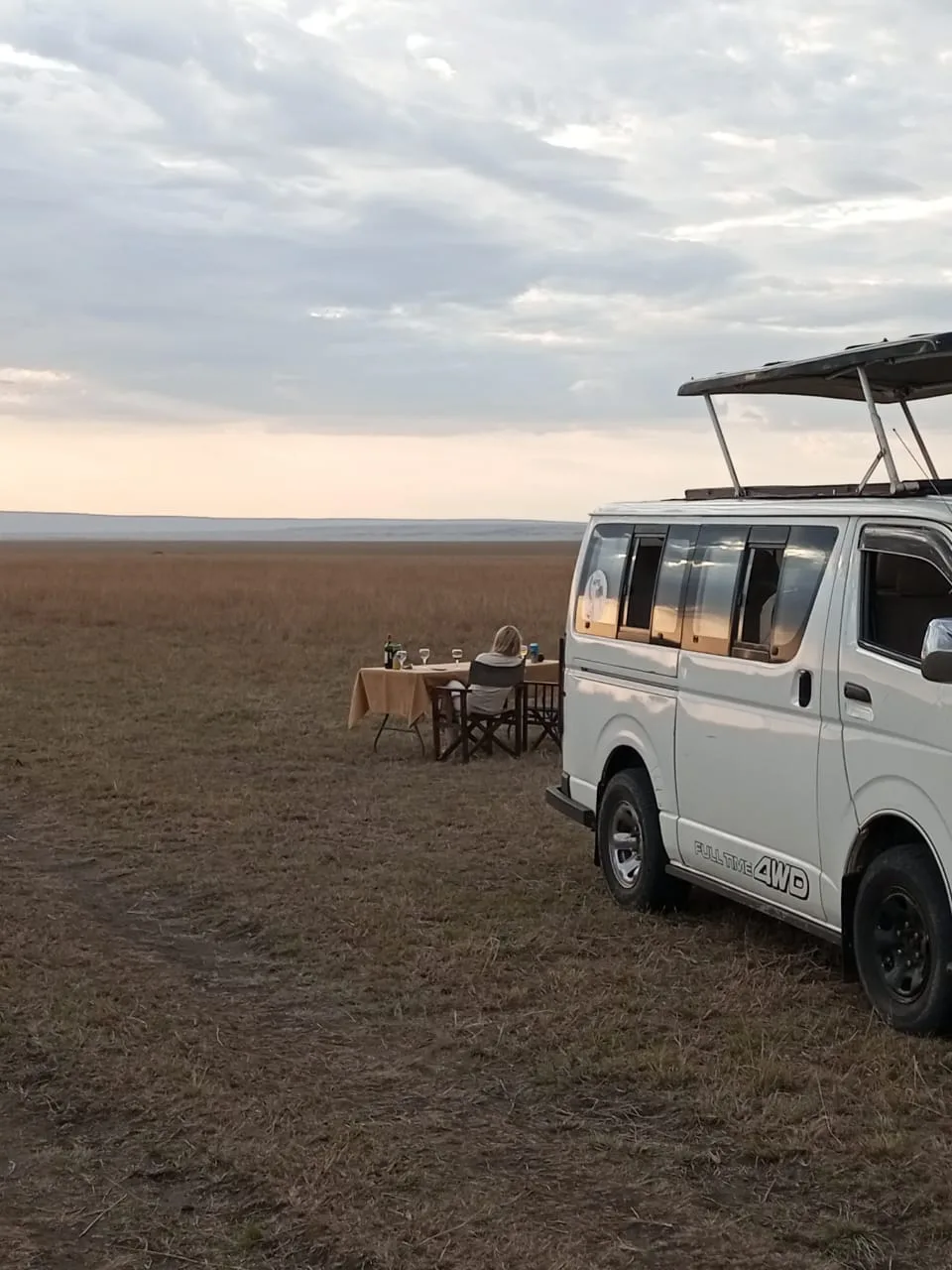
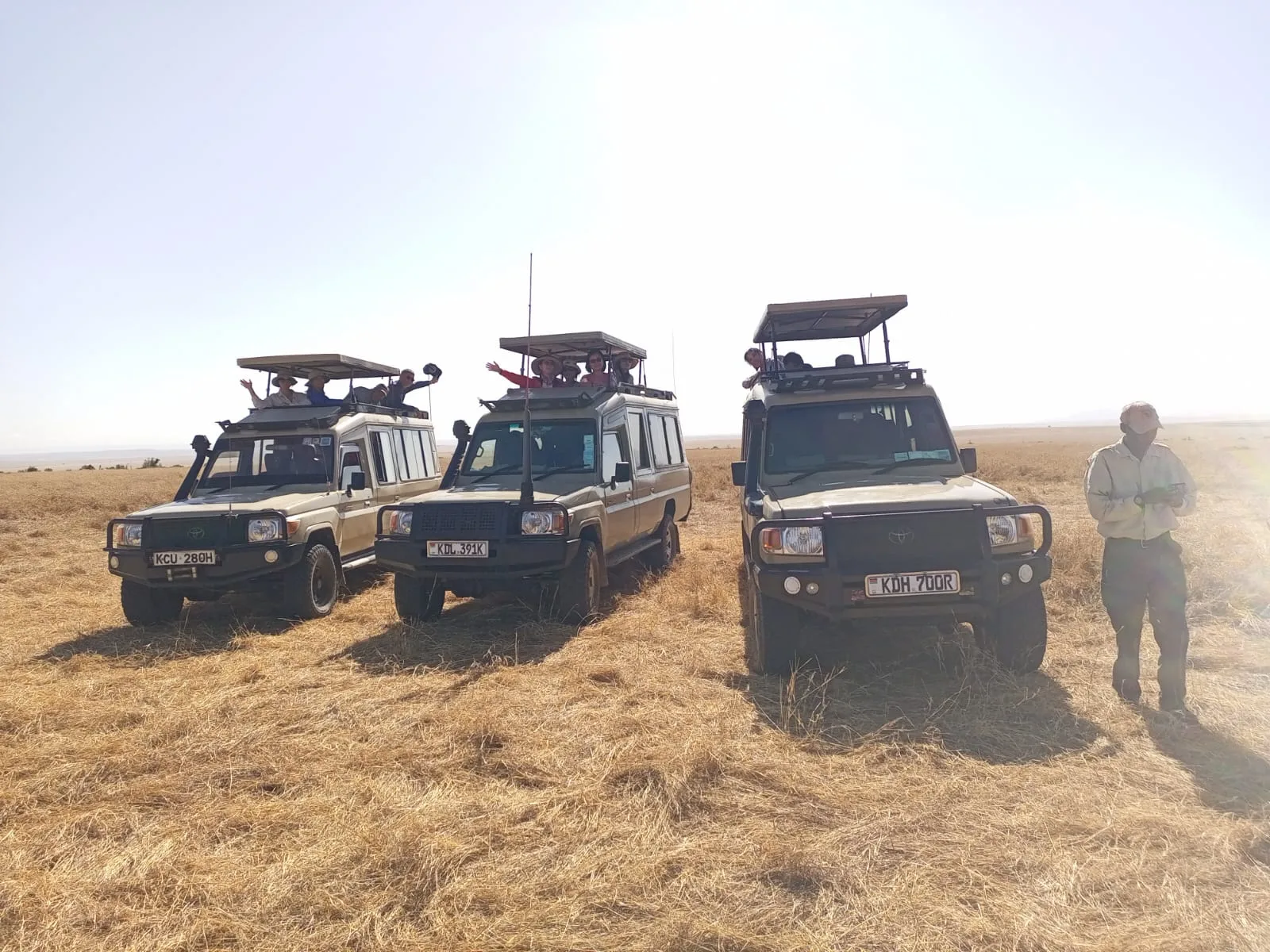
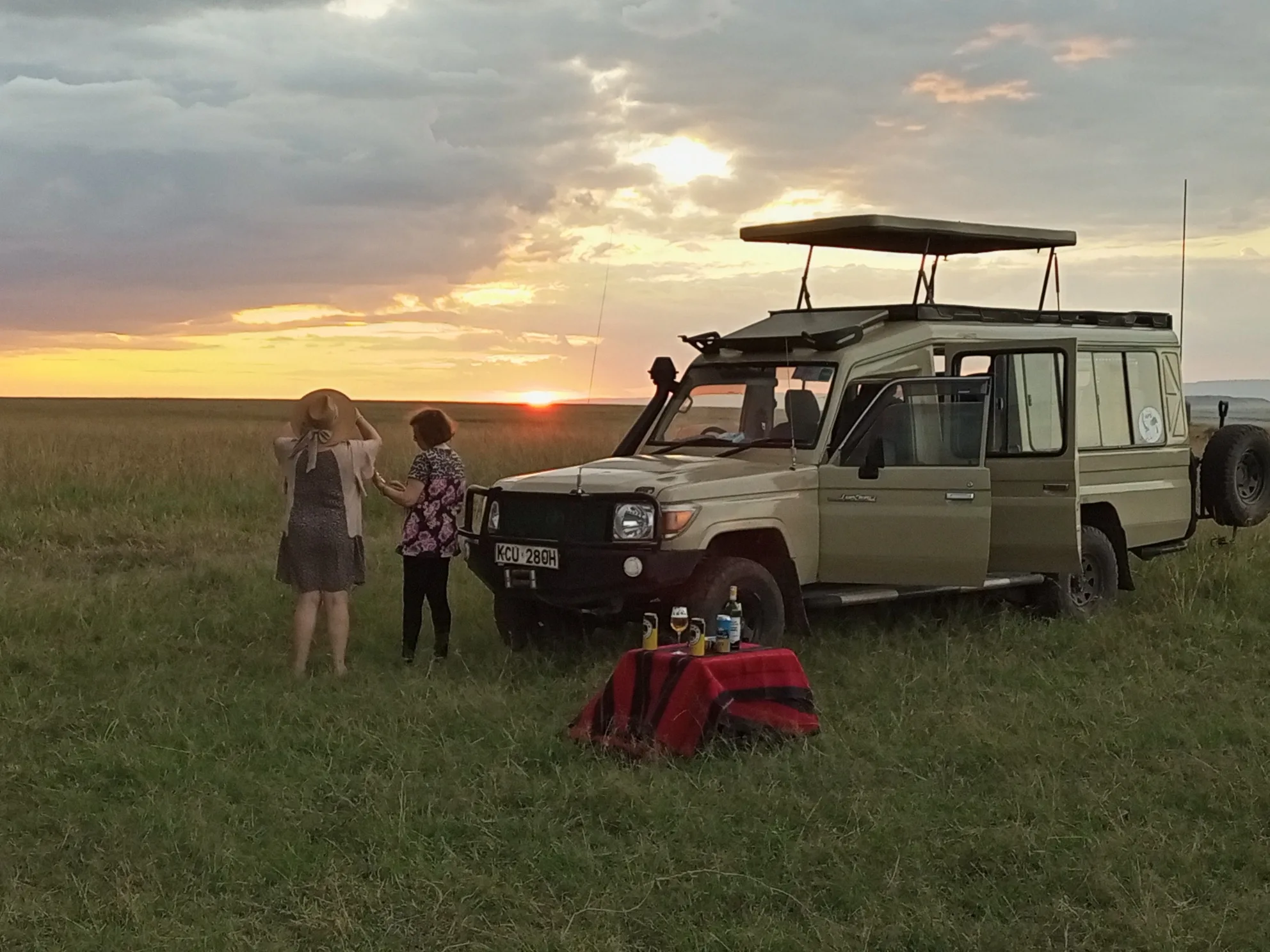
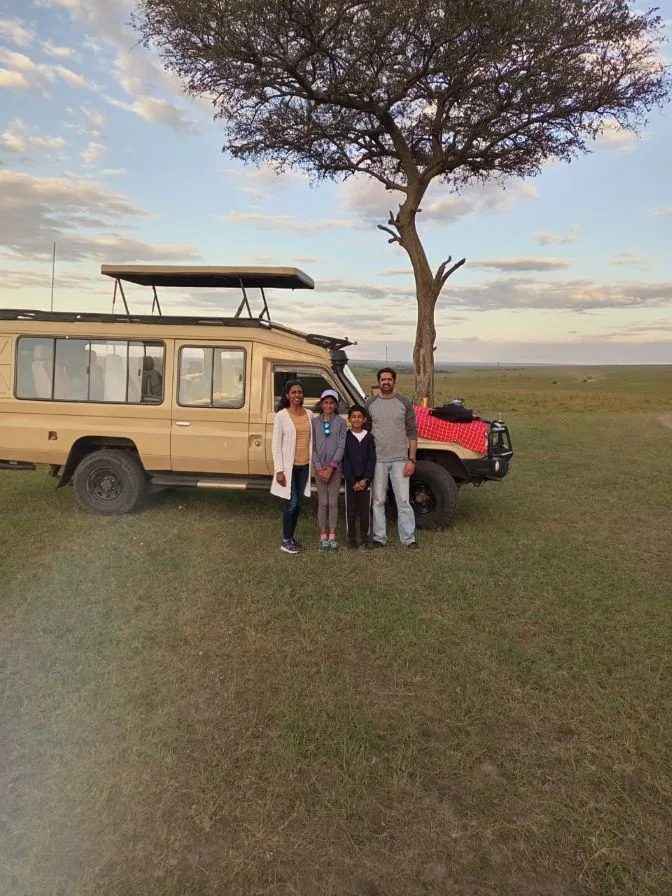
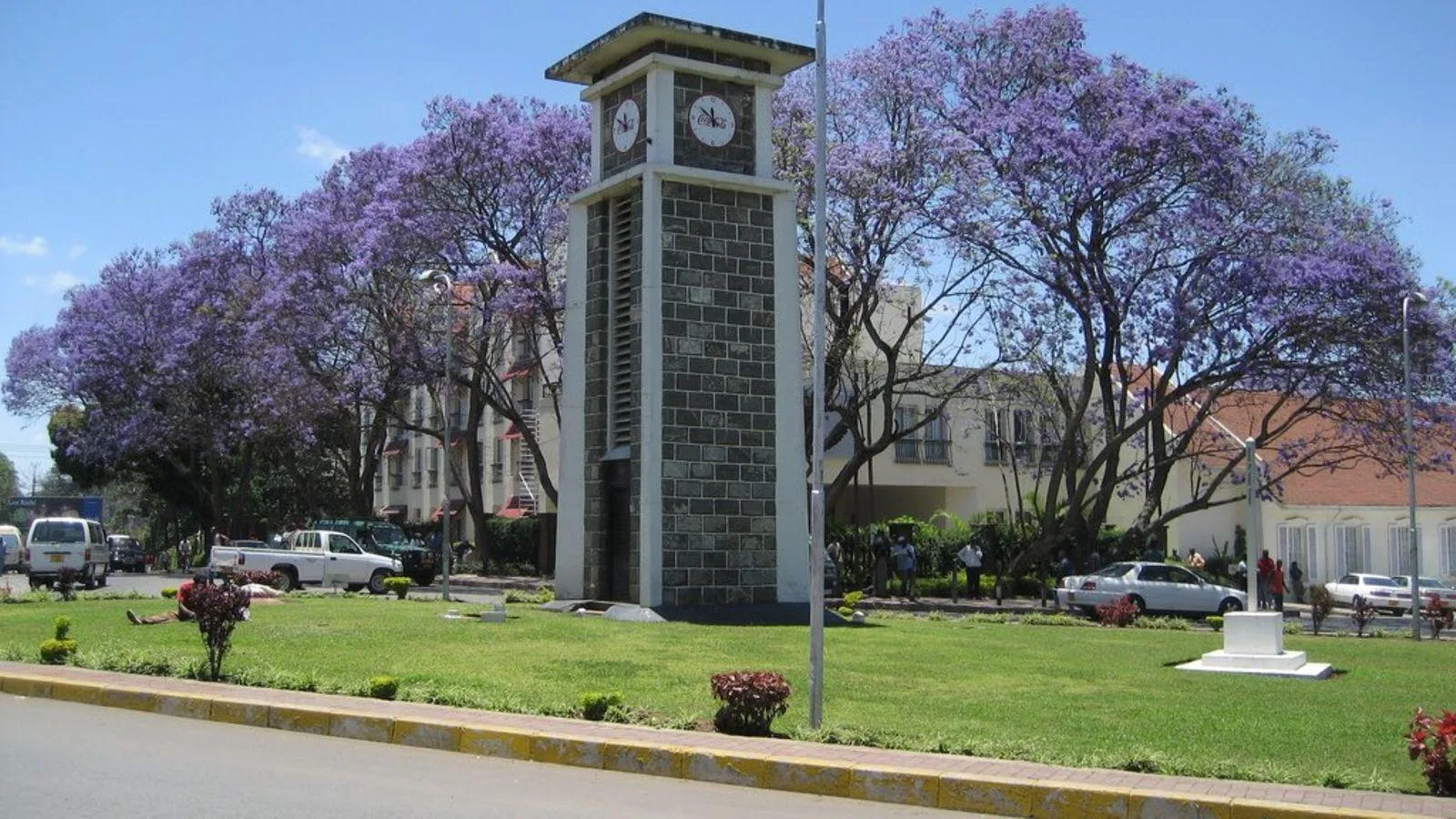
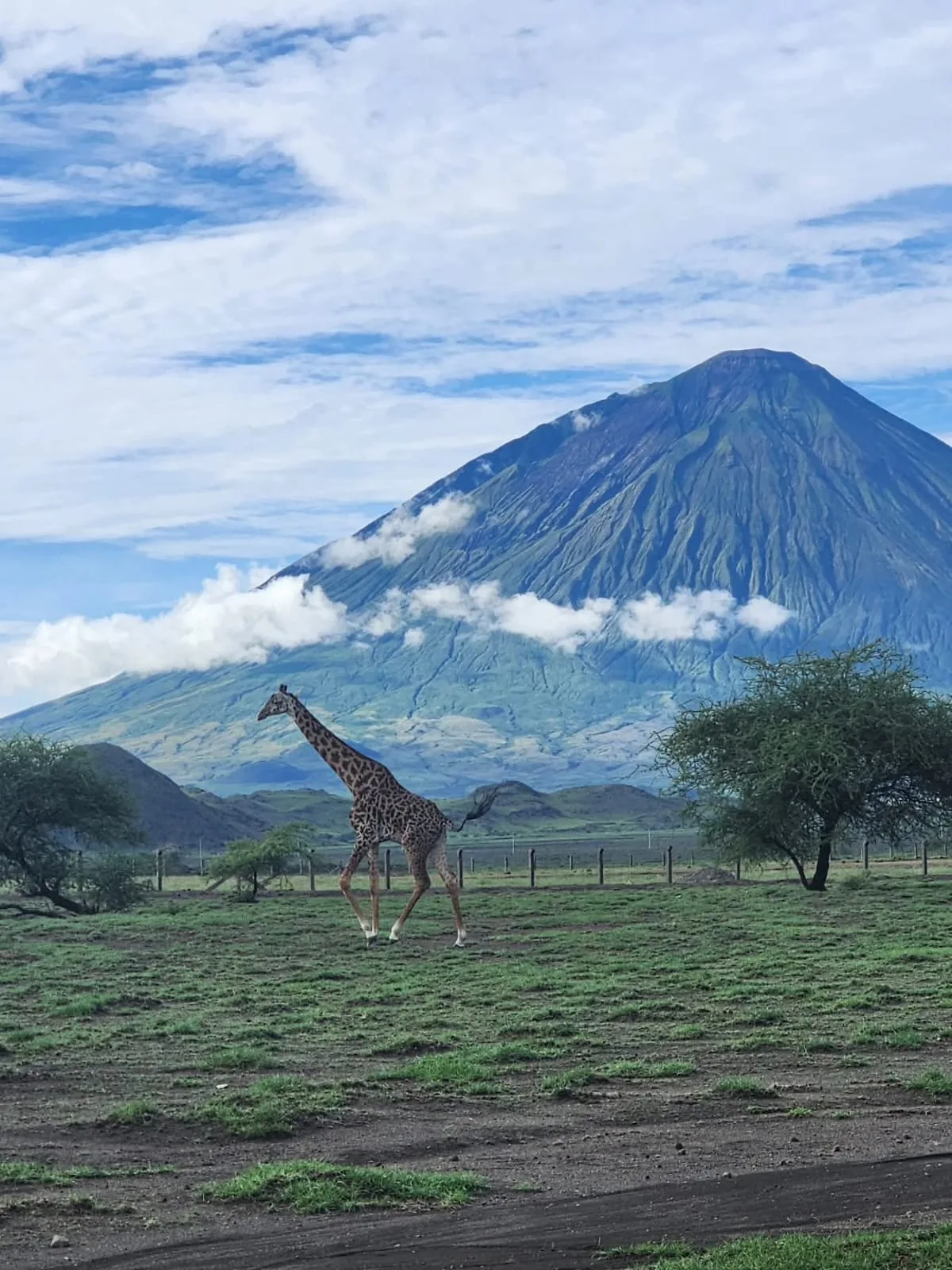
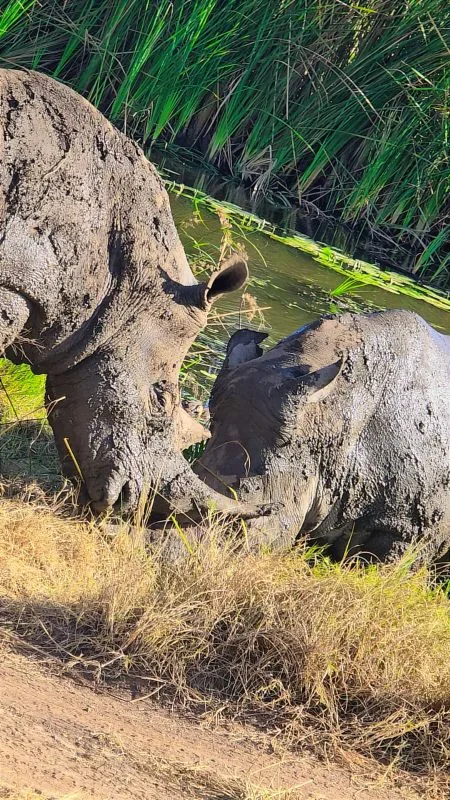
Tanzania safari cost guide Gallery
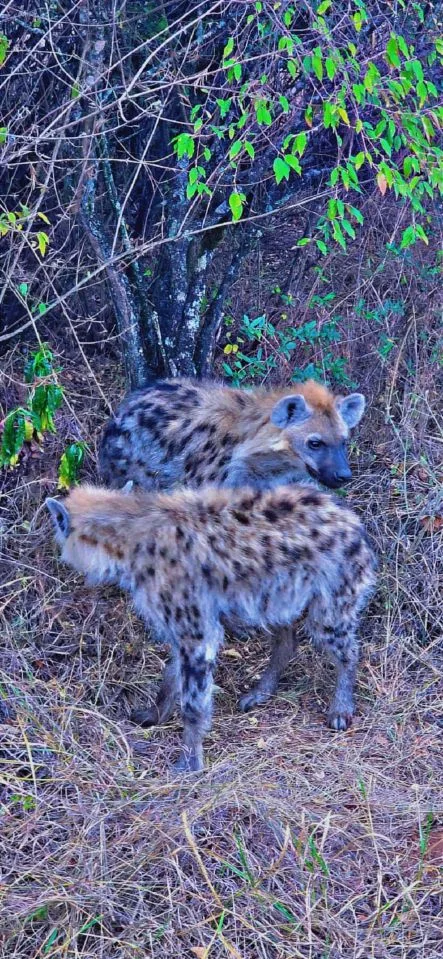
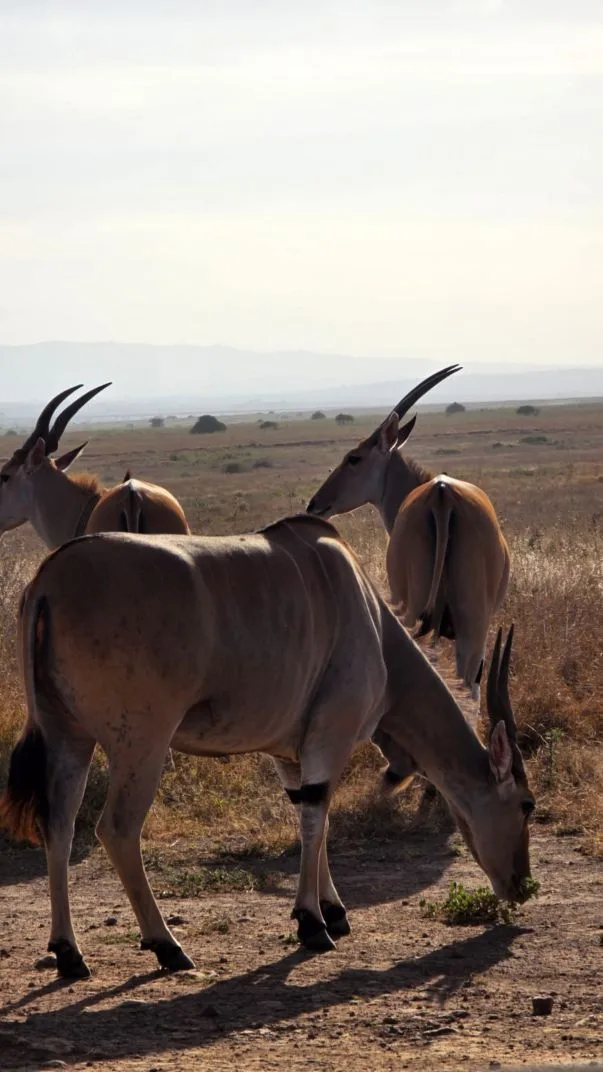
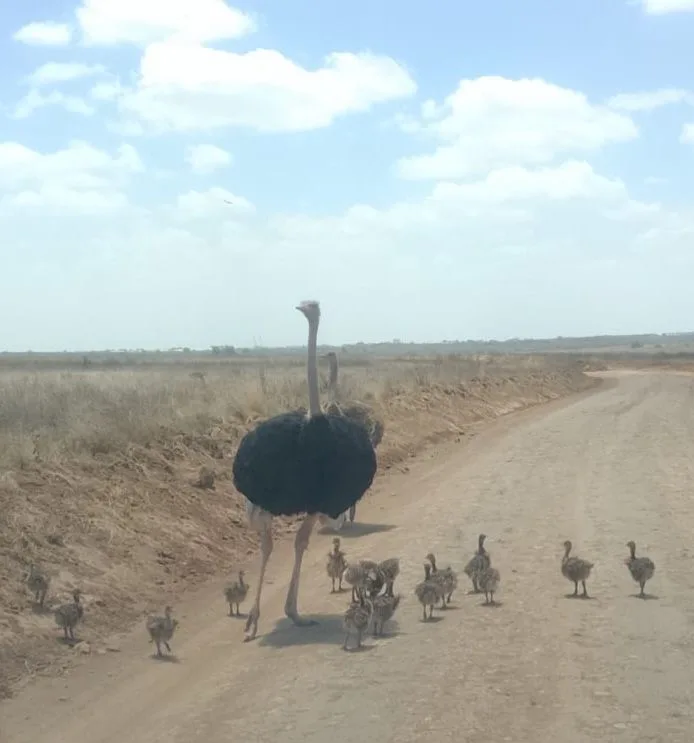
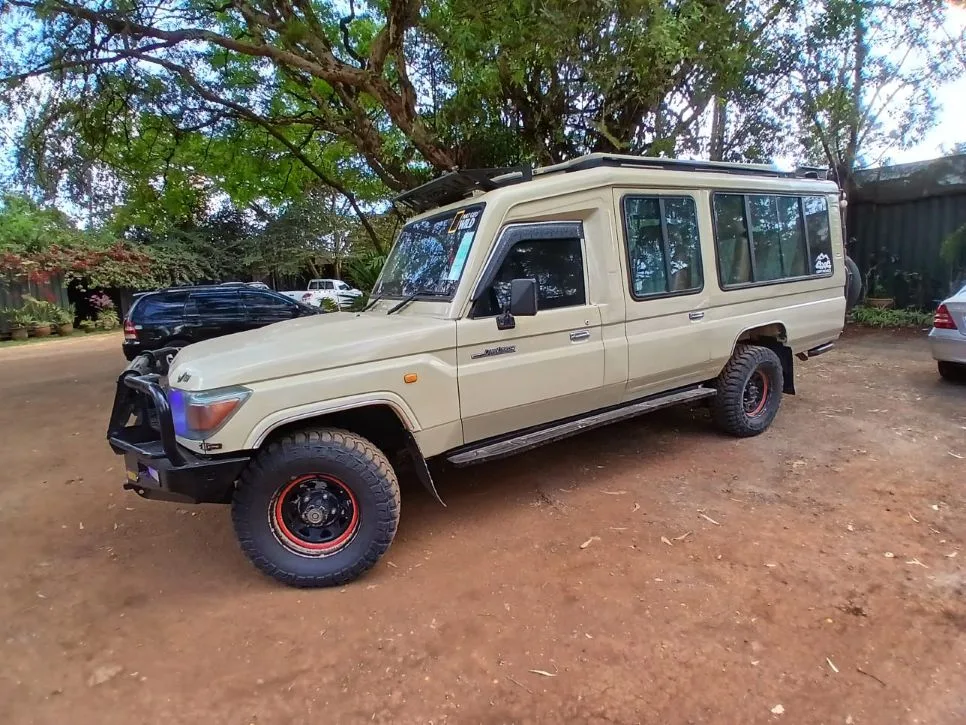
Tanzania Safari Cost at a Glance
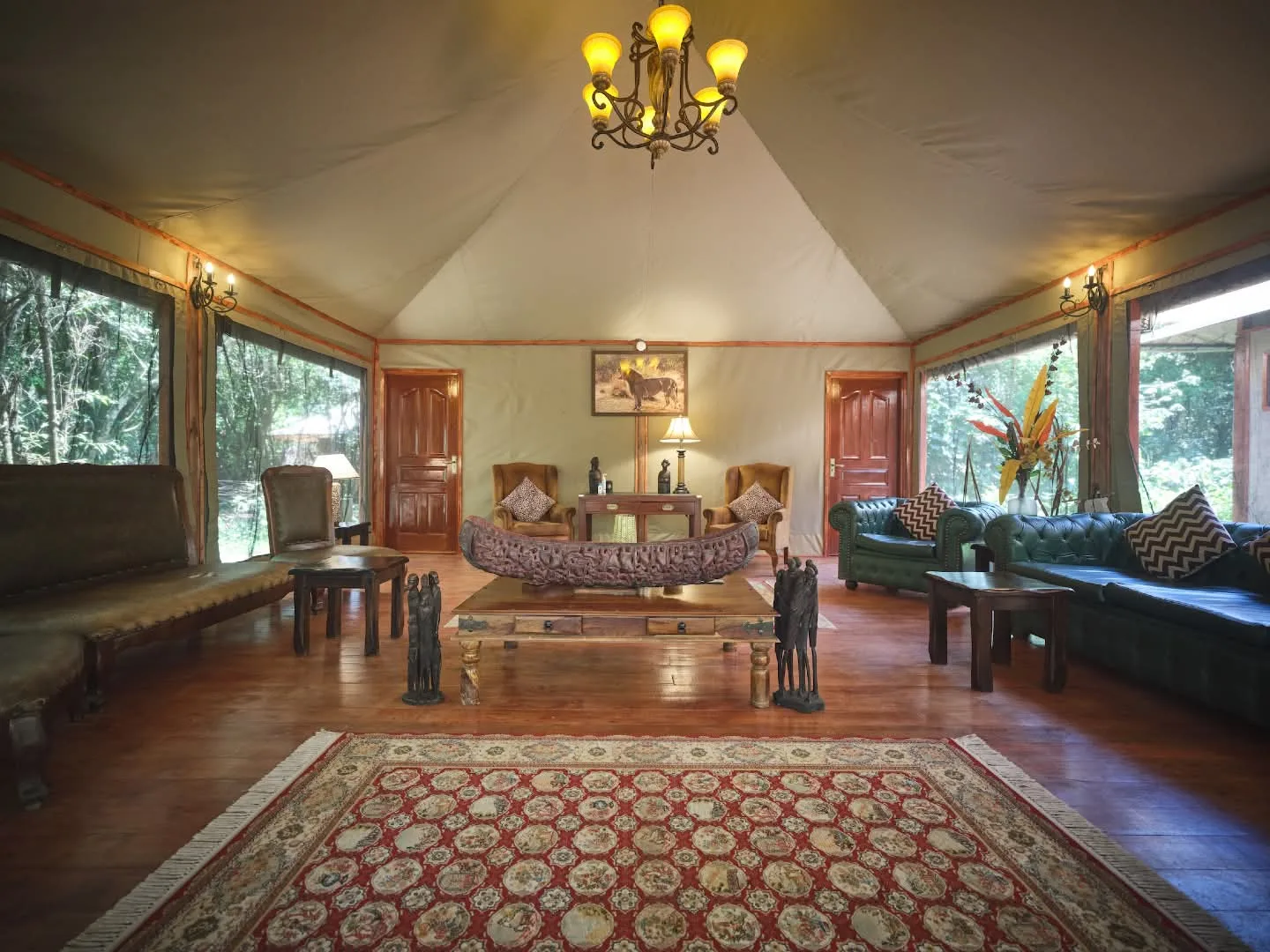
There is no single fixed price for a Tanzania safari. As a realistic planning range, expect approximately USD 250–450 per person per day for a budget safari, USD 400–700 for a mid-range safari, and USD 700–1,500+ for a luxury safari.
If you already know approximately how much you want to spend, compare our Tanzania safari itineraries to see how different trip lengths and routes fit your budget.
The table below provides a quick comparison.
| Safari Style | Estimated Cost Per Person/Day | Typical Accommodation | Best For |
|---|---|---|---|
| Budget Safari | USD 250–450 | Campsites, simple lodges or budget tented camps | Travellers prioritising wildlife over accommodation |
| Mid-Range Safari | USD 400–700 | Comfortable lodges & ensuite tented camps | Couples, families & first-time safari travellers |
| Luxury Safari | USD 700–1,500+ | Luxury lodges & smaller premium tented camps | Travellers wanting greater comfort, location & service |
| Premium Fly-In Safari | USD 800–1,800+ | Luxury or premium camps | Travellers with limited time or wanting fewer road transfers |
Safari Price Validity — 2027–2028
Prices shown are indicative USD per-person planning estimates unless identified as a specific package offer. Final safari quotations depend on travel dates, group size, accommodation sharing, applicable park fees, taxes and seasonal supplements.
Published starting prices apply only to the group-size and accommodation conditions specified for each package. All confirmed bookings receive a detailed quotation showing inclusions, exclusions and the total payable amount.
What Does That Mean for a Complete Safari?
A 5-day Tanzania safari may cost roughly USD 1,250–2,250 per person at budget level, USD 2,000–3,500 mid-range, and USD 3,500–7,500+ for luxury travel.
A 7-day Tanzania safari may range from approximately USD 1,750–3,150 budget, USD 2,800–4,900 mid-range, and USD 4,900–10,500+ luxury.
These figures are planning estimates rather than fixed package prices. Your actual Tanzania safari cost can be higher or lower depending on your travel dates, number of people sharing the vehicle, accommodation, park fees, itinerary and whether domestic flights are included.
A cheaper Tanzania safari may use accommodation farther from the main wildlife areas, offer fewer game drives or exclude certain park fees. Before booking, compare the complete itinerary, accommodation locations, vehicle arrangements and all included services.
What Determines the Cost of a Tanzania Safari?
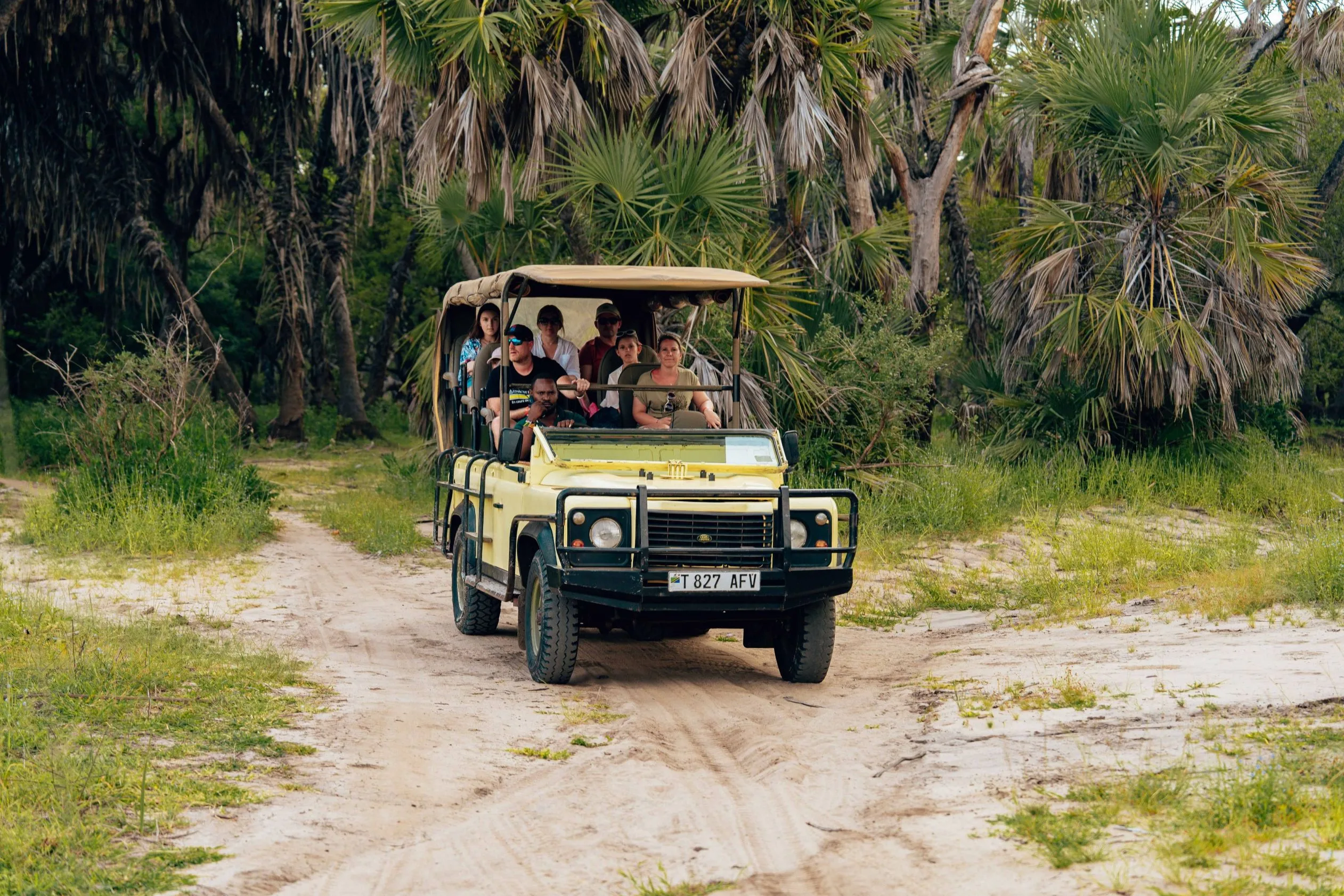
Two Tanzania safaris with the same number of days can have very different prices. A 6-day itinerary for two people travelling privately, for example, cannot be priced in the same way as a 6-day safari for six people sharing one vehicle.
In practice, these are the factors that have the biggest influence on your final Tanzania safari cost.
1. Number of Travellers Sharing the Safari
Group size is one of the biggest factors affecting the Tanzania safari cost per person.
A private 4×4 safari Land Cruiser has many fixed operating costs whether it carries two guests or six. When more travellers share the vehicle, guide and fuel expenses, the cost per person usually comes down.
This is also why you should look carefully at advertised “from” prices. A starting price may be calculated using five or six travellers sharing, while a private safari for two will normally cost more per person.
When requesting a quotation, always provide the number of adults and children travelling so you can compare the correct price.
2. When You Travel
Tanzania safari prices change throughout the year.
July to October is a popular period for Serengeti safaris, particularly for travellers interested in the Great Migration and the northern Serengeti. Demand for well-located camps can be high.
January to March is another important period, especially around Ndutu and the southern Serengeti during the wildebeest calving season.
Parts of the green season can provide lower accommodation rates, fewer safari vehicles and attractive landscapes, although rainfall and seasonal camp closures need to be considered.
If your dates are flexible, choosing the right month can make a noticeable difference to your safari budget.
Read our Best Time to Visit Tanzania for Safari guide before choosing dates based on price alone.
3. Your Choice of Accommodation
Accommodation can change the cost of the same safari route substantially.
Tanzania offers everything from public campsites and simple lodges to comfortable tented camps, luxury lodges and small premium camps.
But price is not only about how luxurious the room is.
Location matters.
A well-positioned camp may cost more but reduce unnecessary driving and give you more time for game viewing. A cheaper lodge farther away may save money on the room while adding transfer time each morning and evening.
When comparing accommodation, consider comfort, location and safari time together.
4. How Many Days You Spend on Safari
A longer safari naturally costs more overall, but a shorter safari is not always cheaper on a per-day basis.
A 3-day safari still requires a safari vehicle, professional guide, fuel and major park fees. Those costs are concentrated into a shorter period.
With six or seven days, you can also build the route more naturally rather than trying to squeeze several parks into a few days.
For a first Northern Tanzania safari, we generally prefer enough time in Serengeti and Ngorongoro rather than adding destinations simply to make the itinerary look more extensive.
5. Which Tanzania Safari Parks You Visit
The parks included in your itinerary directly influence the final price.
A safari combining Tarangire, Serengeti National Park and Ngorongoro Crater has a different cost structure from a short Tarangire and Lake Manyara itinerary.
Park entry fees, conservation charges, vehicle fees and accommodation locations all need to be considered.
Serengeti and Ngorongoro are often among the major cost components of a classic Northern Circuit itinerary, but they are also the reason many travellers come to Tanzania in the first place.
For travellers planning around the Serengeti specifically, our Serengeti Safari Packages guide explains the different itinerary options in more detail.
Tanzania national park fees vary by park, visitor category and applicable tariff period, and rates can change. For current official national park information and tariffs, travellers should consult the Tanzania National Parks Authority (TANAPA) when planning their safari budget.
6. Private Safari vs Group-Joining Safari
A group-joining Tanzania safari is normally cheaper because the vehicle and guide costs are shared between travellers who may not know one another.
A private safari gives the vehicle and driver-guide to your travelling party.
That means greater flexibility over departure times, photography stops, how long you remain at a wildlife sighting and the general pace of each day.
At East Africa Jungle, our private Tanzania road safaris operate using 4×4 safari Land Cruisers.
For four to six people travelling together, a private safari can also become more economical per person because the vehicle cost is shared across the group.
7. Road Safari vs Fly-In Safari
Driving is usually the more economical way to explore Tanzania's Northern Circuit.
It also allows you to see the changing landscapes between Arusha, Tarangire, Ngorongoro and Serengeti.
Flights become useful when you have limited time, want to avoid a long transfer or are combining distant destinations.
For example, a traveller staying in Zanzibar may prefer to fly directly to Serengeti rather than spend valuable holiday time travelling overland.
The trade-off is cost: scheduled flights, airstrip transfers and baggage arrangements increase the overall safari price.
8. Great Migration Season and Location
The Great Migration does not remain in one part of Serengeti throughout the year.
The herds move through the wider Serengeti ecosystem according to rainfall, grazing conditions and other natural factors. This means the best area to stay can change with the month of travel.
During periods of high demand—such as the Ndutu calving season or when travellers are concentrating on the northern Serengeti—well-positioned camps can command higher rates and sell out early.
Paying more does not guarantee a dramatic migration event.
River crossings, predator sightings and the exact location of the herds cannot be guaranteed. A good migration safari is therefore planned around seasonal patterns while allowing for the unpredictability of wildlife.
The Key Takeaway
When comparing Tanzania safari prices, do not ask only:
“Which safari is cheaper?”
Also ask:
“What am I getting for this price?”
Look at the number of travellers, vehicle type, route, accommodation location, park fees, game-drive time, flights and inclusions.
A safari that costs slightly more but gives you an extra meaningful day in Serengeti may offer better value for your priorities than a cheaper itinerary that spends much of that day transferring between destinations.
Tanzania Safari Cost by Number of Days
The cost of a Tanzania safari in 2027–2028 depends on the number of days, accommodation standard, destinations and travel season. Short safaris are ideal for travellers with limited time, while longer itineraries provide more opportunities for wildlife viewing in Serengeti, Ngorongoro Crater and Tarangire National Park.
Tanzania Safari Prices by Duration: 2027–2028
[Keep your existing 2–10-day safari price comparison table here.]
Which Tanzania Safari Duration Offers the Best Value?
3 Days: Best for short Serengeti and Ngorongoro safaris.
5 Days: Ideal for combining Tarangire, Serengeti and Ngorongoro Crater.
7 Days: More time for wildlife photography and relaxed game drives.
10 Days: Suitable for extended safaris, migration experiences and Zanzibar extensions.
East Africa Jungle Travel Tip: A well-planned five-day safari with sufficient game-drive time can offer better value than a rushed seven-day itinerary covering too many destinations.
Prices are indicative per person and subject to travel dates, accommodation availability, group size and applicable park fees.
Tanzania Safari Cost by Group Size: Is It Cheaper to Travel Together?
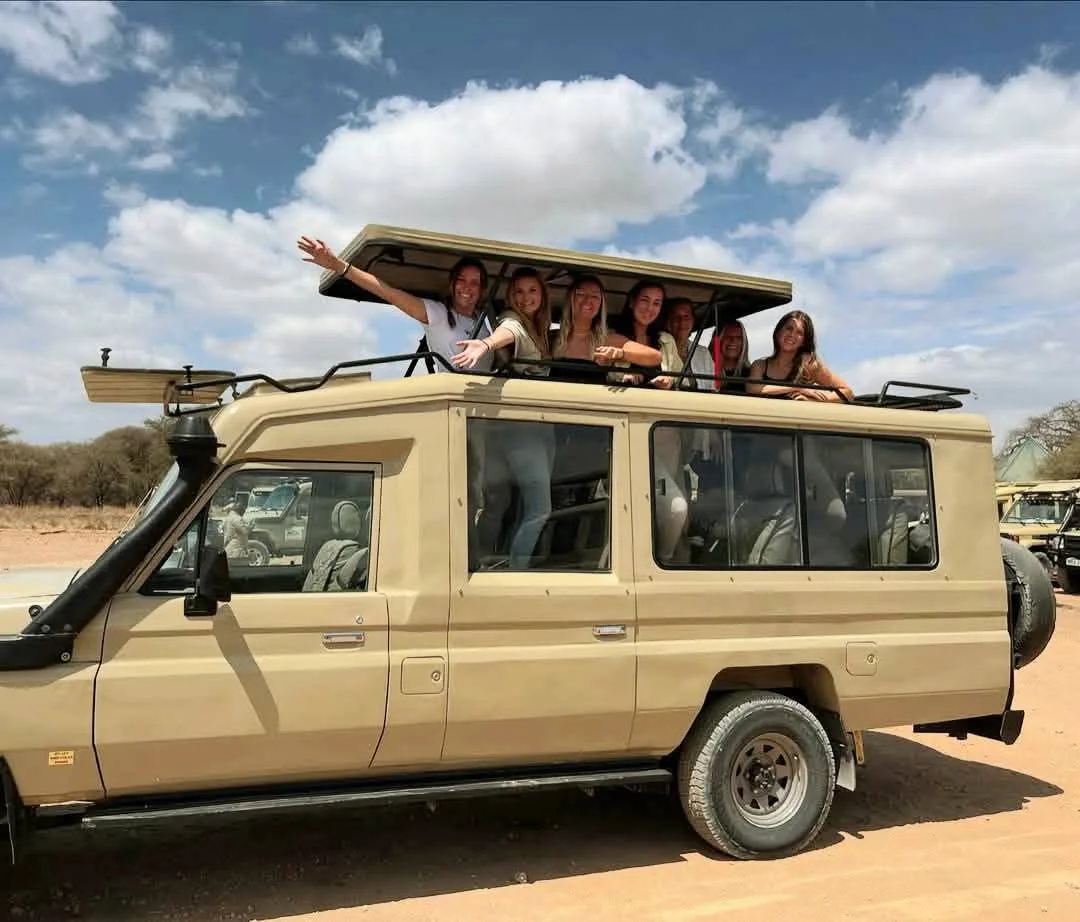
Travelling with four to six people can reduce the Tanzania safari cost per person, particularly on private safaris. This is because the cost of the 4×4 Land Cruiser, driver-guide and fuel is shared among more travellers.
How Group Size Affects Safari Costs
| Cost Component | 2 Travellers | 4–6 Travellers |
|---|---|---|
| Safari vehicle | Shared between 2 | Shared between 4–6 |
| Driver-guide | Higher cost per person | Lower cost per person |
| Accommodation | Double or twin room | Multiple rooms required |
| Park fees | Charged per visitor | Charged per visitor |
| Private safari flexibility | Exclusive vehicle | Exclusive vehicle |
Private Safari vs Group-Joining Safari
A private Tanzania safari offers exclusive use of a vehicle and flexible game drives, while a group-joining safari allows individual travellers and couples to share transport costs with other guests.
For couples, group joining is often the more affordable option. Families and groups of friends may find private safaris more economical per person when sharing a vehicle.
Request a personalised quote for 2, 4 or 6 travellers to compare the actual cost of your preferred itinerary.
Tanzania Safari Cost by Season: When Is a Tanzania Safari Cheapest?
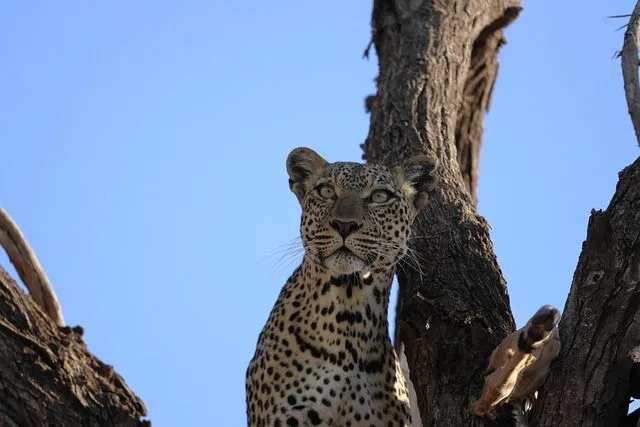
Tanzania safari prices vary by season, with the highest rates generally occurring from July to October and during Christmas and New Year. April and May often offer lower accommodation prices, while November and early December can provide excellent shoulder-season value.
Choosing the best time for a Tanzania safari depends on your budget, wildlife interests and preferred travel experience.
Tanzania Safari Prices by Month & Season
| Travel Period | Price Level | Wildlife & Safari Experience |
|---|---|---|
| January–March | Medium–High | Ndutu calving season, predators and photography |
| April–May | Low | Green landscapes, fewer visitors and seasonal discounts |
| June | Medium–High | Transition to dry season, good wildlife viewing |
| July–October | High | Dry-season safaris and Great Migration opportunities |
| November | Low–Medium | Short rains, greener landscapes and fewer crowds |
| Early December | Medium | Good value before festive demand |
| Christmas–New Year | High | Holiday demand and premium accommodation rates |
Prices vary by lodge, destination, availability and travel dates.
What Is the Cheapest Month for a Tanzania Safari?
April and May are often the cheapest months for Tanzania safari accommodation, with discounted lodge rates and fewer tourists. However, rainfall can affect road conditions, and some seasonal camps close.
November and early December can also offer affordable safari options with greener landscapes and fewer vehicles.
When Is a Tanzania Safari Most Expensive?
July to October is generally Tanzania's peak safari season, particularly in Serengeti, where demand increases for Great Migration experiences. Christmas and New Year also attract higher accommodation rates.
January and February can be expensive around Ndutu during the wildebeest calving season.
How to Save Money on a Tanzania Safari
Travel during April–May or November for potential seasonal savings.
Compare mid-range lodges and tented camps.
Book peak-season safaris early.
Consider group-joining safaris to share transport costs.
Avoid festive supplements when your dates are flexible.
East Africa Jungle Safari Planning Tip
The cheapest month is not always the best-value month. For wildebeest calving, consider January–March around Ndutu; for northern Serengeti migration opportunities, consider July–October. For lower prices and quieter parks, April–May or November may be suitable.
Contact East Africa Jungle for a personalised 2027–2028 Tanzania safari quotation based on your preferred travel dates, budget and wildlife interests.
Tanzania Safari Cost by Accommodation Type
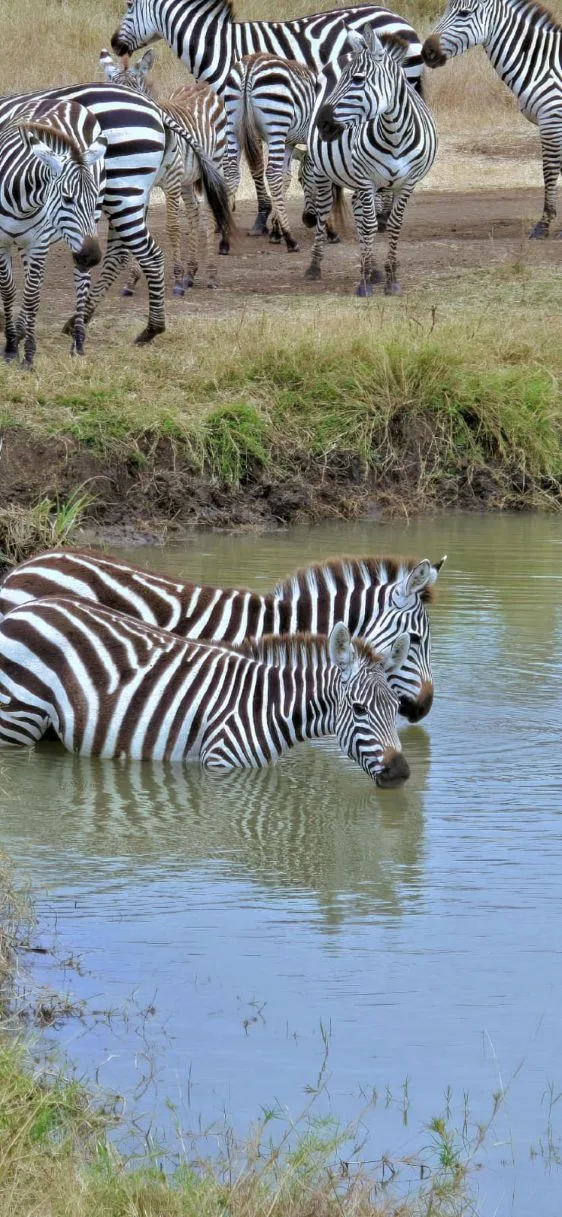
Accommodation is one of the biggest factors affecting Tanzania safari costs. Prices vary depending on the lodge category, location, travel season and facilities. Choosing the right accommodation can help balance comfort, wildlife-viewing time and your overall safari budget.
Tanzania Safari Accommodation Price Comparison
| Accommodation Type | Typical Experience | Cost Level |
|---|---|---|
| Budget Camping | Basic campsites and shared facilities | Lowest |
| Budget Lodge / Tented Camp | Simple rooms or tents with essential amenities | Low |
| Mid-Range Lodge | Comfortable rooms, ensuite bathrooms and meals | Moderate |
| Mid-Range Tented Camp | Ensuite safari tents, comfortable facilities and wilderness setting | Moderate |
| Luxury Lodge / Camp | Premium accommodation, dining and personalised service | High |
| Exclusive Luxury Camp | Exceptional locations, premium facilities and exclusive experiences | Very High |
Accommodation prices vary by destination, season, park fees and availability.
Budget, Mid-Range vs Luxury Safari Accommodation
Budget Tanzania safaris use public campsites, basic lodges or affordable tented camps, allowing travellers to experience Serengeti, Tarangire and Ngorongoro at lower costs.
Mid-range Tanzania safaris provide comfortable lodges or tented camps with private bathrooms, meals and convenient locations. They are popular with couples, families and first-time safari travellers.
Luxury Tanzania safaris feature premium lodges, exclusive tented camps, personalised service and exceptional settings, particularly in Serengeti and Ngorongoro.
Why Safari Accommodation Location Matters
Choosing accommodation close to wildlife-viewing areas can reduce travel time and maximise game drives.
In Serengeti National Park, strategically located camps are especially valuable during the Great Migration and Ndutu calving season. However, wildlife movements and sightings cannot be guaranteed.
Staying in Karatu, near Ngorongoro, can offer more affordable accommodation while remaining convenient for many Northern Circuit itineraries.
How to Save Money on Tanzania Safari Accommodation
Choose mid-range lodges instead of luxury properties for every night.
Upgrade selectively to well-positioned Serengeti camps.
Compare accommodation rates during low and shoulder seasons.
Check whether meals, park fees and concession charges are included.
Prioritise accommodation location over unnecessary luxury.
East Africa Jungle Accommodation Planning Tip
At East Africa Jungle, we recommend accommodation based on safari route, wildlife interests, comfort, travel season and budget.
A well-located mid-range camp can sometimes offer better safari value than a more expensive lodge requiring lengthy transfers.
Request a personalised Tanzania safari quotation to compare budget, mid-range and luxury accommodation options for your preferred travel dates.
Private vs Group-Joining Tanzania Safari Cost: Which Suits You?
A group-joining Tanzania safari is generally cheaper for solo travellers and couples, as vehicle, driver-guide and operating costs are shared. A private Tanzania safari offers greater flexibility, privacy and control over game drives, making it ideal for families, photographers and groups of friends.
Private vs Group Tanzania Safari Comparison
| Feature | Private Safari | Group-Joining Safari |
|---|---|---|
| Safari Vehicle | Exclusive 4×4 Land Cruiser | Shared 4×4 Land Cruiser |
| Cost for 1–2 Travellers | Higher | Lower |
| Cost for 4–6 Travellers | Better value per person | Economical |
| Game Drives | Flexible pace and stops | Fixed group schedule |
| Accommodation | Customisable | Usually predetermined |
| Photography | More time at sightings | Shared group preferences |
| Best For | Families, couples, photographers | Solo and budget travellers |
Why Does a Private Tanzania Safari Cost More?
Private safaris cost more because the 4×4 Land Cruiser, professional driver-guide and fuel are dedicated to your travelling party. However, the cost per person generally decreases when four to six travellers share the vehicle.
Is a Private Tanzania Safari Worth the Extra Cost?
Private safaris are ideal for travellers seeking personalised game drives, flexible schedules, privacy and better control over wildlife photography. Families also benefit from adjusting the daily pace to suit children.
Group-joining safaris are a budget-friendly choice for solo travellers and couples who enjoy meeting other travellers and following a shared itinerary.
Both options provide opportunities to explore Serengeti, Ngorongoro Crater and Tarangire National Park in a 4×4 safari Land Cruiser.
All game drives follow national park regulations and responsible wildlife-viewing practices.
East Africa Jungle Safari Recommendation
At East Africa Jungle, we recommend private safaris for families, photographers and groups of four to six travellers, while group joining is often more economical for solo travellers and budget-conscious couples.
Request a Tanzania safari quotation to compare private and group-joining prices for your preferred travel dates.
Road Safari vs Fly-In Tanzania Safari Cost: Is Flying Worth the Extra Money?
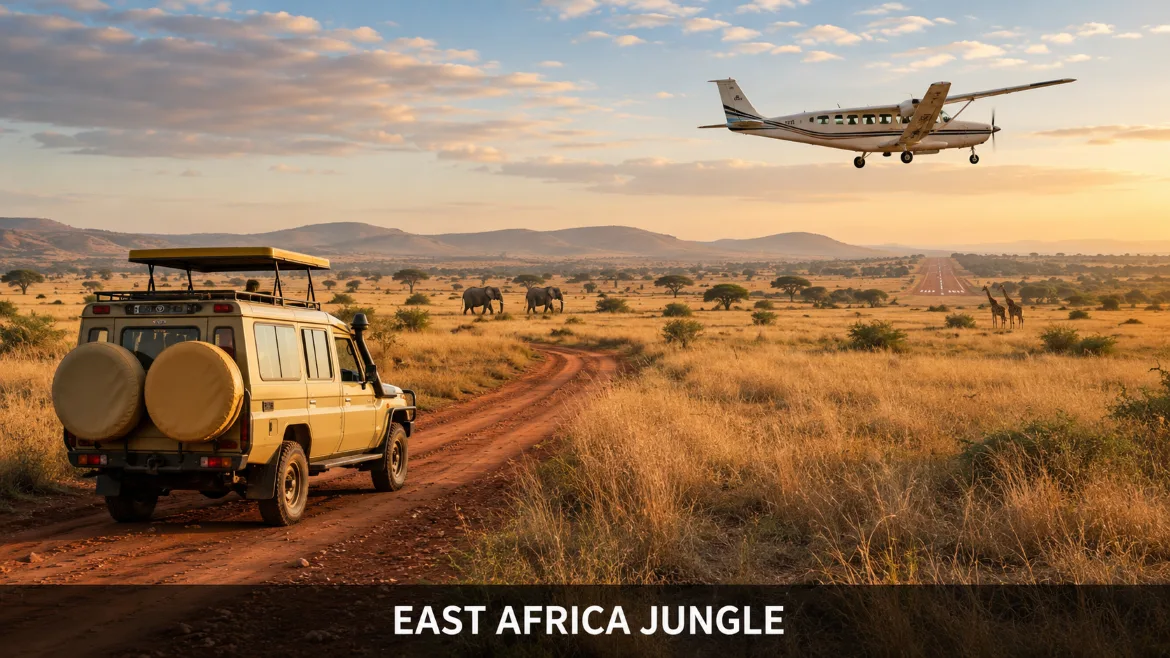
A Tanzania road safari is generally more affordable than a fly-in safari, while flying saves travel time and provides more opportunities for wildlife viewing, especially on short Serengeti safaris or trips starting from Zanzibar.
The best option depends on your budget, safari duration and destinations.
Road Safari vs Fly-In Safari Comparison
| Feature | Road Safari | Fly-In Safari |
|---|---|---|
| Cost | Usually lower | Higher due to domestic flights |
| Transport | 4×4 safari Land Cruiser | Flight + safari vehicle |
| Travel Time | Longer road transfers | Faster access to remote parks |
| Best For | 5–10-day Northern Circuit safaris | Short 3–4-day safaris |
| Zanzibar Connection | Requires mainland transfer | Convenient flight connections |
| Luggage | Generally more flexible | Airline baggage limits apply |
| Safari Experience | Scenic drives between parks | More time in wildlife areas |
How Much Does a Tanzania Road Safari Cost?
Road safaris are ideal for exploring Tarangire, Serengeti and Ngorongoro Crater in one itinerary.
At East Africa Jungle, our 3 Days Serengeti and Ngorongoro Road Safari starts from approximately USD 1,195 per person, based on the applicable six-traveller configuration, subject to rate confirmation.
Road travel is particularly cost-effective for five- to seven-day safaris, allowing travellers to experience multiple national parks without additional domestic flight expenses.
How Much Does a Serengeti Fly-In Safari Cost?
A 3-day Serengeti fly-in safari starts from approximately USD 1,650 per person for five to six travellers sharing, subject to confirmation.
Flying reduces lengthy transfers and is especially convenient for travellers with limited time or those combining a Tanzania safari with Zanzibar beach holidays.
Flights can also be combined with road transfers to balance cost and convenience.
Which Tanzania Safari Offers Better Value?
Choose a road safari if you have five or more days, want to explore several Northern Circuit parks and prefer lower transport costs.
Choose a fly-in safari if you have only three or four days, prioritise Serengeti wildlife viewing or are travelling from Zanzibar.
Remember that fly-in packages still require a safari vehicle for game drives, which may be private or shared. Domestic flights also have baggage restrictions.
East Africa Jungle Safari Planning Tip
At East Africa Jungle, we recommend road safaris for longer Northern Circuit itineraries and fly-in safaris when saving travel time significantly improves the wildlife experience.
Request a personalised Tanzania safari quotation to compare road, fly-in and combined safari options for 2027–2028.
Tanzania Safari from Zanzibar: Prices for 2–4 Days

Flying from Zanzibar to the mainland is often the most convenient way to combine a wildlife safari with a beach holiday, especially when visiting Serengeti or Ngorongoro Crater.
Tanzania Safari from Zanzibar Price Comparison
| Safari Duration | Typical Destinations | Estimated Price Per Person |
|---|---|---|
| 2 Days | Tarangire & Ngorongoro | USD 1,000–1,600+ |
| 3 Days | Serengeti & Ngorongoro | USD 1,500–2,300+ |
| 3 Days Fly-In | Serengeti National Park | USD 1,650–2,500+ |
| 4 Days | Serengeti & Ngorongoro | USD 1,950–3,000+ |
| 4+ Days Luxury | Premium Serengeti fly-in safari | USD 3,000+ |
Prices are indicative planning estimates, not confirmed quotations. Flight schedules, accommodation and travel season affect final costs.
How Much Does a 3-Day Safari from Zanzibar Cost?
A 3-day Tanzania safari from Zanzibar costs approximately USD 1,500–2,500+ per person and offers a practical introduction to Serengeti and Ngorongoro.
At East Africa Jungle, our 3 Days Serengeti Fly-In Safari starts from approximately USD 1,650 per person, based on five to six travellers sharing, subject to rate confirmation.
For travellers with four days, adding an extra night allows more game-drive time and a less rushed itinerary.
What Is Included in a Tanzania Safari from Zanzibar?
Depending on the package, safari costs may include:
Domestic flights from Zanzibar and return or onward flights
4×4 safari Land Cruiser and professional driver-guide
National park and conservation fees
Safari accommodation and meals
Scheduled wildlife game drives
Airport and airstrip transfers
Always confirm whether both outbound and return flights are included.
Is a Tanzania Safari from Zanzibar Worth It?
Yes, particularly for travellers combining Zanzibar beaches with Tanzania's wildlife destinations. A two-day safari suits limited schedules, while three or four days generally provide more wildlife-viewing opportunities.
Couples and families may prefer private safaris for flexibility, while group joining can help reduce costs.
East Africa Jungle Safari Planning Tip
For short Zanzibar safari extensions, prioritise fewer destinations and more game-drive time rather than rushing between parks. Flights can make Serengeti more accessible, but schedules should be planned carefully.
Request a personalised Tanzania safari from Zanzibar quotation for 2027–2028, including flights, accommodation, park fees and transfers.
Great Migration Safari Cost: How Much Does a Serengeti Migration Safari Cost?

As a broad planning range, allow approximately USD 400–700 per person per day for a comfortable mid-range migration safari and USD 700–1,500+ per person per day for luxury travel. Premium fly-in camps and highly sought-after seasonal locations can cost considerably more.
But there is no single Great Migration safari price.
The cost depends on when you travel, which part of the Serengeti ecosystem you visit, how many nights you stay, your accommodation category, group size and whether you travel by road or air.
Great Migration Safari Cost by Area & Season
| Area | Typical Period of Interest | Cost Impact | Main Planning Consideration |
|---|---|---|---|
| Ndutu / Southern Serengeti | Dec–Mar | Medium–High / High | Calving season & seasonal camps |
| Central Serengeti | Year-round | Medium–High | Excellent base for general wildlife |
| Western Corridor | Roughly May–Jul | Medium–High | Seasonal herd movements |
| Northern Serengeti | Roughly Jul–Oct | High–Very High | Strong demand & remote accommodation |
| Fly-In Migration Safari | Seasonal | High–Very High | Flights reduce road-transfer time |
| Luxury Migration Safari | Seasonal | Very High | Premium camps, location & service |
Migration timing varies from year to year according to rainfall and grazing conditions. These periods are planning guidelines, not guarantees of herd location.
Why Are Great Migration Safaris More Expensive?
The wildlife itself does not carry a special “migration fee.”
What increases the price is demand and location.
When thousands of travellers want to stay in a particular part of Serengeti during the same period, strategically positioned camps can charge higher seasonal rates.
Remote locations can also be more expensive to operate.
Food, staff, fuel and other supplies need to reach camps far from Tanzania's main towns, while travellers may require domestic flights to avoid very long road transfers.
So when you pay more for a migration safari, much of the additional cost is connected to:
Accommodation location + season + logistics + availability.
Ndutu Calving Safari Cost
From roughly December through March, migration-focused travel shifts toward the southern Serengeti and Ndutu ecosystem, with the main calving period generally associated with the early months of the year.
This period can provide opportunities to see large wildebeest concentrations and predator activity.
It is also a popular time to travel.
Well-positioned seasonal camps around Ndutu can therefore become expensive and fill early.
Our 4 Days Ndutu Calving Safari starts from around USD 1,495 per person in the applicable pricing configuration.
For a calving-focused safari, we normally recommend spending enough time in the Ndutu area rather than attempting to combine too many distant parks.
Central Serengeti Safari Cost
Central Serengeti is important because it is not dependent entirely on migration movements.
The Seronera region supports resident wildlife throughout the year and can offer opportunities to see lions, leopards, cheetahs, elephants, giraffes and many other species.
For travellers who cannot travel during a particular migration period—or who simply want a classic Serengeti safari—Central Serengeti can therefore remain an excellent option.
It also works naturally as part of road itineraries connecting Serengeti with Ngorongoro.
Northern Serengeti Safari Cost
Northern Serengeti is particularly sought after during the period when migration herds may be moving through the region and around the Mara River.
This can be one of the more expensive Serengeti safari periods.
Accommodation is more limited than in some central areas, demand is high, and the distance from Arusha means travellers may choose to fly.
A northern Serengeti safari can therefore involve:
Higher seasonal camp rates
Domestic flights
Park and conservation charges
Remote-area logistics
Longer stays to improve the safari experience
If your budget is limited, reducing the luxury level of the camp while keeping a good location and enough nights may make more sense than booking one very expensive night and leaving immediately.
How Many Nights Should You Spend in Serengeti?
For a short general safari, two to three Serengeti nights can provide a useful starting point.
For a migration-focused itinerary, we often prefer three or more nights in the relevant area, depending on the overall route and available time.
This is especially important when travellers are hoping to see unpredictable behaviour.
Wildlife does not operate according to an itinerary.
You can arrive at a river and find thousands of wildebeest nearby, but that does not mean they will cross while you are there.
Having more time gives your guide more flexibility to respond to actual conditions.
Can a Safari Company Guarantee a Great Migration River Crossing?
No. River crossings cannot be guaranteed.
The Great Migration is a natural wildlife movement influenced by rainfall, grazing, water and animal behaviour.
Wildebeest can gather beside a river and then turn away. They may cross later that day, several days later or at another location.
A responsible safari operator can plan your itinerary around historical seasonal patterns and current conditions, but cannot honestly promise that a crossing will happen during your game drive.
The same applies to predator sightings and other wildlife encounters.
What Are You Actually Paying for on a Migration Safari?
You are paying to improve the opportunity to experience the migration—not to purchase a guaranteed event.
A good migration safari invests in:
Correct seasonal area + sensible accommodation location + enough safari time + experienced guiding + flexible game drives.
Those factors matter more than a marketing promise.
Serengeti Balloon Safari Cost
A hot-air balloon safari is one of the most popular optional additions to a Serengeti itinerary.
Depending on the operating area and provider, a Serengeti balloon safari can cost approximately USD 625–650 per person, while balloon experiences around Ndutu may vary by season and operator.
Balloon safaris usually begin very early in the morning and provide an aerial perspective over the landscape before returning to the day's normal safari programme.
They are optional and should be budgeted separately unless specifically included in your package.
If your budget is limited, we would prioritise good accommodation location and enough game-drive time before adding optional activities.
Is a Luxury Camp Necessary for the Great Migration?
No.
You do not need an ultra-luxury camp to experience the migration.
What matters more is whether your accommodation is sensibly positioned for your travel month and itinerary.
A comfortable mid-range seasonal tented camp in the right area can provide a stronger migration-focused safari than a more luxurious property requiring long daily transfers.
This is one area where spending intelligently matters more than simply upgrading.
How Can You Reduce the Cost of a Great Migration Safari?
There are several practical ways:
Travel with more people. Four to six travellers sharing a private Land Cruiser can reduce vehicle costs per person.
Choose mid-range accommodation. Protect location before luxury.
Stay longer in fewer places. Constantly changing camps can add transfers without improving the wildlife experience.
Use road travel where practical. Flights are valuable when they save meaningful time, but they add cost.
Be flexible with dates. If your wildlife priorities allow it, dates outside the most expensive peak periods can provide better accommodation value.
Book early for high-demand periods. Waiting can leave only premium properties available.
Great Migration vs Regular Serengeti Safari: Which Should You Choose?
Choose a migration-focused safari when following the wildebeest herds is one of your main reasons for travelling to Tanzania.
Choose a general Serengeti safari when your priority is the broader wildlife experience rather than one seasonal event.
Serengeti remains much more than the migration.
Resident predators, elephants, giraffes, buffalo, antelope and other wildlife can make the park rewarding throughout the year.
For some travellers, a lower-priced Central Serengeti safari at the right time can provide more satisfaction than spending considerably more simply to use the words “Great Migration” in the itinerary.
Our Great Migration Planning Principle
We plan migration safaris around where the wildlife is seasonally expected to be, then look for accommodation that puts you in a practical position to explore that area.
But we never build the itinerary around a promise that nature cannot keep.
If your budget allows only one major upgrade, we would generally choose:
More useful time in the correct Serengeti area
before:
A more luxurious room with less useful safari time.
The Great Migration rewards patience. Your safari budget should give you enough time to use it.
What Is Included in the Price of a Tanzania Safari?
The price of a Tanzania safari typically includes national park entrance fees, accommodation, safari transportation, a professional driver-guide, meals and scheduled wildlife game drives. However, the exact inclusions depend on whether you book a budget camping safari, mid-range lodge safari, luxury safari or fly-in package.
Understanding what is included in your Tanzania safari cost helps you compare quotations accurately, avoid unexpected expenses and choose a package that offers genuine value for money.
For example, two 5-day Tanzania safari packages may advertise different prices because one includes all park fees, full-board accommodation and private transportation, while the other charges separately for certain activities, transfers or additional services.
Tanzania Safari Cost Breakdown: Inclusions and Additional Expenses
| Cost Component | Normally Included? | What Travellers Should Know |
|---|---|---|
| National park entrance fees | Yes, in most fully inclusive safaris | Required for visiting Serengeti, Tarangire, Lake Manyara and other national parks. Fees depend on the park, visitor category and applicable tariff. |
| Ngorongoro conservation fees | Usually | Required when entering the Ngorongoro Conservation Area. Charges depend on the visitor category and applicable rules. |
| Ngorongoro Crater service fee | Usually, when crater descent is included | A separate vehicle-related charge applies to crater descents. Confirm it is included in the quotation. |
| Safari accommodation | Yes | Budget campsites, mid-range lodges, tented camps or luxury properties, depending on the package. |
| 4×4 safari Land Cruiser | Usually | Covers scheduled safari transportation. Private packages provide exclusive vehicle use; group safaris share transportation. |
| Professional safari driver-guide | Yes | Includes the services of an experienced guide for scheduled game drives and transfers. |
| Safari vehicle fuel | Usually | Fuel for the agreed itinerary and scheduled game drives should be included. |
| Meals during the safari | Usually | Many road safaris include breakfast, lunch and dinner. Arrival and departure meals may differ. |
| Drinking water | Often | Bottled or filtered drinking water may be provided during game drives. Check the quantity and arrangement. |
| Internal domestic flights | Only when specified | Flights between Arusha, Serengeti, Zanzibar and other destinations may be included in fly-in safaris but are not automatically included in road safaris. |
| Airport transfers | Depends on package | Transfers may be included when explicitly listed in the itinerary. |
| Hot-air balloon safari | Usually optional | An additional activity available in selected safari destinations, subject to availability and operating conditions. |
| Maasai village visits | Usually optional | Cultural experiences may require separate community or activity fees. |
| Guide and lodge staff tips | Usually excluded | Gratuities are generally discretionary and paid separately. |
| Travel insurance | Usually excluded | Travellers should arrange appropriate medical, travel and evacuation insurance unless specific coverage is included. |
| International flights and visas | Usually excluded | International airfares and applicable entry authorisations are generally arranged separately. |
Important: Mandatory park and conservation fees are not necessarily included in every advertised safari price. Always request a written quotation specifying which charges have been included.
Are Tanzania National Park Fees Included in Safari Packages?
Most fully inclusive Tanzania safari packages include the national park entrance fees required for the scheduled itinerary.
These charges are administered by the Tanzania National Parks Authority (TANAPA) for national parks such as Serengeti, Tarangire and Lake Manyara.
Park fees can vary according to the destination, visitor nationality or residency category, age, season and duration of entry. Additional vehicle, camping or concession charges may apply depending on the itinerary.
For accurate park tariffs, consult the official TANAPA Park Fees and Tariffs page.
What Ngorongoro Crater Fees Are Included in a Tanzania Safari?
A safari visiting Ngorongoro Crater may involve several different charges, including:
Ngorongoro conservation area entry fees: Applicable to visitors entering the conservation area.
Crater service fee: A separate charge associated with authorised vehicle entry onto the crater floor.
Vehicle-related fees: Applicable according to the vehicle and entry arrangements.
Accommodation or concession charges: May apply depending on where guests stay.
The Ngorongoro Conservation Area Authority (NCAA) administers these charges separately from TANAPA national park fees.
Travellers should confirm that their quotation includes both the applicable conservation charges and the crater service fee when a crater-floor game drive is part of the itinerary.
Official information: NCAA Tariffs and Prices.
Are Accommodation, Meals and Safari Vehicles Included?
Most organised Tanzania safari packages include accommodation, scheduled meals and transportation throughout the safari.
Budget camping safaris generally use designated campsites and shared safari vehicles, with meals prepared by a safari cook or camp team.
Mid-range Tanzania safaris typically include comfortable lodges or ensuite tented camps, full-board meals during the safari and transportation in a 4×4 Land Cruiser.
Luxury Tanzania safaris may include premium lodges, exclusive-use vehicles, additional services and selected transfers, depending on the package.
At East Africa Jungle, safari quotations specify the proposed accommodation, meal arrangements, transportation and included services so travellers can understand the total package cost before confirming their booking.
What Additional Costs Should You Budget for on a Tanzania Safari?
Even when booking a fully inclusive Tanzania safari, some personal and optional expenses may not be covered.
Common additional costs include:
International flights to and from Tanzania.
Visa fees and travel insurance.
Hot-air balloon safaris in Serengeti or Ndutu.
Optional cultural activities and village visits.
Alcoholic beverages and personal purchases.
Tips for safari guides and lodge staff.
Domestic flights not specifically included in the itinerary.
Additional hotel nights before or after the safari.
These expenses vary according to personal preferences, travel arrangements and the selected safari package.
How to Compare Tanzania Safari Prices Without Hidden Costs
Before booking a Tanzania safari, compare quotations using the following five questions:
Are all applicable national park and Ngorongoro fees included?
Which lodges or camps are included, and what meal plans apply?
Is the safari vehicle private or shared, and are scheduled game drives included?
Are airport transfers and domestic flights included where required?
Which optional activities, personal expenses and additional services are excluded?
A lower advertised safari price does not always mean better value. The most useful comparison is the total cost of the safari with the same itinerary, accommodation standard, transportation and inclusions.
East Africa Jungle Safari Planning Tip: Request an itemised safari quotation showing accommodation, park fees, transportation, guiding, meals and additional services. This makes it easier to compare budget, mid-range and luxury Tanzania safari packages fairly.
Get a Transparent Tanzania Safari Quote
Planning a Tanzania safari in 2027 or 2028?
East Africa Jungle offers private and group-sharing safari itineraries covering Serengeti National Park, Ngorongoro Crater, Tarangire National Park and other Tanzania destinations.
Contact our safari team with your preferred travel dates, number of travellers and accommodation category to receive a personalised itinerary with clearly stated inclusions, exclusions and total safari price.
Hidden Tanzania Safari Costs: What Else Should You Budget For?
Your safari package is usually the largest part of the holiday budget, but it may not be the final amount you spend.
International flights, visas, travel insurance, tips, optional activities, pre-safari accommodation and Zanzibar extensions can all increase the total cost of a Tanzania safari holiday.
A useful budget should therefore have two figures:
1. Your safari package price
2. Your complete Tanzania trip budget
The second figure is what ultimately matters.
Additional Tanzania Safari Costs at a Glance
| Additional Expense | Typical Budget Impact | Planning Advice |
|---|---|---|
| International flights | Significant | Compare fares before fixing safari dates |
| Pre/post-safari hotel | Low–High | Useful around late arrivals/early departures |
| Tanzania visa | Additional | Check current official requirements |
| Travel insurance | Additional | Budget before paying final trip costs |
| Safari tips | Variable | Discretionary |
| Single supplement | Moderate | Important for solo travellers |
| Domestic flights | Moderate–High | Confirm whether included in your package |
| Balloon safari | High | Optional; book ahead |
| Drinks & laundry | Low–Moderate | Depends on lodge and package |
| Zanzibar extension | Moderate–High | Accommodation and flights add to total |
| Card/bank charges | Low–Moderate | Depends on payment method |
| Personal purchases | Variable | Souvenirs and personal spending |
1. International Flights to Tanzania
International airfare is normally separate from your safari quotation and can make a substantial difference to the total holiday cost.
Many Northern Tanzania safari travellers use Kilimanjaro International Airport, while other routes may connect through Dar es Salaam, Nairobi or Zanzibar.
Before confirming non-refundable flights, make sure the arrival and departure airports work with the safari itinerary.
A cheap airfare can stop being cheap if it creates an additional hotel night, private transfer or domestic flight.
2. Hotel Before or After Your Safari
Not every international flight arrives at a convenient time for beginning a safari immediately.
If your aircraft lands late in the evening, staying overnight in Arusha or the Kilimanjaro area can create a much more comfortable start.
Likewise, an early international departure may require accommodation after the safari.
When comparing packages, check whether these nights are included or need to be budgeted separately.
3. Tanzania Visa Costs
Visa expenses are separate from most safari packages.
Requirements and fees depend on nationality and can change, so use Tanzania's official immigration information when planning rather than relying on an old safari blog or social-media post.
Also check your passport validity and entry requirements well before departure.
4. Travel Insurance
Travel insurance is another cost that should be included in the overall holiday budget.
The cheapest policy is not automatically suitable for an East African safari.
Review the actual coverage for medical treatment, evacuation, cancellation, interruption, baggage and the activities included in your itinerary.
Insurance conditions vary considerably between providers.
5. Safari Guide Tips
Gratuities are normally separate from the package price.
There is no need to treat a tip as another compulsory park fee. It should reflect your experience and the service provided.
If you are travelling as a family or group, clarify whether any tipping guidance you receive is suggested per traveller, per group or per day, as this can otherwise cause unnecessary confusion.
6. Single-Room Supplements
Solo travellers can face two separate pricing effects.
First, one person carries a larger share of private vehicle costs.
Second, a lodge may charge a single supplement because one guest is occupying a room normally priced around double occupancy.
If you are travelling alone, request a dedicated solo quotation rather than trying to calculate your price from a twin-sharing rate.
7. Domestic Safari Flights
Domestic flights can add several hundred dollars to a Tanzania safari, depending on the route.
They are commonly used for:
Zanzibar to the safari circuit
Arusha to Serengeti
Serengeti to Zanzibar
Long-distance fly-in safari combinations
Check whether the airfare, taxes and airstrip transfers are included.
Also check the luggage allowance, as safari aircraft generally have more restrictive baggage policies than international airlines.
8. Serengeti Balloon Safari
A hot-air balloon safari is a popular optional upgrade.
A Serengeti balloon safari can cost approximately USD 625–650 per person, while Ndutu balloon experiences may fall around USD 480–600 per person, depending on the operator and season.
For a couple, this can add more than USD 1,000 to the holiday budget.
It can be a memorable experience, but it is not necessary for enjoying Serengeti.
If your budget requires a choice between a balloon flight and an additional well-positioned Serengeti night, consider which experience matters more to you.
9. Drinks, Laundry & Lodge Extras
Full-board does not always mean every drink and hotel service is included.
Depending on the lodge, you may pay separately for:
Alcoholic drinks
Premium beverages
Laundry
Spa treatments
Telephone services
Shop purchases
Certain private activities
These expenses are usually small relative to the safari price, but they can accumulate during a longer trip.
10. Cultural Visits & Optional Activities
Maasai village visits, walking experiences and other cultural or specialist activities may be optional rather than part of the base safari.
Check the itinerary rather than assuming they are included.
Where community experiences are offered, we recommend understanding how the visit is organised and what the stated fee supports.
11. Adding Zanzibar After Your Safari
A Tanzania safari and Zanzibar beach holiday is a popular combination, but the Zanzibar portion needs its own budget.
Additional expenses may include:
Safari-to-Zanzibar flight + Zanzibar hotel + airport transfers + meals not included by the hotel + activities + applicable local charges.
A five-day safari advertised at USD 2,000 per person therefore should not be interpreted as the total price of a ten-day Tanzania safari-and-beach holiday.
12. Credit-Card & Bank Charges
Payment charges are easy to overlook because they do not appear to be part of the safari itself.
For East Africa Jungle bookings, card payments can be subject to the applicable 3.8% processing surcharge. International bank transfers may also generate bank charges depending on the banks involved.
For example, a 3.8% card charge on a USD 4,000 payment is:
USD 4,000 × 3.8% = USD 152
That should be considered when deciding how to pay.
Example: Total Tanzania Safari Holiday Budget for Two
Consider a couple booking a mid-range safari.
| Expense | Example Couple's Budget |
|---|---|
| 7-day safari | USD 6,000 |
| International flights | USD 2,000 |
| Pre-safari hotel | USD 180 |
| Visas | Variable by nationality |
| Travel insurance | USD 250 |
| Tips & personal expenses | USD 350 |
| Optional balloon safari for two | USD 1,250 |
| Estimated total before visa/payment variables | USD 10,030 |
This is an illustrative example, not a quotation. International airfare, insurance, accommodation and optional-activity prices vary considerably.
But it demonstrates an important point:
A USD 3,000-per-person safari does not necessarily mean the entire Tanzania holiday will cost USD 3,000 per person.
Safari Package Cost vs Total Holiday Cost
When building your budget, divide it into three categories:
Essential safari costs
Vehicle, guide, accommodation, meals, park fees and required transfers.
Travel costs
International flights, visas, insurance and pre/post-safari accommodation.
Optional experience costs
Balloon safaris, accommodation upgrades, Zanzibar, premium drinks and personal spending.
This makes it much easier to see where you can reduce costs without weakening the core safari.
Where Should You Save—and Where Should You Avoid Cutting Too Much?
If the budget becomes too high, we normally look first at:
Accommodation category → optional activities → travel season → unnecessary flights
before reducing:
Useful game-drive time → sensible routing → professional guiding → appropriate safari vehicle.
For example, replacing a luxury camp with a good mid-range camp can save a substantial amount without removing Serengeti from your itinerary.
Removing an entire Serengeti day simply to keep a luxury room may have a much bigger effect on the actual safari experience.
Build Your Budget From the Total Trip Price
Before booking, calculate:
Safari package + international flights + visa + insurance + pre/post-safari nights + tips + optional activities + payment costs + personal spending.
That gives you a much more realistic Tanzania safari budget.
And if the final figure is higher than you expected, don't immediately shorten the safari.
Sometimes changing where you sleep, when you travel or which optional extras you add can save more money while protecting the wildlife experience you came to Tanzania for.
How to Save Money on a Tanzania Safari Without Spoiling the Experience
The key is knowing where to save and where not to cut too deeply.
If your budget is becoming uncomfortable, we would normally adjust accommodation, season, optional activities and transport before reducing meaningful game-drive time.
1. Travel With 4–6 People
One of the most effective ways to reduce the Tanzania safari cost per person is to share a private safari with family or friends.
The Land Cruiser, driver-guide and many vehicle operating costs are required whether two or six guests travel.
With six travellers, those fixed expenses are divided more widely.
This is why a safari that costs substantially more per person for a couple may become surprisingly competitive for a family or group of friends.
If you already know people who would enjoy travelling together, this can reduce the cost without reducing the quality of the safari itself.
2. Choose Mid-Range Accommodation Instead of Luxury Everywhere
You do not need a luxury lodge every night to have an excellent Tanzania safari.
Comfortable mid-range lodges and tented camps can provide private ensuite bathrooms, good meals, proper beds and practical safari locations at considerably lower prices.
If you want some luxury, upgrade selectively.
For example:
Mid-range Tarangire + mid-range Karatu + upgraded Serengeti camp
may provide better value than:
Luxury everywhere + fewer safari days.
Spend more where the upgrade actually improves your experience.
3. Protect Location Before Luxury
A cheaper lodge is not necessarily better value if its location creates long daily transfers.
This is particularly important in Serengeti.
If one camp costs USD 100 more per night but saves substantial driving each morning and evening, that additional expense may buy something more valuable than a larger room:
time in the wildlife area.
When comparing accommodation, ask where the property is located before looking only at its category.
4. Consider the Green or Shoulder Season
If your dates are flexible, travelling outside the busiest months can reduce accommodation costs.
Parts of April, May, November and early December can offer better rates at selected properties.
There can also be fewer safari vehicles and beautifully green landscapes.
The trade-off may be a greater chance of rain or seasonal camp closures.
This strategy works best for travellers who want a general wildlife safari rather than a very specific seasonal event.
If you are travelling specifically for Ndutu calving or a northern Serengeti migration itinerary, choose dates around that wildlife objective rather than chasing the lowest room rate.
5. Use Road Travel Where It Makes Sense
Domestic flights are useful, but they add cost.
For a classic Northern Circuit itinerary such as:
Arusha → Tarangire → Ngorongoro → Serengeti
road travel can make excellent sense because the destinations naturally connect.
Your Land Cruiser becomes both your transfer and game-drive vehicle.
Use flights when they solve a genuine problem—such as reducing a long transfer on a short safari or connecting Zanzibar efficiently—not simply because a fly-in itinerary sounds more luxurious.
6. Don't Try to Visit Every Park
This is one of the easiest ways to improve both the price and the quality of a safari.
Suppose you have five days.
Trying to include:
Tarangire + Lake Manyara + Ngorongoro + Serengeti
may look better on a destination list.
But every additional park requires time to reach.
If Serengeti is your main priority, dropping one destination and spending the saved time on another Serengeti game drive can produce a more satisfying itinerary.
More parks do not automatically mean more safari.
Sometimes they simply mean more driving.
7. Don't Cut the Wrong Safari Day
When a quotation exceeds budget, travellers sometimes immediately shorten the trip.
Before removing a day, ask what else can be adjusted.
For example:
Luxury camp → mid-range camp
may save more money than:
6-day safari → 5-day safari
while preserving another full day of wildlife viewing.
Similarly, removing an optional balloon safari can save enough to protect an additional safari night.
Decide which experiences matter most before cutting days.
8. Book Early for Peak Safari Dates
Early booking does not necessarily mean that every lodge will offer a discount.
Its main financial advantage is choice.
During high-demand periods, the best-value mid-range camps can sell out first.
If you wait until only premium accommodation remains, you may end up spending more simply because the affordable properties are no longer available.
This is particularly important for:
July–October Serengeti travel
Ndutu calving season
Christmas & New Year
Family travel requiring specific room configurations
Booking earlier gives you more control over the budget.
9. Compare the Complete Safari Price
A USD 1,900 safari is not automatically cheaper than a USD 2,200 safari.
First check whether both include:
Park fees + accommodation + private/shared vehicle + meals + game drives + crater fees + transfers + flights where required + taxes.
If the cheaper package excludes a mandatory component, its real cost may actually be higher.
Always ask:
“What will I still need to pay after paying the quoted safari price?”
10. Be Flexible With Accommodation Names
Sometimes travellers become attached to a particular lodge after seeing it online.
That can unnecessarily restrict the budget.
If the lodge you want is expensive for your dates, ask whether another property of a similar standard has a better location or rate.
Safari accommodation should support the itinerary.
A well-run mid-range camp that you had never heard of before researching Tanzania can sometimes be a much better choice than a famous property requiring a large premium.
11. Combine Safari and Zanzibar Efficiently
If you are planning Tanzania safari + Zanzibar, design both parts together.
Booking the safari first and then trying to attach Zanzibar afterward can create awkward flight connections or unnecessary hotel nights.
For example, it may make sense to finish the safari in Serengeti and fly toward Zanzibar rather than returning all the way to Arusha first.
The best arrangement depends on available flight schedules and your route.
Good logistics can save both time and money.
12. Keep Optional Activities Optional
Balloon safaris, accommodation upgrades, cultural activities and additional flights can all enhance a holiday.
But they are not required for a good wildlife safari.
If the budget becomes stretched, decide which optional experience matters most.
For example, a couple considering a Serengeti balloon safari may be adding more than USD 1,200 to the trip.
If choosing between:
Balloon safari + shorter Serengeti stay
and
No balloon + another well-positioned Serengeti night
there is no universally correct answer.
Choose according to what you will value more.
Where We Would Reduce a Tanzania Safari Budget First
If we needed to bring a quotation down, our preferred order would generally be:
1. Remove unnecessary optional activities
2. Review luxury accommodation upgrades
3. Compare alternative camps in similar locations
4. Consider different travel dates if flexible
5. Replace unnecessary flights with sensible road sectors
6. Simplify an over-packed route
Only after those options would we look seriously at reducing the core wildlife-viewing time.
Where We Would Be Careful About Cutting Costs
Some savings can weaken the safari significantly.
We would be cautious about reducing:
Useful Serengeti game-drive time
Appropriate accommodation location
A suitable 4×4 safari vehicle
Professional guiding
Necessary park and conservation fees
Realistic travel time between destinations
A safari can be made cheaper by cutting almost anything.
The more useful question is:
“What can we reduce without weakening the experience I am travelling to Tanzania for?”
A Simple Example
Imagine your 7-day Tanzania safari costs USD 3,400 per person, but your target budget is USD 3,000.
You could remove a safari day.
But first consider whether you could instead:
Change one luxury lodge to mid-range
Remove a balloon safari
Replace an unnecessary domestic flight with a road transfer
Move the trip into a more favourable rate period
Select another well-located Serengeti camp
If one or two of those changes save USD 400, you have reached your budget without losing an entire day of safari.
Our Cost-Saving Principle
When we adjust a Tanzania safari to meet a budget, we try to protect four things:
Time in the wildlife areas
Sensible routing
A suitable safari vehicle
Good guiding
Everything else can be discussed.
You do not need the most expensive safari to have an excellent safari.
Spend less on things you will barely remember so you can protect the experiences you travelled to Tanzania to have.
Budget vs Mid-Range vs Luxury Tanzania Safari: Which Should You Choose?
The difference between a budget, mid-range and luxury Tanzania safari is mainly about accommodation, service level, location, exclusivity and transport—not access to completely different wildlife.
A lion does not behave differently because you are staying in a USD 1,000-a-night camp.
Travellers using different accommodation categories can visit the same national parks and sometimes watch the same wildlife.
The question is therefore not simply:
“Which safari is best?”
A more useful question is:
“What level of comfort and exclusivity do I want while protecting enough time and budget for the wildlife experience?”
Tanzania Safari Styles Compared
| Feature | Budget Safari | Mid-Range Safari | Luxury Safari |
|---|---|---|---|
| Planning Cost | USD 250–450 pp/day | USD 400–700 pp/day | USD 700–1,500+ pp/day |
| Accommodation | Campsites/simple lodges/budget camps | Comfortable lodges & tented camps | Luxury lodges & premium camps |
| Private Ensuite | Depends on property | Usually | Yes |
| Meals | Simple/full board depending on package | Full board on safari | Higher-end dining/service |
| Location | Can vary considerably | Often good practical locations | Often premium locations |
| Safari Vehicle | Private or shared depending on package | Often private on custom safaris | Private or premium camp arrangements |
| Service Level | Functional | Comfortable/personal | Highly personalised |
| Fly-In Options | Less common | Available | Common |
| Best For | Cost-conscious travellers | Most first-time safari travellers | Comfort, privacy & premium travel |
These are broad planning categories. Individual properties and safari packages vary.
What Is a Budget Tanzania Safari?
A budget Tanzania safari focuses spending on the essentials:
wildlife areas + transport + guiding + park fees + practical accommodation.
Accommodation may include simple lodges, permanent budget camps or camping, depending on the itinerary.
Budget travel does not have to mean a poor safari.
If the itinerary is sensible and the guiding is good, you can still experience Serengeti, Ngorongoro, Tarangire and other major wildlife areas.
The compromises are more likely to involve:
Simpler rooms
Fewer luxury facilities
Less elaborate meals
Accommodation farther from prime areas in some itineraries
Shared arrangements on some low-cost departures
The most important thing is to check what has actually been reduced to create the lower price.
Who Should Choose a Budget Safari?
Budget safaris can work well for:
Solo travellers, younger travellers, friends, longer-term travellers and anyone who prioritises wildlife over accommodation luxury.
They can also make sense when the choice is between:
5 days with luxury accommodation
and
7 days with simpler accommodation.
For a wildlife-focused traveller, the longer safari may provide greater value.
What Is a Mid-Range Tanzania Safari?
For many first-time visitors, mid-range is the practical middle ground.
A typical mid-range safari combines comfortable lodges or tented camps with private ensuite facilities, full-board meals and locations selected to work efficiently with the itinerary.
You still experience the atmosphere of staying close to nature without paying for every premium luxury feature.
A mid-range safari can also leave more budget available for:
another Serengeti night, a private vehicle, a Zanzibar extension or an optional balloon safari.
This is why many of our Tanzania itineraries are designed around comfortable mid-range accommodation before optional upgrades are considered.
What Does Mid-Range Actually Mean?
The term is not standardised across every safari company.
One operator's “mid-range” may differ from another's.
Instead of relying on the label, check:
Exact accommodation
Room facilities
Property location
Meal plan
Private/shared vehicle
Park fees
Number of game drives
A photograph of a beautiful tent tells you very little about whether the camp is conveniently located for your itinerary.
What Is a Luxury Tanzania Safari?
A luxury Tanzania safari places greater emphasis on comfort, service, exclusivity and often location.
Depending on the property, this can include:
Spacious luxury tents or suites
Premium locations
Smaller properties with fewer guests
Higher staff-to-guest service levels
Fine dining
Private plunge pools at selected properties
Fly-in access
Additional camp activities
More personalised service
Luxury becomes particularly valuable for travellers who want the entire journey—not only the game drives—to feel like a major travel experience.
Does a Luxury Safari Mean Better Wildlife Sightings?
Not necessarily.
Wildlife remains unpredictable.
A guest at a mid-range camp and a guest at a luxury camp may both encounter the same leopard or lion pride.
Where luxury can make a difference is location and logistics.
A premium camp positioned close to the wildlife area you want to explore may reduce transfer time and allow earlier access to game-drive areas.
But that advantage comes from where the camp is, not simply because it is expensive.
When Is Luxury Worth Paying For?
Luxury may be worth considering when:
You are celebrating a honeymoon or anniversary.
Accommodation is an important part of the holiday.
You prefer smaller, more exclusive camps.
You want fly-in travel.
You value premium food and personalised service.
Your budget allows upgrades without shortening the safari.
The final point matters.
We would generally avoid sacrificing important wildlife time simply to maintain a luxury accommodation label throughout the itinerary.
Consider a Mixed-Style Tanzania Safari
Your entire safari does not need to use one accommodation category.
A mixed itinerary can be an effective way to control cost.
For example:
Tarangire — comfortable mid-range lodge
Karatu — mid-range lodge
Serengeti — upgraded tented camp
Zanzibar — luxury beach resort
This concentrates the budget where you personally value it most.
Another traveller might do the opposite and choose simpler accommodation everywhere but spend more on additional safari days.
Both approaches can be sensible.
Budget vs Luxury: Where Does the Extra Money Go?
Suppose two travellers follow almost the same route:
Arusha → Tarangire → Serengeti → Ngorongoro → Arusha
One pays USD 2,500 per person and another USD 6,000.
The difference may come from:
Accommodation category
Camp location
Domestic flights
Private transfers
Room size
Dining
Service level
Exclusivity
Optional activities
It does not necessarily mean the second traveller receives more hours watching wildlife.
That is why itinerary comparison matters.
Which Safari Style Gives the Best Value?
There is no single accommodation category that provides the right value for every traveller.
Choose budget when your priority is keeping costs down while protecting the core safari.
Choose mid-range when you want comfortable accommodation without paying heavily for premium extras.
Choose luxury when accommodation, service, exclusivity and the overall travel experience are important parts of the holiday itself.
And consider a mixed-style safari when you want to spend more in selected destinations without upgrading every night.
Our Planning Preference
When a traveller gives us a budget, we prefer to allocate it in this order:
1. A sensible route
2. Enough time in the important wildlife areas
3. Professional guiding and a suitable 4×4
4. Well-located accommodation
5. Additional luxury
This protects the reason most travellers came to Tanzania in the first place.
A beautifully designed room is valuable if you enjoy it.
But during a safari, one of the most expensive things you can lose is something you cannot buy back later:
time in the right place.
Tanzania Safari Cost for Couples, Families & Solo Travellers
The cost of a Tanzania safari per person changes depending on who is travelling.
A couple may pay more per person for a private safari than four friends sharing the same vehicle. Families may benefit from children's rates and room-sharing arrangements, while solo travellers often need to account for both private vehicle costs and single-room supplements.
For this reason, the most useful safari price is one calculated for your actual number of adults, children, rooms and travel dates.
Tanzania Safari Cost by Traveller Type
| Traveller Type | Typical Cost Effect | Main Reason |
|---|---|---|
| Solo Traveller | Higher per person | Vehicle costs + possible single supplement |
| Couple | Moderate–High | Vehicle costs shared by two |
| 3–4 Travellers | Moderate | Better sharing of fixed safari costs |
| 5–6 Travellers | Lower private-safari cost per person | Vehicle costs shared more widely |
| Family With Children | Variable | Children's ages, rooms and fee policies matter |
| Honeymoon Couple | Variable–High | Depends heavily on accommodation and upgrades |
How Much Does a Tanzania Safari Cost for Two People?
For two travellers, a Tanzania safari can broadly range from around USD 500–900 per couple per day at the budget end, USD 800–1,400 for mid-range travel and USD 1,400–3,000+ per day for luxury, based on the planning ranges used throughout this guide.
A seven-day mid-range private safari for two might therefore require a safari budget of approximately:
USD 5,600–9,800 per couple
depending on the season, accommodation, route and inclusions.
This is a broad planning estimate rather than a quotation.
Two-person private safaris cost more per traveller than larger groups because the vehicle, fuel and guide costs are divided between only two guests.
The advantage is that the 4×4 safari Land Cruiser is dedicated to the couple, providing much greater flexibility over the pace of the safari.
Is a Private Tanzania Safari Worth It for a Couple?
It depends on your priorities.
A private safari allows you to decide how long to remain at wildlife sightings, when practical stops are made and how the game-drive day is paced within park regulations and the itinerary.
For couples interested in photography, wildlife behaviour or a quieter safari experience, that flexibility can be valuable.
If keeping the price as low as possible is more important, a scheduled group departure may be worth comparing.
Tanzania Honeymoon Safari Cost
A honeymoon safari does not automatically have to be ultra-luxury.
The biggest cost difference usually comes from the accommodation you select and whether you add premium experiences such as:
Fly-in sectors, luxury Serengeti camps, private dining experiences, balloon safaris and a luxury Zanzibar extension.
One effective approach is to mix accommodation categories.
For example:
Comfortable mid-range safari + one premium Serengeti camp + luxury Zanzibar beach stay
can provide a special honeymoon without paying luxury rates every night.
Tanzania Family Safari Cost
Family safari pricing requires more individual calculation because children's ages matter.
Depending on the property and applicable regulations, children may qualify for different accommodation or park-fee rates.
Room configuration also affects the price.
A family may use:
Family rooms, interconnected rooms, triple rooms or separate rooms
depending on the children's ages and the accommodation available.
This is why simply multiplying an adult safari price by four can produce an inaccurate family budget.
Example: Family of Four Tanzania Safari
Consider:
2 adults + 2 children
The quotation needs to establish:
Children's ages
Number of rooms required
Whether family accommodation is available
Applicable children's park fees
Meal arrangements
Whether everyone fits comfortably in one safari vehicle
A family of four can often share the fixed vehicle and guide costs efficiently, which may reduce the safari cost per traveller compared with a private safari for two adults.
However, the final amount depends heavily on the children's ages and rooming arrangement.
Should Families Choose a Private Safari?
For many families, a private safari provides practical benefits beyond privacy.
Children may become tired during long game drives.
With your own vehicle, the day's pace can be adjusted more easily around:
Meal times, comfort stops, wildlife interests and the children's energy levels.
A private itinerary can also avoid designing every day around the needs of unrelated travellers.
That flexibility can be particularly useful for families with younger children.
How Much Does a Solo Tanzania Safari Cost?
Solo private safaris generally have a higher per-person cost.
The traveller may be paying most of the vehicle and guide expenses alone while also occupying a lodge room that would otherwise accommodate two guests.
This can create two cost pressures:
Private vehicle cost + single-room supplement.
Solo travellers should therefore request a specific single-traveller quotation rather than relying on prices advertised as “per person sharing.”
How Can Solo Travellers Reduce Tanzania Safari Costs?
A group-joining departure can be one of the most effective options.
Instead of carrying the entire vehicle cost, you share transport and guiding expenses with other travellers.
The trade-off is reduced flexibility.
Departure dates, route, accommodation and game-drive schedules are normally more structured than on a private safari.
Another option is to keep the safari private but choose simpler accommodation.
If flexibility matters more than lodge luxury, this can protect the private experience while bringing the total cost down.
Tanzania Safari Cost for 4–6 Friends
Private safaris can become particularly cost-efficient when four to six friends travel together.
The group shares the Land Cruiser and guide while still retaining the advantages of a vehicle dedicated to their party.
This can make a private safari surprisingly competitive with some higher-end shared arrangements.
For groups, always request the price per person at the actual group size.
Do not calculate it from a two-person quotation.
What If Your Group Needs Two Safari Vehicles?
Larger groups may eventually require an additional vehicle.
At that point, the cost calculation changes because another Land Cruiser and potentially another driver-guide must be added.
Vehicle capacity should also not be treated simply as a question of how many seats physically exist.
Comfort, luggage and access to wildlife-viewing windows matter.
A properly planned safari should give travellers reasonable space for game drives rather than filling the vehicle solely to achieve the lowest possible price.
Children's Ages Matter When Requesting a Quote
If you are requesting a Tanzania family safari price, provide the age of every child and their age at the time of travel.
Do not simply write:
“2 adults + 2 children.”
Instead write:
“2 adults + children aged 7 and 12 at the time of travel.”
That allows the operator to check the appropriate accommodation, rooming arrangements and applicable fees more accurately.
Couples vs Families vs Solo: What Should You Ask For?
When requesting your safari price, provide:
Number of adults
Number and ages of children
Number of rooms required
Travel dates
Preferred safari length
Accommodation level
Private or group preference
Main wildlife priorities
Arrival and departure points
The more accurate this information is, the more useful the first quotation will be.
Our Pricing Advice
Avoid choosing a Tanzania safari based only on an advertised “From USD” figure.
A price based on six adults sharing does not tell a honeymoon couple what their safari will cost.
Likewise, an adult twin-sharing price does not accurately answer the cost for a family travelling with two children.
For meaningful comparison, ask every operator for the same thing:
“What is the complete safari price for my actual travelling party, dates and room arrangement?”
That is the Tanzania safari cost that matters.
Tanzania Safari Cost Examples: 3, 5, 7 & 10-Day Safari Budgets
Per-day prices are useful for initial planning, but most travellers eventually want to know:
“How much should I budget for the entire safari?”
The examples below show how safari length, group size and travel style can affect the total Tanzania safari cost per person.
These are planning examples rather than fixed quotations. Your actual price will depend on travel dates, accommodation availability, number of travellers, route, flights and exact inclusions.
Tanzania Safari Cost by Number of Days
| Safari Length | Budget | Mid-Range | Luxury |
|---|---|---|---|
| 3 Days | USD 900–1,500 pp | USD 1,200–2,100 pp | USD 2,100–4,500+ pp |
| 5 Days | USD 1,250–2,250 pp | USD 2,000–3,500 pp | USD 3,500–7,500+ pp |
| 7 Days | USD 1,750–3,150 pp | USD 2,800–4,900 pp | USD 4,900–10,500+ pp |
| 10 Days | USD 2,500–4,500 pp | USD 4,000–7,000 pp | USD 7,000–15,000+ pp |
Planning ranges are per person and should not be interpreted as guaranteed package prices.
Example 1: 3-Day Tanzania Safari
A short three-day safari normally needs a focused itinerary.
A classic option is:
Day 1 — Arusha → Serengeti
Day 2 — Serengeti → Ngorongoro area
Day 3 — Ngorongoro Crater → Arusha
Our 3 Days Serengeti & Ngorongoro road safari starts from around USD 1,195 per person on the applicable six-person pricing basis.
For smaller private groups, the per-person cost increases because fewer travellers share the vehicle and guide expenses.
A fly-in version costs more but can reduce road-transfer time. Our 3 Days Serengeti Fly-In Safari starts from around USD 1,650 per person for five to six travellers, with indicative pricing of approximately:
| Travellers | Starting Price Per Person |
|---|---|
| 2 | USD 1,950 |
| 3 | USD 1,800 |
| 4 | USD 1,700 |
| 5–6 | From USD 1,650 |
This illustrates why group size matters even when the route remains similar.
Example 2: 5-Day Mid-Range Northern Tanzania Safari
Consider a first-time visitor following:
Arusha → Tarangire → Serengeti → Ngorongoro → Arusha
A mid-range five-day safari might broadly fall around:
USD 2,000–3,500 per person
depending on group size, season and accommodation.
For six travellers sharing a private vehicle, the lower portion of the range may become more achievable.
For a private couple using higher-priced Serengeti accommodation during peak season, the cost may move considerably higher.
The important question is not simply whether the safari lasts five days.
Check how those days are divided.
A five-day itinerary with useful Serengeti time can provide better value than a six-day itinerary that spends much of the additional time transferring between destinations.
Example 3: 7-Day Mid-Range Safari for a Couple
Consider two adults travelling privately for seven days.
A broad mid-range planning range is:
USD 2,800–4,900 per person
or approximately:
USD 5,600–9,800 for the couple
for the safari component.
The lower and upper figures can vary significantly according to accommodation and season.
For example, a couple travelling during a high-demand migration period and staying in strategically positioned Serengeti camps may pay substantially more than a couple using comfortable mid-range accommodation during a lower-demand period.
The route could include:
Tarangire → Central Serengeti → Ngorongoro
with enough time allocated to Serengeti rather than trying to add every Northern Circuit park.
Example 4: 7-Day Family Safari
Now consider:
2 adults + 2 children
It would be misleading simply to multiply an adult rate by four.
The actual family price depends on:
Children's ages + room configuration + applicable park-fee categories + accommodation policy + travel season.
A family room may cost differently from two separate rooms.
Children may also qualify for different rates at particular properties or protected areas.
At the same time, four family members sharing one private Land Cruiser can distribute vehicle costs more efficiently than two adults travelling alone.
For an accurate family safari budget, always provide the children's ages at the time of travel when requesting a quotation.
Example 5: 7-Day Private Safari for Six Friends
Six friends travelling together can often achieve one of the strongest private-safari cost structures.
Instead of two people dividing the vehicle and guide costs, those fixed expenses are shared across six travellers.
The group can still retain a private Land Cruiser dedicated to them while reducing the per-person transport cost.
This is one reason our advertised starting prices may use a five- or six-person basis.
The price is genuine for the stated configuration—but it should never be interpreted as the automatic rate for a private couple.
Example 6: 10-Day Tanzania Safari
A 10-day safari provides considerably more routing flexibility.
A broad planning budget might be:
Budget: USD 2,500–4,500 pp
Mid-range: USD 4,000–7,000 pp
Luxury: USD 7,000–15,000+ pp
A longer itinerary might combine:
Tarangire → Ngorongoro → Serengeti → additional Serengeti region or another carefully selected wildlife area
rather than moving to a new destination every day.
Ten days also gives travellers more freedom to include slower travel, longer game drives and multiple nights in strategically important areas.
Example 7: Tanzania Safari + Zanzibar Budget
Suppose a couple wants:
7-day mid-range safari + 4 nights Zanzibar
The safari might broadly cost:
USD 2,800–4,900 per person
But that is not the complete holiday cost.
You may still need to add:
Safari-to-Zanzibar flight
Zanzibar accommodation
Airport transfers
Meals not included by the beach hotel
Optional Zanzibar activities
International airfare
Visa
Travel insurance
Tips and personal spending
This distinction is important when searching online for a Tanzania safari and Zanzibar cost.
A safari-only price and a complete safari-and-beach holiday price are not directly comparable.
Example 8: Great Migration Safari Budget
A migration-focused itinerary can cost more than a general Serengeti safari because accommodation prices and logistics change according to season and location.
For example, an itinerary targeting Northern Serengeti during a high-demand migration period may require premium seasonal accommodation or flights.
An Ndutu calving safari has a different cost structure because the accommodation and wildlife focus shift toward Southern Serengeti/Ndutu.
Our 4 Days Ndutu Calving Safari starts from around USD 1,495 per person in the applicable pricing configuration.
Again, the starting price should always be read together with:
Group size + travel period + accommodation + transport + inclusions.
How Much Cash Should You Budget Beyond the Safari Price?
Even when most safari services are prepaid, allow a separate budget for personal expenses.
This can include:
Tips
Drinks not included
Souvenirs
Laundry
Optional activities
Personal purchases
There is no universal amount because spending habits vary considerably.
Instead of carrying excessive cash, review your itinerary and identify which expenses will actually need to be paid locally.
Don't Build Your Budget From the Cheapest Advertised Price
Imagine you find:
Safari A — From USD 1,500 pp
and:
Safari B — USD 1,850 pp
The first appears cheaper.
But then you discover Safari A's price assumes six travellers, while you are a couple.
Safari B may already be priced for two.
The headline comparison was therefore meaningless.
Before using any online safari price to build your budget, identify:
Number of travellers
Travel dates
Accommodation level
Private or shared vehicle
Route
Park fees
Flights
Number of nights
Exact inclusions
A Better Tanzania Safari Budget Formula
For initial planning, use:
Daily safari range × number of safari days
Then refine it using:
Group size + season + accommodation + route + flights + optional activities
Finally add:
International travel + visa + insurance + pre/post-safari nights + personal spending
That gives you three useful figures:
1. Estimated safari cost
2. Estimated optional extras
3. Estimated complete Tanzania holiday budget
Example Budget Worksheet
| Budget Item | Your Estimated Cost |
|---|---|
| Safari package | USD ______ |
| International flights | USD ______ |
| Domestic flights | USD ______ |
| Pre/post-safari hotels | USD ______ |
| Zanzibar extension | USD ______ |
| Visa | USD ______ |
| Travel insurance | USD ______ |
| Balloon/optional activities | USD ______ |
| Tips | USD ______ |
| Personal spending | USD ______ |
| Payment/bank charges | USD ______ |
| Estimated Total Trip Cost | USD ______ |
The Most Useful Price Is Your Own
Online averages are useful for deciding whether Tanzania fits your approximate budget.
They cannot tell you exactly what your safari will cost.
A meaningful quotation needs your:
Travel dates + number of travellers + children's ages + safari duration + preferred comfort level + arrival/departure points + wildlife priorities.
With those details, the question changes from:
“How much does a Tanzania safari cost?”
to the much more useful:
“How much will the Tanzania safari I actually want cost?”
Tanzania Safari Cost Calculator: Estimate Your Safari Budget
Use this simple Tanzania safari cost calculator to estimate your travel budget for 2027–2028 before requesting a personalised quotation.
Step 1: Calculate Your Estimated Safari Cost
Safari duration × estimated daily cost per person = estimated safari budget per person.
| Safari Style | Estimated Daily Cost Per Person |
|---|---|
| Budget | USD 250–450 |
| Mid-Range | USD 400–700 |
| Luxury | USD 700–1,500+ |
Step 2: Example — 7-Day Mid-Range Tanzania Safari
For a seven-day mid-range safari:
Duration: 7 days
Daily planning range: USD 400–700 per person
Estimated safari cost: USD 2,800–4,900 per person
Estimated total for two adults: USD 5,600–9,800
These are broad planning estimates, not confirmed private safari quotations.
Step 3: Allow for Additional Expenses
Check whether your quotation includes domestic flights, airport transfers, park fees and optional activities. Budget separately for international flights, travel insurance, visas where applicable, tips and personal expenses.
Step 4: Request Your Exact Tanzania Safari Cost
For an accurate quotation, provide East Africa Jungle with your travel dates, number of adults and children, preferred safari duration, accommodation category and destinations.
Request Your Personalised Tanzania Safari Quote
Our safari specialists will prepare a detailed itinerary with accommodation options, applicable park fees, inclusions and the confirmed total price.
How to Compare Tanzania Safari Prices & Quotes
Two Tanzania safaris can follow similar routes and still have very different prices.
One quotation may be USD 300 cheaper per person, but that does not automatically make it better value. The difference could come from accommodation location, private versus shared transport, excluded park fees, fewer game drives or a price calculated for a larger group.
Before choosing a safari, compare the actual experience behind the number.
Tanzania Safari Quote Comparison Checklist
| Compare This | What to Check | Why It Matters |
|---|---|---|
| Group Size Basis | Is the price based on 2, 4 or 6 travellers? | Fixed vehicle costs change the pp rate |
| Safari Vehicle | Private or shared 4×4? | Changes flexibility and game-drive experience |
| Accommodation | Exact lodge/camp and location | Location affects both price and safari time |
| Number of Nights | Count actual overnight stays | “7 days” does not always mean 7 nights |
| Game Drives | Full day, half day or transfer game drive? | Determines useful wildlife-viewing time |
| Park Fees | Included or excluded? | Can be a substantial mandatory expense |
| Ngorongoro Charges | Is crater descent included? | Important for crater itineraries |
| Meals | Full board, half board or breakfast only? | Changes additional spending |
| Domestic Flights | Included where required? | Can materially change total price |
| Transfers | Airport/airstrip/hotel transfers included? | Prevents unexpected logistics costs |
| Taxes | Included in final quote? | Compare final payable amounts |
| Optional Activities | Included or separately priced? | Balloon and upgrades can add significantly |
| Payment Charges | Card/bank charges? | Affects the final amount paid |
| Cancellation Terms | What happens if plans change? | Price alone does not show booking flexibility |
1. Check How Many Travellers the Price Assumes
This should be one of the first things you check.
A package advertised:
“From USD 1,500 per person”
may be based on six people sharing one private Land Cruiser.
If you are travelling as a couple, your actual price may be higher.
Look for wording such as:
Per person sharing
Based on 6 travellers
Minimum 4 guests
Single supplement applies
The advertised price can be genuine while still being irrelevant to your particular group.
2. Compare Private vs Shared Safari Vehicles
Ask whether the safari uses a:
Private 4×4 safari Land Cruiser
or:
Shared/group safari vehicle.
This can explain a significant price difference.
A shared safari spreads vehicle costs across unrelated travellers. A private safari dedicates the vehicle and driver-guide to your travelling party.
Neither arrangement should be hidden behind vague wording such as simply “transport included.”
For our private Tanzania road safaris, the 4×4 safari Land Cruiser is dedicated to the booked travelling party.
3. Compare the Exact Accommodation
Do not compare quotations based only on:
“Mid-range safari”
versus:
“Mid-range safari.”
The term does not guarantee identical accommodation.
Check the actual property names and locations.
A lodge outside the main safari area may cost less than a tented camp positioned closer to where your game drives take place.
Ask:
Where exactly is the accommodation?
How long will it take to reach the main game-drive area?
Is the property confirmed or only suggested?
4. Count Safari Nights—Not Just Days
A package title can sometimes make an itinerary sound longer than the accommodation actually provided.
For example, check whether a 7-day safari contains:
6 nights or 7 nights?
Also look at the arrival and departure days.
If Day 1 begins at midday and Day 7 ends after breakfast, those days do not provide the same wildlife-viewing time as full safari days.
This does not make the itinerary wrong—but you should understand what you are paying for.
5. Compare Actual Game-Drive Time
This is one of the most overlooked parts of safari pricing.
Two itineraries may both say:
“6 Days Tanzania Safari”
but one may provide considerably more useful wildlife time.
Look for the difference between:
Full-day game drive
Morning game drive
Afternoon game drive
En-route game drive
Transfer day
An itinerary with fewer parks but more meaningful game-drive time can provide better value than one that constantly moves between destinations.
6. Check Whether Park Fees Are Included
Park and conservation fees can represent a substantial part of the safari cost.
If one quotation includes them and another excludes them, the headline prices are not directly comparable.
For a Northern Tanzania safari, check the relevant charges for destinations such as:
Serengeti
Ngorongoro Conservation Area
Ngorongoro Crater
Tarangire
Lake Manyara
Ask whether the quoted amount already incorporates the applicable fees for the confirmed itinerary.
7. Look Closely at Ngorongoro Crater
A quotation mentioning Ngorongoro does not necessarily tell you exactly what activity is included.
Check whether the itinerary includes an actual Ngorongoro Crater descent and game drive rather than simply travelling through or staying near the conservation area.
This matters both for the safari experience and the cost structure.
8. Check Domestic Flights Carefully
Flights are particularly important when comparing:
Serengeti fly-in safaris
Safari from Zanzibar packages
Serengeti–Zanzibar combinations
Remote migration itineraries
Check the exact sectors.
For example:
Zanzibar → Serengeti
does not tell you whether:
Serengeti → Zanzibar
is also included.
Ask for every included flight sector to be listed clearly.
9. Compare “Or Similar” Accommodation Carefully
The phrase “or similar” is common in safari planning because lodge availability changes.
It is not automatically a problem.
What matters is what “similar” means.
An alternative should be reasonably comparable in:
Standard + location + room facilities + meal plan + suitability for the itinerary.
If a quoted camp is unavailable, ask which alternative would be used before confirming the booking.
10. Check the Cancellation & Payment Conditions
The cheapest quotation may also have the least flexible terms.
Before paying, understand:
Deposit required
Balance payment date
Cancellation terms
Refund or credit conditions
Payment method
Card/bank charges
These conditions become especially important for expensive family or multi-country trips booked months in advance.
Example: Why the Cheapest Safari May Not Be the Cheapest
Consider two five-day safari quotations.
| Item | Safari A | Safari B |
|---|---|---|
| Advertised Price | USD 1,850 pp | USD 2,150 pp |
| Vehicle | Shared | Private |
| Park Fees | Some excluded | Included as specified |
| Accommodation | Outside key safari area | Better-positioned camps |
| Crater Descent | Extra | Included |
| Transfers | Some extra | Included as specified |
| Real Comparison | Requires additional calculation | More complete headline price |
Safari A may still be the right choice for a traveller whose priority is keeping the initial price low.
Safari B may suit someone who values privacy and wants more costs incorporated upfront.
The important point is that USD 1,850 and USD 2,150 are not meaningful comparisons until the underlying services are matched.
The 10 Questions to Ask Before Booking
Before choosing a Tanzania safari quotation, ask:
How many travellers is this price based on?
Is the safari vehicle private or shared?
Which exact lodges or camps are included?
Are all applicable park and conservation fees included?
Does the itinerary include the Ngorongoro Crater descent where stated?
How much actual game-drive time does each day provide?
Which domestic flights and transfers are included?
Which meals are included?
What will I still need to pay locally or separately?
What are the deposit, cancellation and payment conditions?
If an operator cannot clearly answer these questions, price comparison becomes difficult.
Compare Safari Value, Not Just Safari Price
A good quotation should make it possible to understand:
Where you will sleep
How you will travel
What wildlife areas you will visit
How much useful safari time you have
What is included
What remains to be paid
Only then should you compare the final price.
For us, the objective is not to make a quotation appear cheaper by removing important costs from the headline figure.
It is to help you understand what you are paying for before you arrive in Tanzania.
How Much Should You Tip on a Tanzania Safari?
Tipping is common on Tanzania safaris, but gratuities are generally discretionary and are normally separate from the safari package price.
There is no single compulsory tipping amount that every traveller must follow.
The amount you choose can depend on the quality of service, length of the safari, size of your travelling party and whether the guidance you receive is stated per person, per vehicle or per group.
The most important thing when budgeting is to understand the basis of any suggested amount before your safari begins.
Tanzania Safari Tipping at a Glance
| Service | How Tipping Is Commonly Handled | Planning Advice |
|---|---|---|
| Safari Driver-Guide | Usually at the end of the safari | Consider service, safari length and group size |
| Lodge/Camp Staff | Tip box or direct according to property practice | Ask the property if unsure |
| Porters | Small discretionary gratuity | Usually given for direct assistance |
| Restaurant/Bar Staff | Depends on property/service arrangement | Check whether service is already included |
| Balloon Safari Crew | Optional | Separate from the balloon price |
| Specialist Guides | Optional | Consider duration and quality of service |
Tipping Your Tanzania Safari Driver-Guide
Your safari driver-guide may spend several days travelling with you.
Their work includes much more than driving.
A good guide helps with:
Wildlife interpretation
Game-drive planning
Animal tracking and observation
Route and timing decisions
Park logistics
Communication during the safari
Day-to-day problem solving
Many travellers therefore choose to tip their guide at the end of the safari when they are satisfied with the service.
Rather than treating a suggested figure as a compulsory charge, include a gratuity allowance in your overall budget and decide the final amount according to your experience.
Is Safari Tipping Per Person or Per Group?
Always check.
This is one of the most common sources of confusion.
For example, if someone suggests:
“USD X per day”
that statement is incomplete.
Does it mean:
Per traveller per day?
Per couple per day?
Per vehicle per day?
Per family per day?
The difference can become substantial over a seven- or ten-day safari.
When you receive tipping guidance, ask for the basis to be stated clearly.
Do Children Need a Separate Tipping Budget?
Families do not necessarily need to treat every child as another full independent tipping unit.
What matters is the service provided to the travelling party and whatever tipping approach the family considers appropriate.
If you receive a suggested guideline, ask whether it is intended for the whole family or each individual traveller.
This prevents families from unintentionally multiplying a group recommendation several times.
Tipping at Tanzania Safari Lodges & Camps
Safari lodges and tented camps may have their own tipping arrangements.
Some properties provide a central tip box, allowing gratuities to be distributed among staff.
This can recognise team members working behind the scenes, including housekeeping, kitchen and other support staff.
Other properties may have different practices.
If you are unsure, ask the lodge manager or your guide how that particular property handles gratuities.
Should You Tip a Balloon Safari Crew?
A Serengeti or Ndutu balloon safari is normally paid for separately from the main safari package.
Any gratuity for the balloon team should therefore be viewed as a separate, optional decision.
The balloon price itself can already represent a significant additional holiday expense, so include the activity in your budget first and treat any gratuity separately.
What Currency Can You Use for Safari Tips?
Travellers commonly carry suitable cash for small discretionary expenses during safari.
Whichever currency you plan to use, bring notes in good condition and discuss practical payment options with your operator before travelling.
Avoid carrying unnecessarily large amounts of cash purely for tipping.
Your safari quotation should already cover the major prepaid services stated as included.
When Should You Tip Your Safari Guide?
For a driver-guide accompanying you throughout a multi-day safari, gratuities are commonly given at the end of the safari.
This allows you to base your decision on the complete experience.
There is generally no need to tip your main guide at the end of every game drive when the same guide remains with you throughout the itinerary.
Is Tipping Included in the Tanzania Safari Price?
Normally, no.
Unless your quotation specifically states otherwise, gratuities should be treated as a personal and discretionary expense.
This is why tipping belongs in your total Tanzania trip budget, but not as though it were another mandatory national park fee.
How Should You Budget for Safari Tips?
Create a separate line in your travel budget:
Safari gratuities: USD ______
Then consider:
Number of safari days
Number of travellers
Private or group safari
Driver-guide service
Lodge/camp arrangements
Additional specialist guides or activities
This is more useful than discovering at the end of the safari that you had not budgeted anything for gratuities.
Don't Choose a Safari Based on Tips
Tipping should remain a relatively small part of the overall decision.
Your main safari comparison should still focus on:
Itinerary quality
Game-drive time
Vehicle arrangement
Guiding
Accommodation location
Park fees
Inclusions
Final safari price
Gratuities come afterward.
Our Approach to Tanzania Safari Tipping
We believe tipping guidance should be clear but not coercive.
A gratuity is a way for a traveller to recognise service they appreciated. It should not be presented as a hidden compulsory charge required to complete the safari.
If you would like guidance before travelling, ask us to explain the customary approach for your particular itinerary and travelling party.
That way, you can include an appropriate allowance in your budget without treating a suggested tip as a fixed safari fee.
When Is the Cheapest Time for a Tanzania Safari?
The cheapest time for a Tanzania safari is often during parts of the green season, particularly April and May, when visitor numbers are generally lower and some lodges and camps may offer reduced seasonal rates.
November and early December can also provide good value at selected properties before the Christmas and New Year peak.
However, the cheapest month is not automatically the best month for every safari.
Your ideal travel period should depend on the wildlife experience you want, your tolerance for rain and how flexible you are about accommodation and routing.
Tanzania Safari Prices by Season
| Travel Period | General Price Level | What to Consider |
|---|---|---|
| January–March | Medium–High | Ndutu/calving demand can increase prices |
| April–May | Lower | Green season, more rain, selected camp closures |
| June | Medium–High | Transition toward busier dry-season travel |
| July–October | High | Strong demand, particularly migration areas |
| November | Low–Medium | Potentially good value, short rains possible |
| Early December | Medium | Useful shoulder period at selected properties |
| Christmas/New Year | High | Holiday demand increases rates |
These are general planning patterns. Individual lodge, camp and flight prices vary.
Why Are April and May Often Cheaper?
April and May fall within Tanzania's wetter green-season period.
Demand is generally lower than during the main dry-season months, and selected lodges may reduce accommodation rates.
For travellers who are flexible about weather, this can mean:
Lower accommodation costs
Fewer safari vehicles in some areas
Green landscapes
Potentially better overall safari value
But there are trade-offs.
Rain can affect road conditions, some seasonal camps may close, and individual safari days can be less predictable.
A lower price should therefore be weighed against the type of safari you want.
Is November a Good Month for a Cheaper Tanzania Safari?
It can be.
November is associated with the short-rains period, although weather patterns vary.
For travellers interested in general Serengeti, Ngorongoro or Northern Circuit wildlife rather than a specific migration event, this period can sometimes provide a useful balance between price and experience.
The landscape may become greener, visitor numbers can be lower than peak season, and selected properties may have more favourable rates.
Why Is July to October More Expensive?
July through October is one of Tanzania's most popular safari periods.
Dry-season conditions, international summer holidays and interest in the Great Migration all contribute to demand.
Northern Serengeti can be particularly expensive when travellers are targeting the period associated with migration activity around the Mara River.
Accommodation in strategically useful locations may sell out well in advance.
You are not paying for a guaranteed river crossing.
You are paying partly for high-demand accommodation and access to the appropriate seasonal area.
Is January to March Cheap?
Not necessarily.
January through March includes the period when many travellers visit Ndutu and the southern Serengeti ecosystem for the calving season.
Demand for well-positioned seasonal camps can therefore be strong.
If calving is your main wildlife priority, paying the seasonal rate may make more sense than travelling during a cheaper month when the experience you want is less relevant.
Christmas & New Year Safari Prices
The festive period can carry higher accommodation rates and stronger demand.
Families and international travellers often have fixed holiday dates, which places additional pressure on popular safari properties.
If you are flexible and cost is important, moving the safari away from the Christmas/New Year period may provide more accommodation choices.
Cheapest vs Best-Value Tanzania Safari
There is an important difference between cheap and good value.
Imagine:
Safari A — USD 2,200 pp in a cheaper season
but the itinerary does not match the wildlife experience you want.
And:
Safari B — USD 2,600 pp during a more suitable period
with better positioning for your main wildlife priority.
The extra USD 400 may provide more value to you.
The reverse can also be true. If your goal is simply a broad Tanzania wildlife safari, paying peak migration-season accommodation rates may be unnecessary.
Who Should Consider the Green Season?
A lower-season safari can work particularly well for travellers who:
Have flexible travel dates
Want to reduce accommodation costs
Prefer fewer vehicles
Enjoy green landscapes
Are interested in general wildlife rather than one specific migration event
Are comfortable with the possibility of rain
Photographers may also appreciate dramatic skies, greener backgrounds and different seasonal conditions.
Who Should Prioritise Season Over Price?
Do not choose the cheapest month first if your main objective is highly seasonal.
Examples include:
Ndutu calving-focused safari
Northern Serengeti migration-focused safari
A particular seasonal camp
Specific wildlife or photographic priorities
Start with the experience you want, identify the appropriate travel window, and then find the best value within that period.
Our Advice for Finding a Lower-Cost Safari Period
If your dates are flexible, don't simply ask:
“What is the cheapest month?”
Tell us what you want to see and ask:
“What is the most affordable period that still suits the safari experience I want?”
That small change in the question can produce a much better itinerary.
The lowest Tanzania safari price is only good value if you still enjoy the safari you travelled for.
Expert Tanzania Safari Cost Advice — John Peter
With over 16 years of East Africa safari planning experience, I have learned that the cheapest Tanzania safari is not always the best value. A well-planned safari should balance cost, wildlife-viewing time, accommodation location and realistic travel distances.
1. Prioritise Wildlife Time Over Luxury
I recommend spending more time in priority wildlife areas rather than upgrading every lodge. An additional day in Serengeti National Park can offer greater value than one night in an expensive lodge.
2. Choose Accommodation Based on Location
A cheaper lodge far from wildlife-viewing areas may increase driving time. Well-positioned mid-range camps often provide an excellent balance between comfort, convenience and cost.
3. Consider Group Size and Safari Transport
Private safari costs per person generally decrease when four to six travellers share a 4×4 Land Cruiser. For shorter safaris, domestic flights can save valuable time, especially when combining Serengeti with Zanzibar.
4. Avoid Overcrowded Safari Itineraries
Visiting too many parks in a short period can reduce game-drive time. I recommend focusing on fewer destinations and allowing sufficient time for meaningful wildlife experiences.
5. Plan Around Wildlife Seasons
The Great Migration and Ndutu calving season influence safari routes and accommodation choices. However, wildlife sightings and river crossings can never be guaranteed.
6. Adjust Accommodation Before Reducing Safari Days
When a quotation exceeds your budget, consider alternative mid-range lodges, seasonal rates or a more efficient route before removing valuable safari days.
My Tanzania Safari Planning Advice
The best Tanzania safari is not necessarily the cheapest or most luxurious—it is the one that uses your budget wisely.
At East Africa Jungle, we prioritise realistic routes, suitable accommodation, professional guiding, transparent pricing and sufficient wildlife-viewing time.
— John Peter
East Africa Safari Specialist | East Africa Jungle
16+ Years of East Africa Safari Planning Experience
Tanzania Safari Pricing Methodology & Verification (2027–2028)
At East Africa Jungle, we aim to provide transparent Tanzania safari prices based on accommodation costs, national park fees, safari transport, guiding services and seasonal travel conditions.
Our published prices fall into two categories:
Estimated Safari Prices: General budget ranges used to help travellers compare safari styles, destinations and durations. These are not confirmed booking prices.
Published Package Prices: Starting prices for specific East Africa Jungle itineraries, based on the stated group size, accommodation category and travel conditions. Final availability and pricing are confirmed before booking.
How We Calculate Tanzania Safari Prices
| Pricing Factor | How It Affects Your Safari Cost |
|---|---|
| Travel Period | Rates vary by season and supplier tariff year |
| Group Size | Starting prices may assume 4–6 travellers sharing a vehicle |
| Accommodation | Double/twin sharing unless otherwise stated |
| Park Fees | Applicable park and conservation charges included when specified |
| Transport | Private or shared 4×4 Land Cruiser; flights where included |
| Taxes | Applicable VAT and statutory charges identified in the quotation |
| Seasonal Supplements | Peak-season, festive and single-room charges may apply |
Official Tanzania Safari Price Sources
We reference official information from:
Tanzania National Parks Authority (TANAPA): National park entrance fees, camping and concession charges.
Ngorongoro Conservation Area Authority (NCAA): Ngorongoro conservation and crater-related fees.
Accommodation and Airline Suppliers: Seasonal lodge rates, room supplements and domestic flight fares.
Important 2027–2028 Safari Pricing Information
All safari prices are quoted in USD per person unless otherwise stated. Starting prices may depend on a minimum group size and shared accommodation.
2027–2028 safari rates remain subject to confirmation against applicable park tariffs, accommodation availability, flight fares and seasonal supplements.
Before confirming a booking, East Africa Jungle provides a detailed quotation identifying the safari itinerary, accommodation, transport, included park fees, applicable taxes, exclusions and final price.
Last pricing methodology review: 21 October 2026.
Official tariffs and supplier prices are checked when preparing confirmed safari quotations.
Guest Reviews
Safari prices tell you what a trip costs, but previous travellers can provide another perspective on whether the itinerary, guiding, accommodation and overall experience delivered good value.
Our Tanzania guests include couples, families, friends and private groups travelling on everything from short wildlife safaris to longer Serengeti and Northern Tanzania journeys.
The reviews below are based on published traveller experiences with East Africa Jungle Safaris.
★★★★★ “An Unforgettable Experience for the Family”
Anita – USA
Travel Month: July 2024
Group Type: Family
Safari Length: 4 days
Safari Highlights: Private safari planning, wilderness camps, Big Five sightings and varied accommodation
“The safari lasted four days, and what can I say – the experiences were indescribable! These are memories that will stay with us for a lifetime.”
Anita described planning the trip several months in advance, selecting from different lodges and camps recommended by the safari team, and having the arrangements booked according to the family's preferences. She particularly highlighted the remote wilderness camp, food, game drives and wildlife experiences.
Safari planning insight:
This experience highlights why accommodation choice can influence both safari price and atmosphere. Mixing different accommodation styles can provide comfort while still allowing travellers to experience more remote areas.
★★★★★ “Thank You East Africa Jungle for the Most Beautiful Trip of My Life”
Robert – Cannada
Travel Month: September 2024
Group Type: Friends
Safari Length: 7 days
Safari Highlights: Wildlife spotting, knowledgeable guiding, safari meals and personalised service
“John Peter knows Tanzania by heart. He knows exactly where the animals are hiding while remaining respectful towards them.”
Robert also praised the safari chef and described the seven-day Tanzania safari as an exceptional experience, highlighting both the guiding and overall care provided during the journey.
Safari planning insight:
A longer safari can provide more time for wildlife viewing without trying to fit every experience into a short itinerary. Guide knowledge can also make an important difference when locating wildlife and deciding where to spend game-drive time.
★★★★★ “The Trip of a Lifetime”
Victor – Europe
Travel Month: August 2024
Group Type: Friends
Safari Length: 7 days
Safari Highlights: Personalised itinerary planning, experienced guiding and Tanzania wildlife experience
“John Peter was very helpful throughout the whole process and planned the perfect tour for us.”
The guest described the seven-day safari as a trip of a lifetime and particularly valued the planning support and the guide's extensive Tanzania safari experience.
Safari planning insight:
Safari value is not determined by accommodation category alone. It also depends on how well the itinerary is planned, the amount of useful safari time available and the quality of guiding throughout the journey.
★★★★★ “An Amazing Holiday”
Sarah – Egypt
Travel Month: October 2024
Group Type: Private group of 3
Safari Length: 5 days
Safari Highlights: Two nights in Serengeti, tented camps and lodges, Big Five sightings and organised airport transfers
“We spent 2 nights directly in the Serengeti National Park – a highlight.”
Stefan described the five-day safari as professionally organised from airport transfers and the Arusha overnight stay through to the safari itself. The group stayed in a combination of tented camps and lodges and particularly valued having two nights inside Serengeti National Park.
Safari planning insight:
Where you stay can affect how much usable game-viewing time you have. Spending nights within or close to the Serengeti can reduce unnecessary transfers and provide more time for morning and afternoon game drives.
What to Look for in Tanzania Safari Reviews
When comparing Tanzania safari reviews, look beyond the star rating. The most useful reviews usually provide specific information about guide knowledge and communication, time spent on game drives, safari vehicle arrangements, accommodation location, itinerary pacing, wildlife viewing, airport transfers and how the trip was organised.
Detailed feedback can tell you considerably more about the actual safari experience than a one-line statement saying a trip was simply “amazing.”
Reviews and Tanzania Safari Prices
A traveller booking a budget or mid-range safari should not expect the same accommodation as someone paying for a premium lodge or luxury fly-in itinerary. However, every traveller should expect the services, accommodation category and safari arrangements confirmed in their booking.
This is why we recommend comparing reviews with the actual itinerary and inclusions rather than judging a safari by accommodation photographs or price alone.
The useful question is not simply:
“Did every traveller stay somewhere luxurious?”
It is:
“Did the safari operator deliver the itinerary and services that were promised?”
Verified Experience Matters More Than Marketing Claims
Wildlife sightings should never be treated as guaranteed. Some of the guests above reported seeing the Big Five, but that does not mean future travellers following similar routes will have identical sightings.
Wild animals move freely, and sightings vary according to season, location, weather and many other factors.
Reviews are therefore particularly useful for evaluating guiding, organisation, communication, itinerary design, accommodation and overall safari experience rather than predicting exactly which animals a future traveller will see.
Share Your Tanzania Safari Experience
After travelling with East Africa Jungle Safaris, we welcome feedback about the complete journey—from safari planning and driver-guide service to accommodation, game drives and travel logistics.
Genuine traveller feedback helps future guests understand what different Tanzania safari styles are actually like and what they may receive at different budget levels.
Related Tanzania Safaris by Budget & Travel Style
Once you have an approximate budget, the next step is to compare real Tanzania safari itineraries.
The packages below cover different trip lengths and travel styles, from short Northern Circuit safaris to Serengeti fly-in and seasonal migration experiences.
Starting prices depend on the stated group-size basis, travel period and availability. Request a quotation for your actual dates and number of travellers before using any starting price as your final safari budget.
Tanzania Safari Packages & Starting Prices
| Safari | Route / Focus | Starting Price | Best For |
|---|---|---|---|
| 3 Days Serengeti & Ngorongoro Safari | Serengeti + Ngorongoro | From USD 1,195 pp | Short classic safari |
| 3 Days Tarangire, Lake Manyara & Ngorongoro | 3 Northern Circuit parks | From USD 1,150 pp | Travellers with limited time |
| 5 Days Northern Tanzania Safari | Tarangire + Serengeti + Ngorongoro | From USD 1,400 pp | First-time Tanzania safari |
| 4 Days Ndutu Calving Safari | Ndutu + Ngorongoro | From USD 1,495 pp | Seasonal calving safari |
| 4 Days Great Migration Tanzania Safari | Serengeti migration focus | From USD 1,650 pp | Migration-focused travel |
| 4 Days Serengeti & Ngorongoro Fly-In Safari | Serengeti + Ngorongoro | From USD 1,950 pp | Shorter premium/fly-in safari |
Starting prices are based on the applicable package configuration and should not be interpreted as the automatic price for every group size or travel date.
3 Days Serengeti & Ngorongoro Safari — From USD 1,195 pp
Best for: Travellers who want Serengeti and Ngorongoro within a short road safari.
This itinerary concentrates on two of Northern Tanzania's most recognised wildlife areas rather than trying to include every park.
The starting price of approximately USD 1,195 per person applies on the relevant six-traveller pricing basis.
For couples and smaller private groups, request the appropriate per-person price.
3 Days Serengeti & Ngorongoro Safari
3 Days Tarangire, Lake Manyara & Ngorongoro — From USD 1,150 pp
Best for: Travellers who want a short Northern Circuit safari without travelling as far as Serengeti.
This route combines three different wildlife areas and can work well when available time is limited.
Current starting pricing is approximately USD 1,150 per person for six travellers, with indicative private pricing increasing for smaller groups.
This package also provides a useful comparison with a short Serengeti itinerary: one covers more nearby parks, while the other prioritises Serengeti.
3 Days Tarangire, Lake Manyara & Ngorongoro Safari
5 Days Northern Tanzania Safari — From USD 1,400 pp
Best for: First-time travellers wanting a classic Northern Circuit route.
A five-day itinerary can combine:
Tarangire → Serengeti → Ngorongoro
without adding destinations simply to make the safari appear larger.
Our working starting price is approximately USD 1,400 per person on the applicable group configuration.
For many travellers, this is a useful starting point for comparing the cost of a short safari with a more complete Northern Tanzania experience.
5 Days Northern Tanzania Safari
4 Days Ndutu Calving Safari — From USD 1,495 pp
Best for: Travellers visiting during the seasonal calving period.
This itinerary focuses on Ndutu/Southern Serengeti and Ngorongoro, with two nights allocated around the Ndutu wildlife area.
Starting from approximately USD 1,495 per person in the applicable pricing configuration, it is designed around seasonal wildlife rather than trying to cover the entire Northern Circuit.
Migration movements, predator encounters and specific wildlife sightings remain natural events and cannot be guaranteed.
4 Days Great Migration Tanzania Safari — From USD 1,650 pp
Best for: Travellers whose main priority is the Great Migration.
The itinerary should be matched to the travel month and expected seasonal movement of the herds, rather than using one Serengeti location throughout the year.
Starting from approximately USD 1,650 per person, the final cost depends particularly on the season, camp location, group size and transport arrangements.
No safari company can guarantee a Mara River crossing or exact herd location on a particular day.
4 Days Great Migration Tanzania Safari
4 Days Serengeti & Ngorongoro Fly-In Safari — From USD 1,950 pp
Best for: Travellers willing to spend more to reduce road-transfer time.
Our 4 Days Serengeti & Ngorongoro Fly-In Safari starts from approximately USD 1,950 per person on the applicable six-traveller basis.
The main reason to choose the fly-in option is not simply luxury.
It is time.
For a traveller with only a few safari days, flying can reduce a long road sector and allow more of the itinerary to be used for wildlife viewing.
4 Days Serengeti & Ngorongoro Fly-In Safari
Which Tanzania Safari Fits Your Budget?
As a starting point:
Around USD 1,100–1,500 pp:
Explore selected short road safaris and group-size-dependent Northern Circuit itineraries.
Around USD 1,500–2,000 pp:
Consider longer short safaris, seasonal migration itineraries and selected fly-in options.
USD 2,000–4,000+ pp:
More mid-range private itineraries, additional safari days, smaller private groups and selective upgrades become possible.
USD 4,000+ pp:
Longer itineraries, premium camps, fly-in sectors and luxury combinations become increasingly practical.
These are planning categories rather than package guarantees.
Don't Choose a Safari From Price Alone
Use the starting prices to identify which itineraries are roughly within budget.
Then compare:
Number of days
Useful game-drive time
Group-size basis
Accommodation
Private or shared vehicle
Park fees
Flights
Season
Exact inclusions
If two packages cost almost the same but one gives you considerably more time in the destination you care about most, that difference may matter more than the headline price.
Need Help Choosing?
Tell us:
Your travel dates
Number of travellers
Children's ages, if applicable
Number of safari days
Approximate budget per person
Main wildlife priorities
Whether you are also visiting Zanzibar
We can then recommend an itinerary that fits the budget and the experience you actually want, rather than simply pointing you toward the cheapest package.
About the Author & Editorial Review

John Peter — East Africa Safari Specialist
Written and Reviewed by John Peter | East Africa Jungle
John Peter is an East Africa safari specialist with over 16 years of experience planning and organising safaris across Tanzania, Kenya and East Africa. His expertise includes safari pricing, itinerary planning, national park fees, accommodation selection and private and group-sharing safaris.
Through East Africa Jungle, he helps travellers explore Serengeti, Ngorongoro Crater, Tarangire and other destinations with transparent pricing and carefully planned itineraries.
How We Verify Tanzania Safari Prices
Our Tanzania safari cost estimates are based on:
Official park fees: Published TANAPA and Ngorongoro Conservation Area Authority (NCAA) tariffs.
Accommodation rates: Seasonal prices from safari lodges, camps and hotels.
Safari operating costs: 4×4 Land Cruiser transport, fuel, professional guides and meals.
Travel arrangements: Group size, travel season, domestic flights and optional activities.
Prices are reviewed periodically and may change depending on travel dates, accommodation availability and updated park fees.
Editorial Information
| Details | Information |
|---|---|
| Author & Reviewer | John Peter |
| Experience | 16+ years in East African safaris |
| Company | East Africa Jungle |
| Last Editorial Review | 8 September 2026 |
| Package Prices Verified | Date to be confirmed |
| TANAPA & NCAA Fees Verified | Dates to be confirmed |
| Next Scheduled Review | January 2027 |
Editorial Note: All safari prices are indicative unless stated otherwise. Final quotations reflect current accommodation rates, applicable park fees, travel dates and group size.
Learn More: Visit our About Us page to discover more about East Africa Jungle and our safari planning experience.
Request Your Personalised Tanzania Safari Quote 2027–2028
Ready to discover how much your Tanzania safari will cost? At East Africa Jungle, we prepare personalised safari itineraries and transparent quotations based on your travel dates, group size, accommodation preferences and wildlife interests.
Get Your Tanzania Safari Cost Estimate
To receive an accurate quotation, please share:
Travel dates: Exact dates or preferred month
Travellers: Number of adults and children's ages
Safari duration: Number of days
Accommodation: Budget, mid-range or luxury
Destinations: Serengeti, Ngorongoro, Tarangire, Ndutu or Zanzibar
Safari style: Private or group joining
Budget: Approximate USD amount per person
Arrival and departure locations
What Will Your Safari Quotation Include?
Your personalised proposal will outline the day-by-day itinerary, accommodation, meals, 4×4 safari transport, game drives, park fees, transfers, applicable flights, inclusions, exclusions and total safari cost.
Whether you are travelling solo, as a couple, with family or in a group, we will recommend an itinerary that balances your budget, comfort and wildlife-viewing opportunities.
Calculate Your Tanzania Safari Cost Today
Contact East Africa Jungle for a customised Tanzania safari quotation for 2027–2028.
WhatsApp: +254 728 567 308
Email: sales@eastafricajungle.com
CTA: Calculate My Tanzania Safari Cost | Request a Safari Quote
About Your Safari Specialist
Written & Reviewed by John Peter
East Africa Safari Specialist | East Africa Jungle
16+ Years of Safari Planning Experience
Last Updated: 21 October 2026
Why This Guide Helps
Use this page to compare safari packages that match the same travel intent. Each result can be reviewed by itinerary, price, duration, accommodation, route map, image gallery, inclusions, and downloadable program.
Questions
1. How Much Does a Tanzania Safari Cost Per Day?
As a broad planning range, a Tanzania safari can cost around USD 250–450 per person per day for budget travel, USD 400–700 for mid-range and USD 700–1,500+ for luxury. The actual price depends on your group size, season, accommodation, parks visited, safari duration and whether you travel privately, with a group, by road or by air.
2. How Much Does a 7-Day Tanzania Safari Cost?
A 7-day Tanzania safari may cost approximately USD 1,750–3,150 per person for budget travel, USD 2,800–4,900 for mid-range and USD 4,900–10,500+ for luxury. A private couple will normally pay more per person than four to six travellers sharing the same safari vehicle.
3. How Much Does a 5-Day Tanzania Safari Cost?
Allow approximately USD 1,250–2,250 per person for a budget 5-day safari, USD 2,000–3,500 for mid-range and USD 3,500–7,500+ for luxury. A classic five-day route can combine Tarangire, Serengeti and Ngorongoro, although the exact itinerary should be designed around your wildlife priorities and available time.
4. Is Tanzania Expensive for a Safari?
Tanzania can be an expensive safari destination because the final price includes much more than accommodation. Park and conservation fees, a safari vehicle, professional driver-guide, fuel, accommodation, meals and logistics all contribute to the cost. Serengeti and Ngorongoro itineraries can be particularly expensive, while premium camps, domestic flights and peak-season travel increase the price further. You can reduce costs by travelling with more people, choosing comfortable mid-range accommodation and using road transport where practical.
5. Why Are Tanzania Safaris So Expensive?
Several major expenses are combined into one package. These can include: National park and conservation fees, accommodation, a 4×4 safari vehicle, driver-guide, fuel, meals, game drives, taxes and remote-area logistics. Safari camps in remote parts of Serengeti also have to transport staff, food, fuel and supplies over considerable distances. The advertised lodge room is therefore only one part of the total safari cost.
6. How Much Does a Serengeti Safari Cost?
A Serengeti safari can range from a short road itinerary to a premium fly-in experience costing several thousand dollars per person. For example, our 3 Days Serengeti & Ngorongoro road safari starts from around USD 1,195 per person on the applicable six-traveller pricing basis, while our 3 Days Serengeti Fly-In Safari starts from around USD 1,650 per person for five to six travellers. Season, group size, camp location and flights can substantially change the final price.
7. Is a Private Tanzania Safari More Expensive?
Usually, particularly for one or two travellers. A private safari requires a dedicated 4×4 and driver-guide, so fewer travellers are sharing those fixed costs. However, private safaris become more cost-efficient per person when four to six people travel together. The additional cost provides greater control over the game-drive pace, wildlife stops and daily schedule within the itinerary and park regulations.
8. What Is Usually Included in a Tanzania Safari Price?
A standard safari package may include safari accommodation, meals according to the itinerary, a safari vehicle, professional driver-guide, scheduled game drives, applicable park and conservation fees, drinking water and specified transfers. Domestic flights are included only when specifically stated. Always read the actual quotation because inclusions vary between packages and operators.
9. What Is Usually Not Included in a Tanzania Safari Price?
Common exclusions include international flights, visa costs, travel insurance, gratuities, personal expenses and optional activities. Domestic flights may also be excluded unless specifically listed. Balloon safaris, accommodation upgrades and Zanzibar extensions should normally be budgeted separately unless the package states that they are included.
10. How Much Is a Tanzania Safari for Two People?
Using broad planning ranges, a couple might budget approximately USD 500–900 per day for a budget safari, USD 800–1,400 per day for mid-range and USD 1,400–3,000+ per day for luxury. For example, a seven-day mid-range safari could broadly fall around USD 5,600–9,800 for two people. These are planning estimates rather than quotations. The actual couple's price depends heavily on season, route and accommodation.

 16+ Years
 English