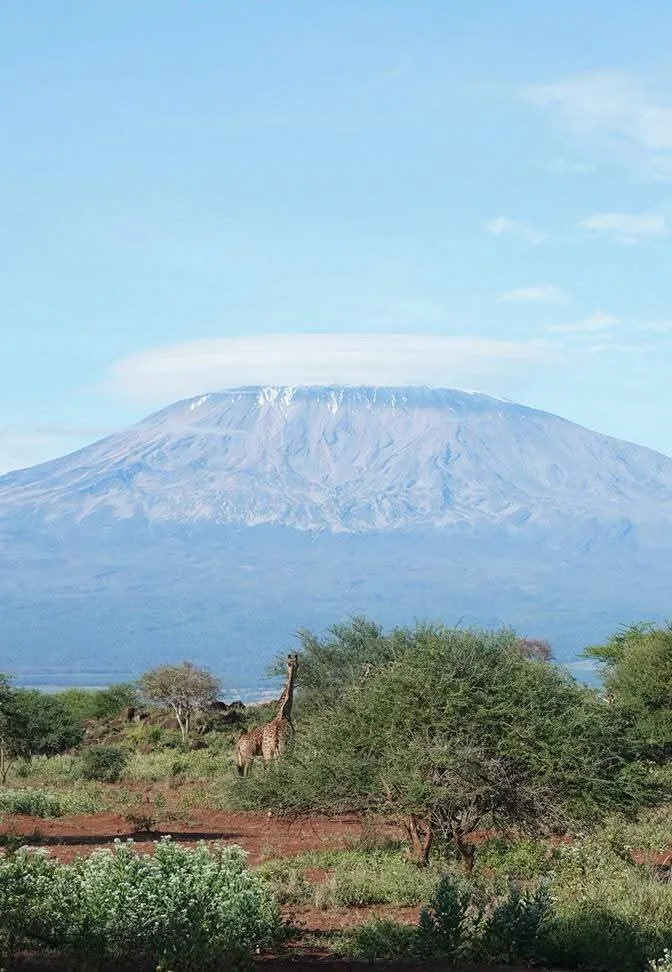
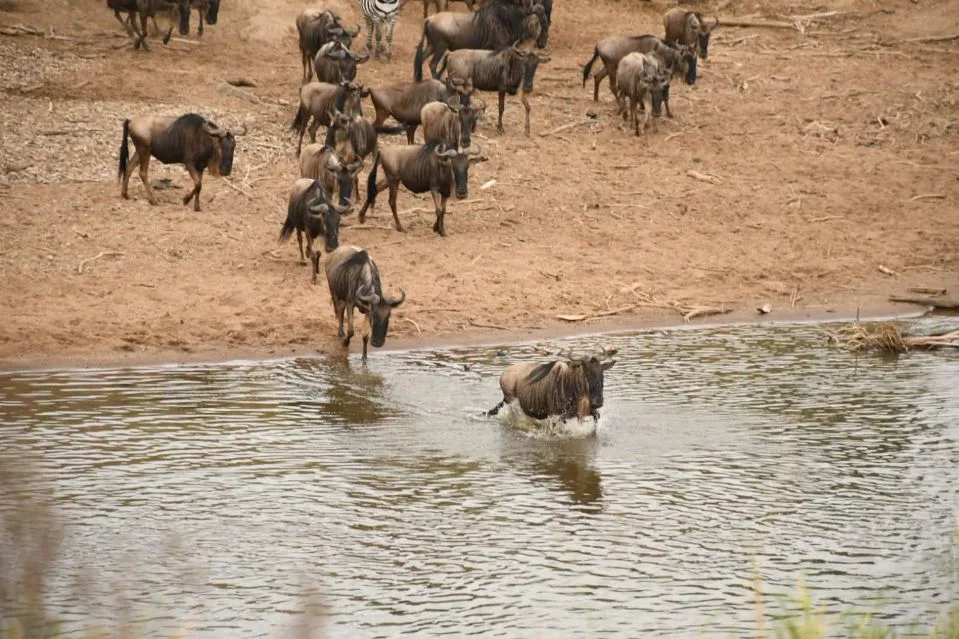
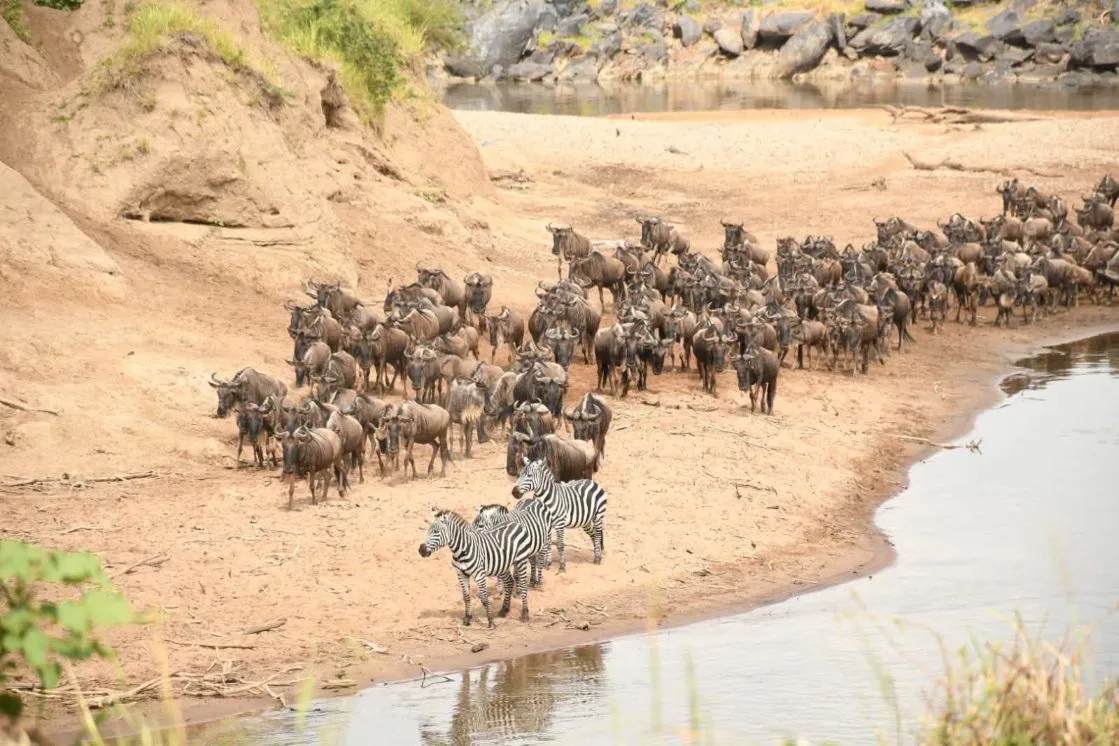
The best time to see the Great Migration in Kenya is generally from July to October, when wildebeest and zebras move through the Masai Mara ecosystem. August and September are popular for possible Mara River crossings, but exact herd locations depend on rainfall, grazing and water levels. Spending four or more nights provides the strongest overall migration experience.
Planning to witness the Great Migration in Kenya? Welcome to your complete 2027- 2028 Great Migration Safari Guide, created by the local safari specialists at East Africa Jungle. Discover the best time to visit the Masai Mara National Reserve, where to witness the spectacular Mara River crossings, the best places to stay, how much a Great Migration safari costs, and which safari itinerary is right for your travel style.
Whether you're planning your first Kenya safari, a family holiday, a luxury fly-in safari, a private wildlife adventure, or a photography expedition, this guide provides everything you need to plan with confidence. You'll also learn when to visit for the best wildlife viewing, compare road and fly-in safaris, explore private versus group tours, and receive practical advice from our experienced Kenya safari specialists.
If you're still comparing options, explore our Kenya Safari Packages, learn about the Best Time to Visit Kenya, or browse our Masai Mara Safari Tours to find the itinerary that best matches your budget, interests and travel dates.
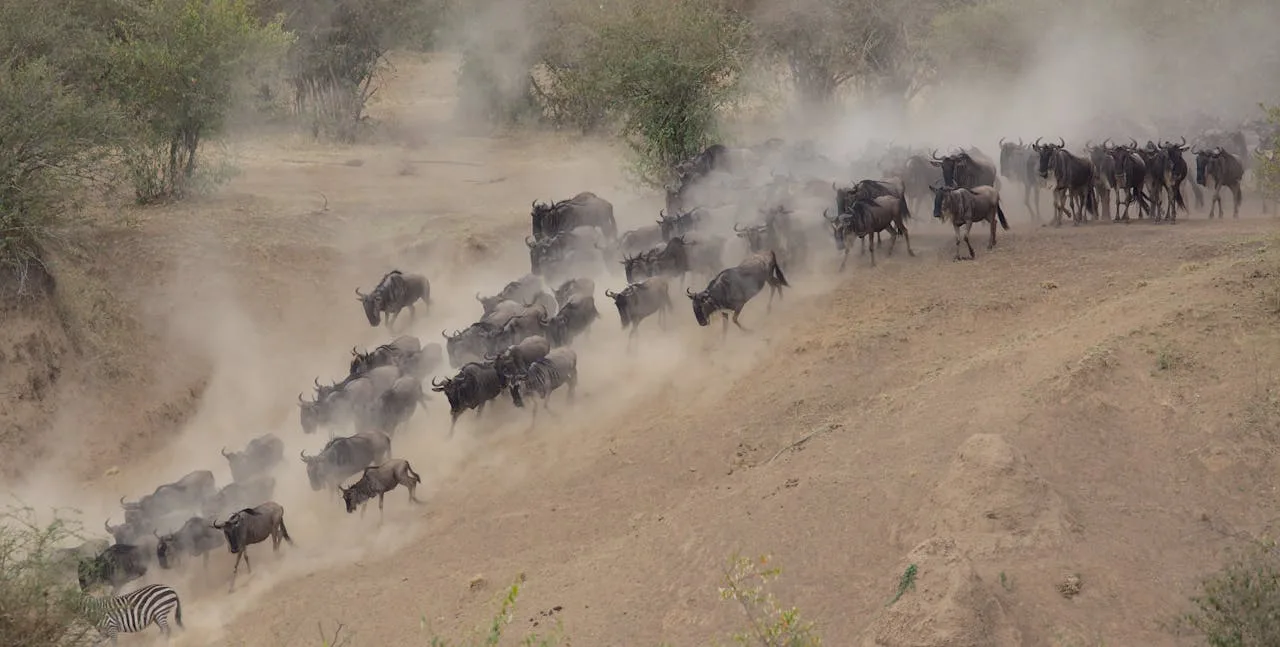
Start planning your Great Migration safari in Kenya (2027 - 2028) with confidence and discover why the annual migration of more than 1.5 million wildebeest, accompanied by hundreds of thousands of zebras and gazelles, is considered one of the world's greatest wildlife spectacles.
| Best Time | July–October |
| Peak River Crossings | August–September |
| Location | Masai Mara National Reserve |
| Safari Duration | 3–8 Days |
| Wildlife | Big Five + Great Migration |
| Best For | Families, Couples, Photographers |
| Safari Types | Private, Group, Luxury & Fly-in |
| Departure | Nairobi |
Why Travel With East Africa Jungle?
- Local Kenya Safari Specialists Since 2014
- Expert Guides with First-Hand Migration Knowledge
- Private 4×4 Land Cruiser & Group Safari Options
- Tailor-Made Great Migration Itineraries
- Flexible Departures Throughout the Migration Season
- Transparent Pricing with No Hidden Costs
Great Migration Kenya 2027 Quick Facts
| Best months | July–October 2027 |
| Peak river crossings | August–September 2027 |
| Best destination | Masai Mara National Reserve |
| Best safari length | 4–6 days |
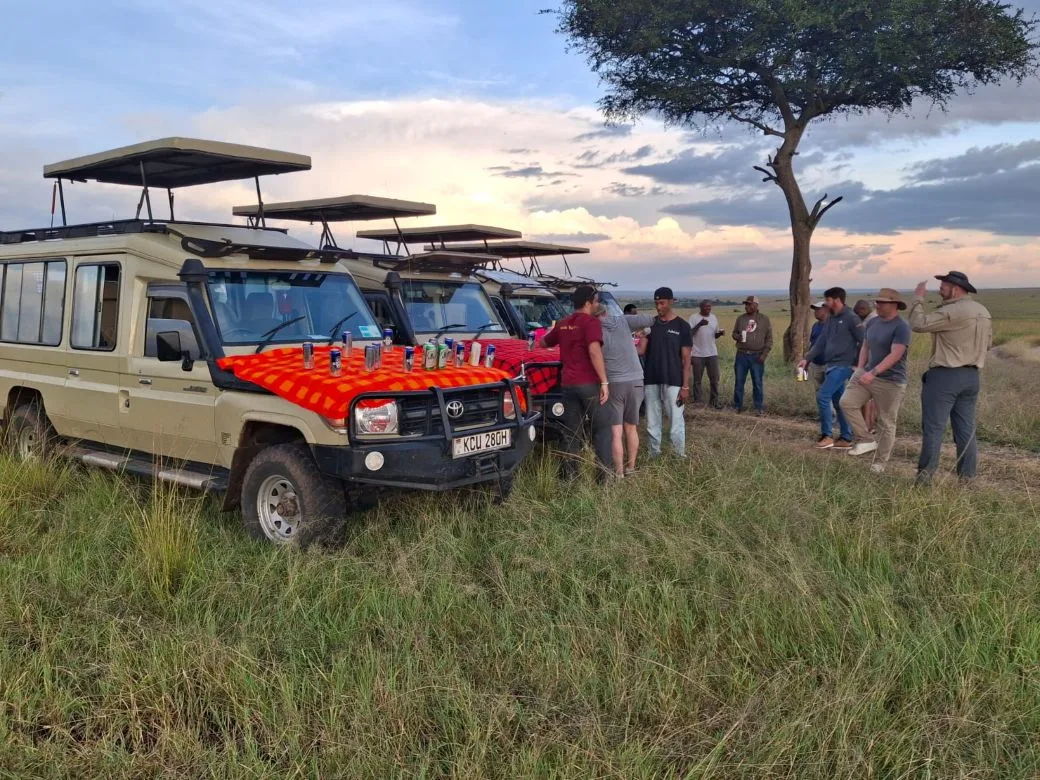
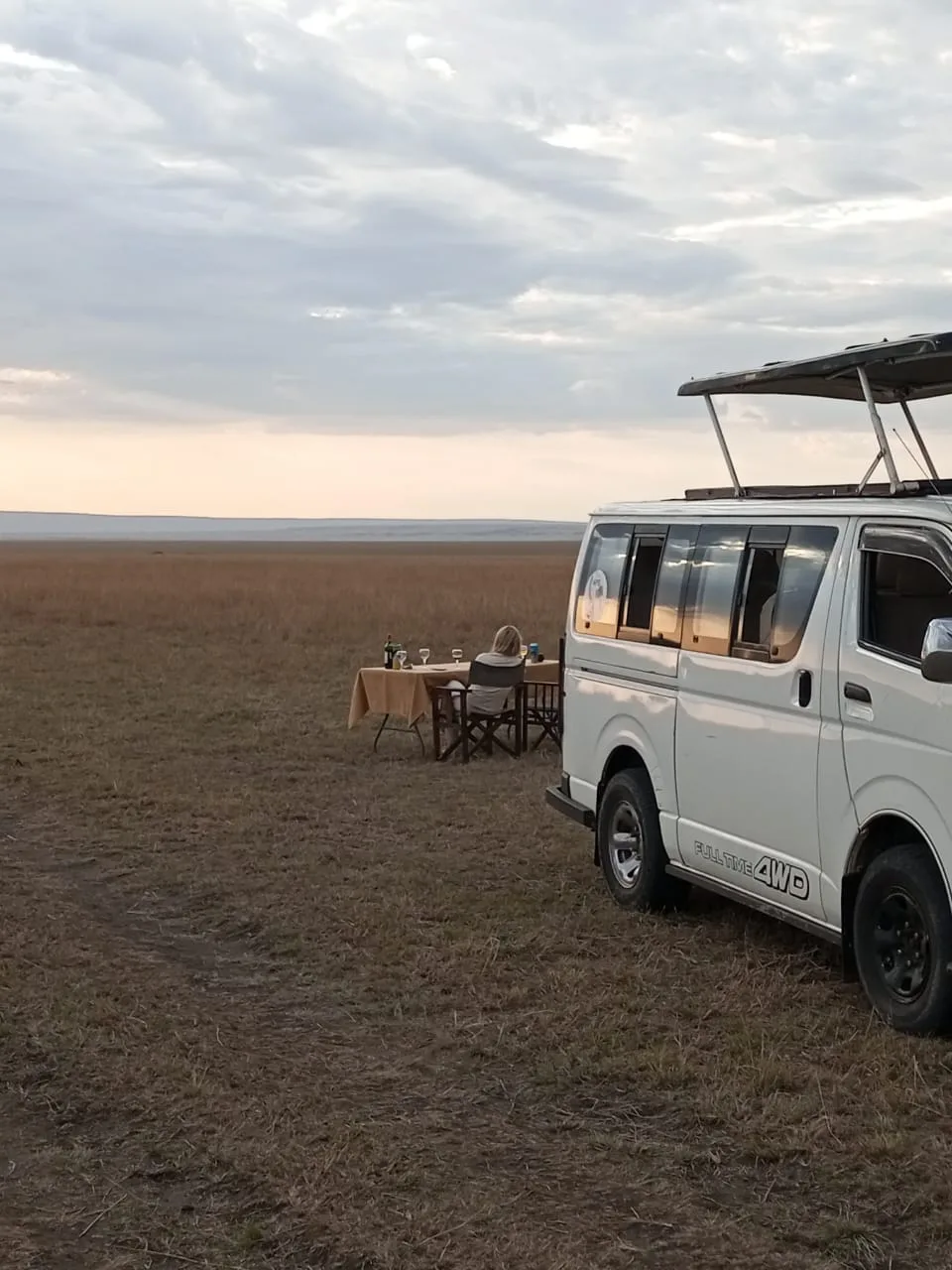
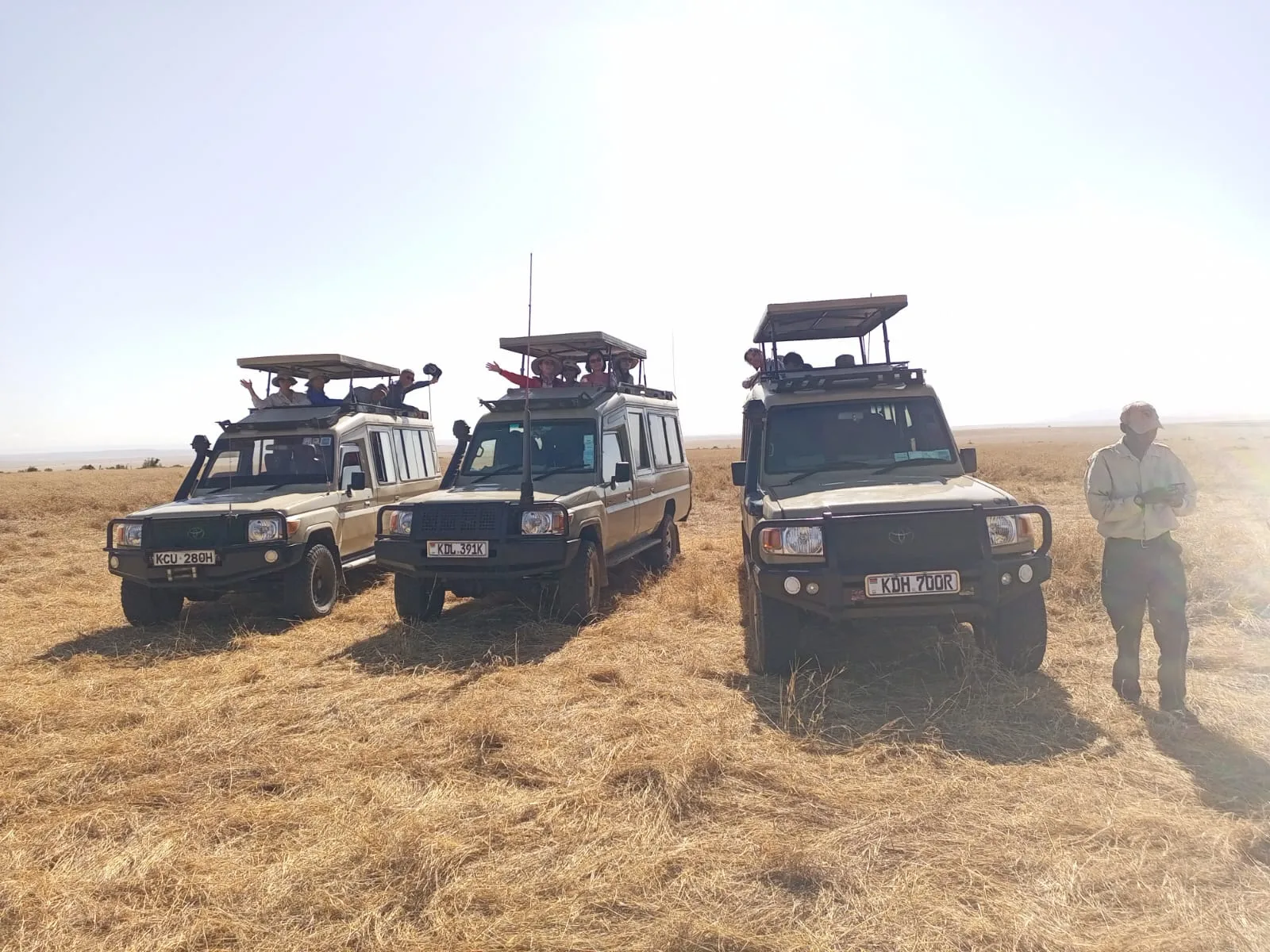
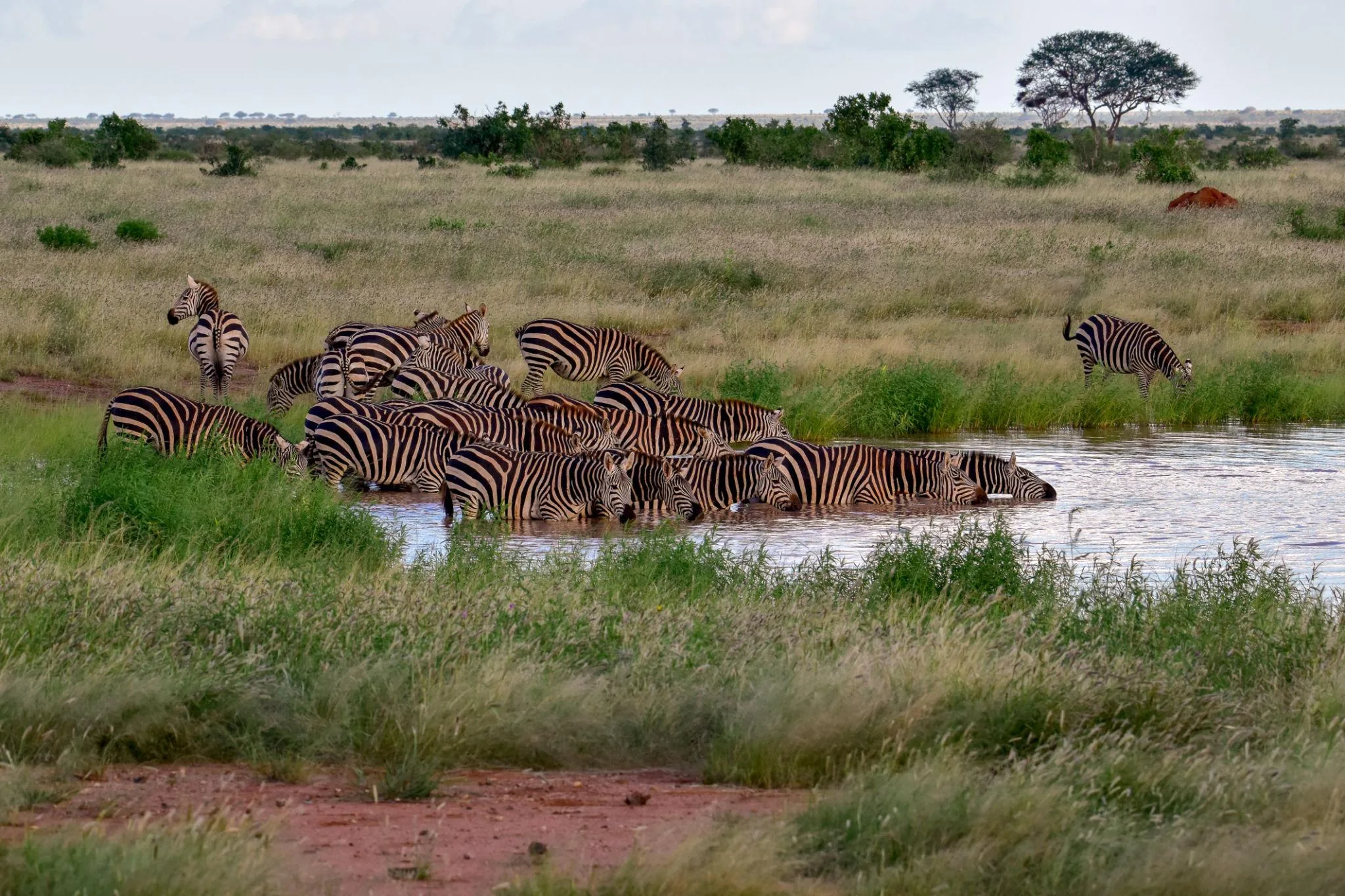
Great Migration in Kenya Gallery
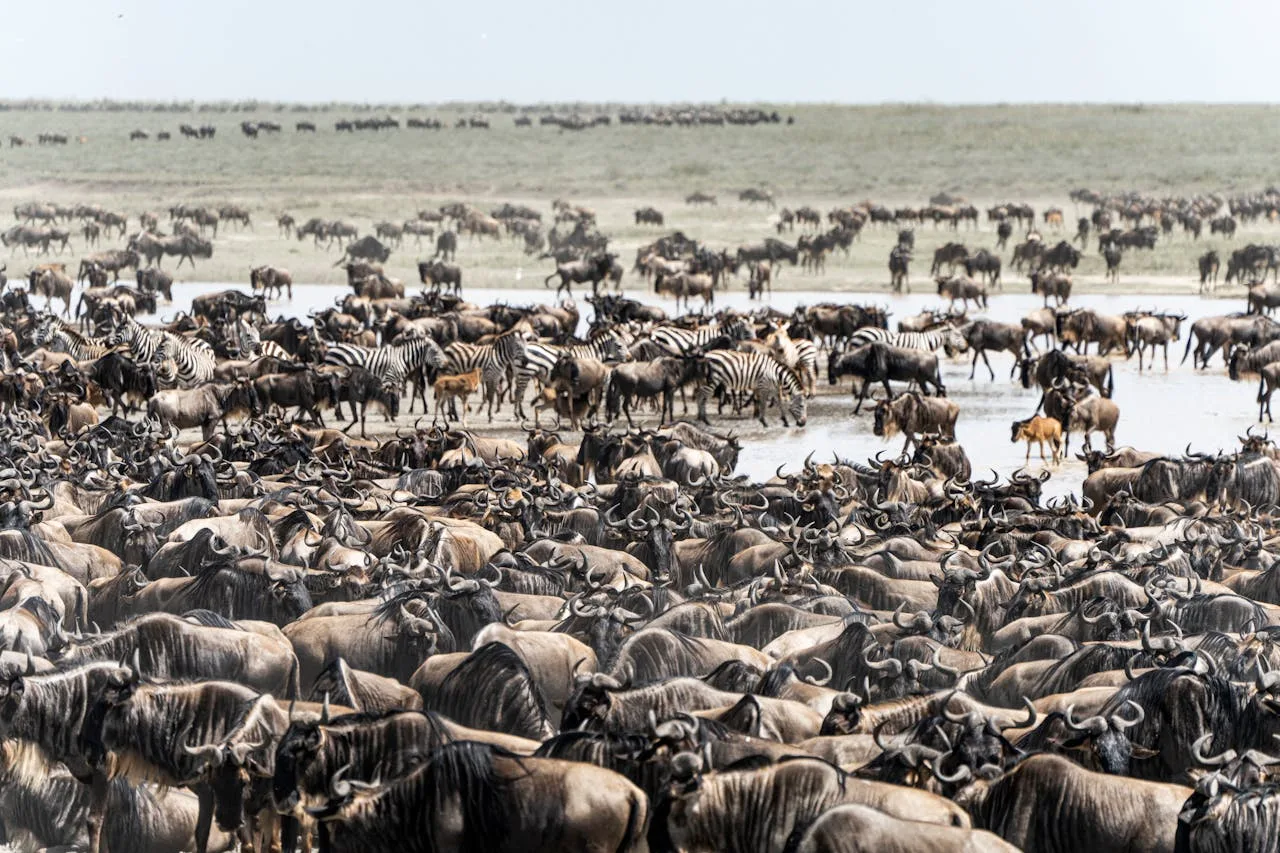
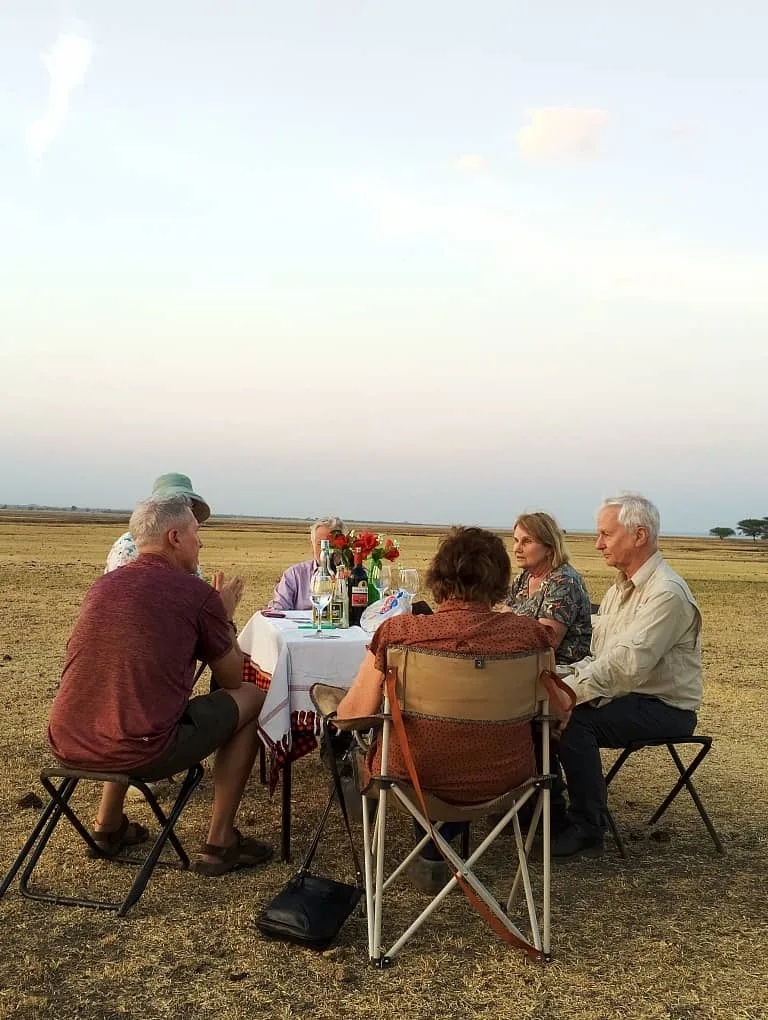
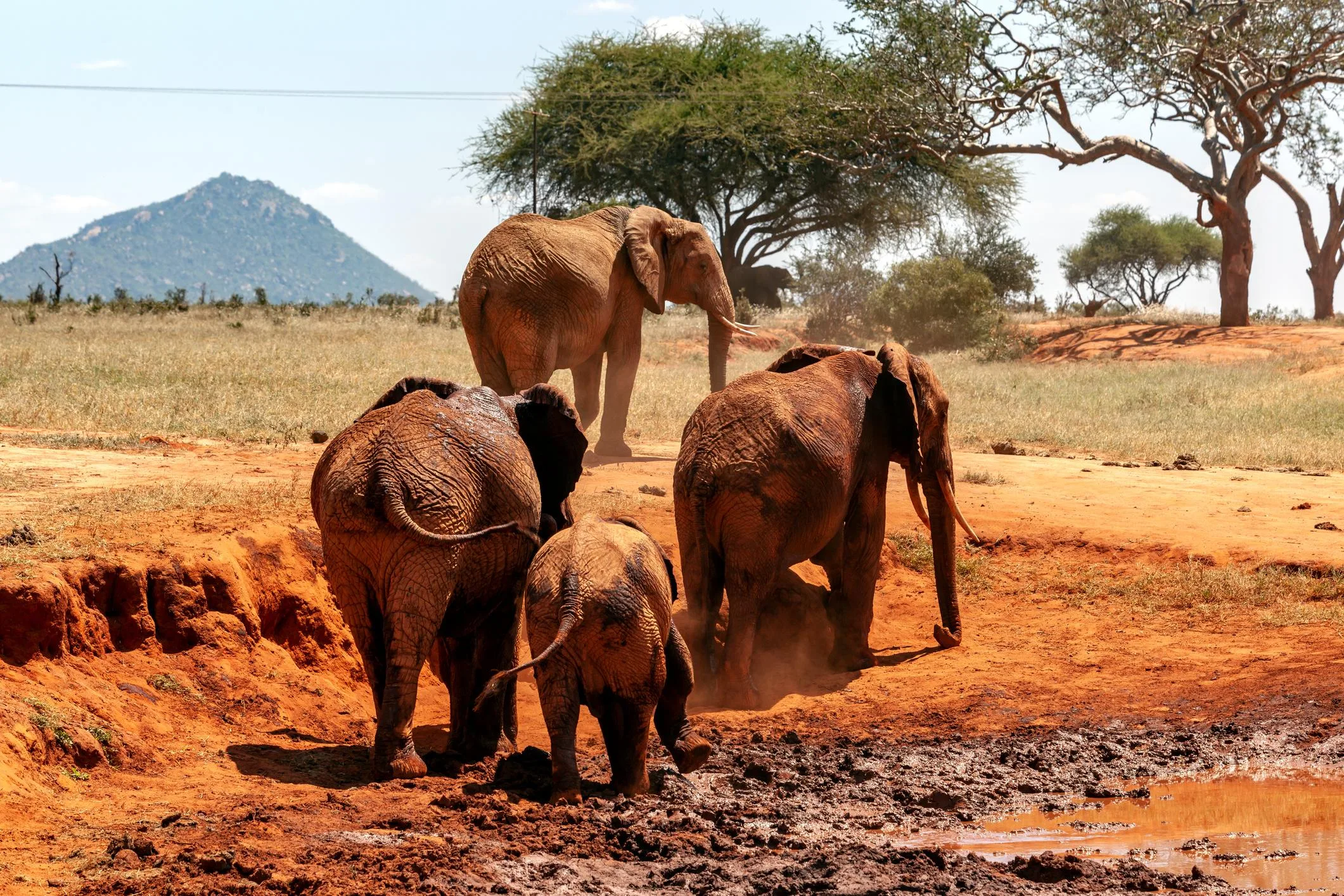
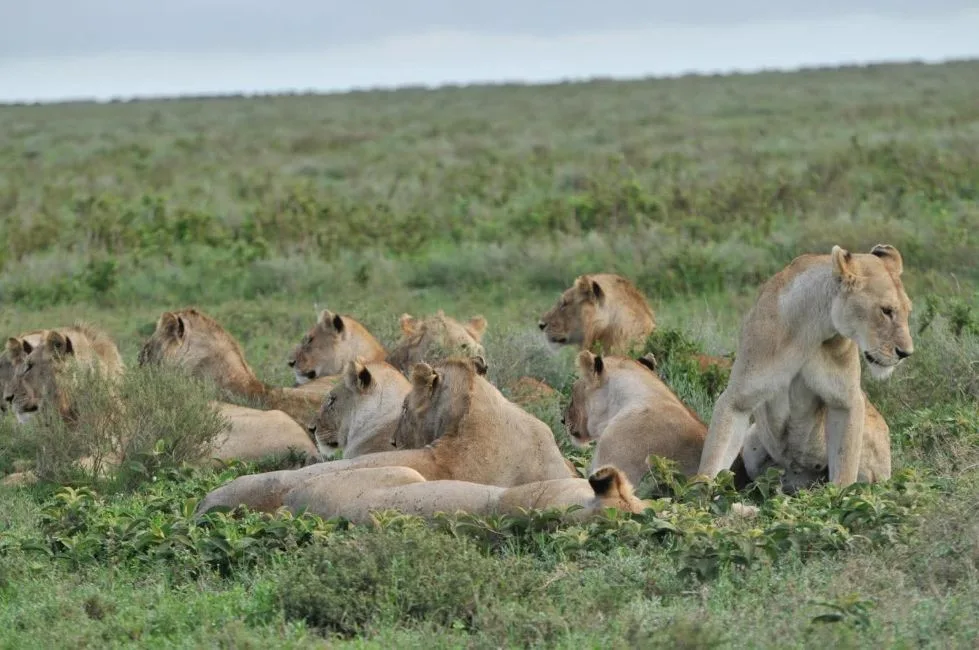
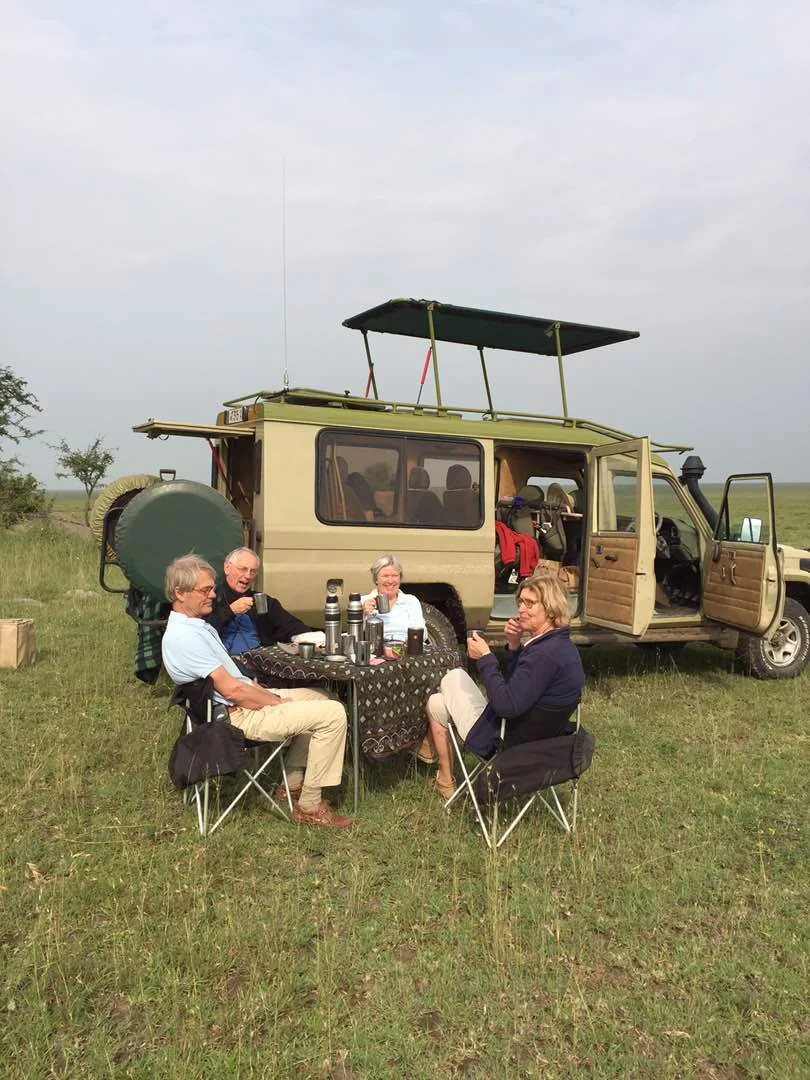
Is 2027 a Good Year for the Great Migration in Kenya?
Yes. 2027 is an excellent year to plan a Great Migration safari in Kenya, particularly between July and October.
Yes. 2027 is an excellent year to plan a Great Migration safari in Kenya, particularly if your priority is seeing large wildebeest herds in the Masai Mara. However, the migration does not follow fixed calendar dates. The movement of wildebeest and zebra depends largely on rainfall, grazing conditions and the availability of fresh grass across the ecosystem.
For travellers planning a Kenya safari in 2027, July to October is generally the safest period for experiencing the migration in the Masai Mara. August and September are especially popular for visitors hoping to witness dramatic Mara River crossings, although crossings are natural events and cannot be guaranteed on specific dates.
Booking early is recommended for July–October 2027, especially for prime-location camps and lodges. If your main goal is the river crossings, allow several days in the Masai Mara rather than planning around a single day.
Expert Safari Insight: Focus on spending more time in the Masai Mara rather than trying to predict an exact crossing date—the wildlife decides the schedule.
Kenya Great Migration Calendar 2027: Month-by-Month Guide
| Month | What happens in the migration | Safari outlook |
|---|---|---|
| January | Large herds are generally in Tanzania's southern Serengeti and Ndutu area. | Lower priority for Kenya migration safaris |
| February | Calving season takes place around the southern Serengeti and Ndutu plains. | Excellent for calving, but not Kenya's main migration season |
| March | Herds begin moving as grazing conditions change. | Good for wider Tanzania migration experiences |
| April | The herds gradually move north following rainfall and fresh grazing. | Kenya migration sightings are still limited |
| May | Large herds continue their northward movement through the Serengeti ecosystem. | Migration is building toward Kenya |
| June | Herds move toward the northern Serengeti and western corridor. | Increasing chance of seeing moving herds |
| July | Herds begin entering or approaching the Masai Mara ecosystem. | Excellent – migration season begins |
| August | Large herds may be spread across the Masai Mara, with river crossings possible. | Peak season – river crossings possible |
| September | Migration activity can remain strong, with crossings possible depending on conditions. | Peak season – excellent wildlife viewing |
| October | Herds gradually begin moving south as rainfall patterns change. | Very good – fewer crowds in some areas |
| November | Many herds continue south toward the Serengeti following the rains. | Migration is moving away from Kenya |
| December | Herds are generally back toward the southern Serengeti and Ndutu region. | Better suited to Tanzania migration safaris |
Best chance of river crossings: August–September
Best strategy: Stay 3–5 nights in the Masai Mara
Great Migration in Kenya Quick Facts (2027–2028)
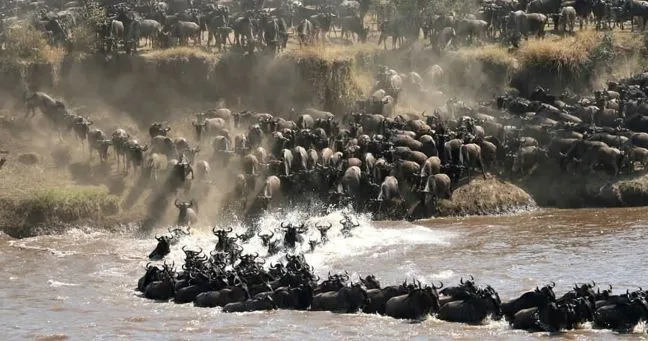
The Great Migration is an annual wildlife movement through the connected Serengeti–Masai Mara ecosystem. Although its general seasonal pattern is predictable, the precise arrival of the herds and timing of Mara River crossings vary according to rainfall, water availability and fresh grazing.
| Great Migration fact | Details |
|---|---|
| Main destination in Kenya | Masai Mara National Reserve |
| Wider migration areas | Mara Triangle, Musiara, Talek and neighbouring conservancies |
| Main Kenya migration season | July to October |
| Most popular months | August and September |
| Best time for possible river crossings | Late July to September |
| Main rivers | Mara River, Talek River and Sand River |
| Main migrating animals | Wildebeest, zebra and Thomson’s gazelle |
| Predators to look for | Lions, cheetahs, leopards, hyenas and Nile crocodiles |
| Recommended stay | At least 4 nights; ideally 5–7 nights |
| Best safari vehicle | Private 4×4 Land Cruiser with a pop-up roof |
| Best game-drive times | Early morning, late afternoon and full-day migration drives |
| Can crossings be guaranteed? | No. Timing and location are controlled by natural conditions |
| Best for | Wildlife enthusiasts, photographers, families, couples and first-time visitors |
| Booking recommendation | Reserve peak-season camps 6–12 months in advance |
Great Migration Month-by-Month Calendar for Kenya (2026–2028)
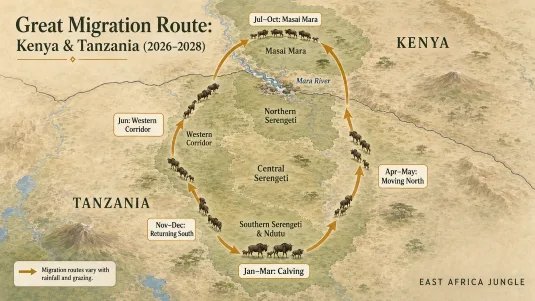
The Great Migration is a continuous, year-round journey rather than a single event. Over 1.5 million wildebeest, accompanied by hundreds of thousands of zebras and Thomson's gazelles, follow seasonal rainfall in search of fresh grazing across the Serengeti-Mara ecosystem. While the exact timing varies slightly each year depending on rainfall, the general migration pattern remains remarkably consistent.
If your goal is to witness the famous Mara River crossings, the best time to visit Kenya is from July to October, when the herds occupy the Masai Mara. However, every month offers a unique wildlife experience, from the calving season in southern Serengeti to predator-filled river crossings and the long journey back south.
| Month | Typical herd location | Main experience | Kenya relevance |
|---|---|---|---|
| January | Southern Serengeti and Ndutu | Calving begins | Not normally in Kenya |
| February | Ndutu region | Peak calving and predators | Not normally in Kenya |
| March | Southern Serengeti | Calving herds begin dispersing | Not normally in Kenya |
| April | Central Serengeti | Green-season movement | Not normally in Kenya |
| May | Western and central Serengeti | Herds move northwest | Not normally in Kenya |
| June | Western and northern Serengeti | Grumeti and northward movement | Early planning period |
| July | Northern Serengeti and Masai Mara | Possible Mara crossings | Kenya season begins |
| August | Masai Mara and northern Serengeti | Major herd concentrations | Peak Kenya period |
| September | Masai Mara | Crossings and predators | Excellent Kenya period |
| October | Masai Mara and northern Serengeti | Late-season crossings | Very good Kenya period |
| November | Moving south through Serengeti | Return migration | Most herds leave Kenya |
| December | Central and southern Serengeti | Southward movement | Not normally in Kenya |
Migration locations are approximate. Rainfall, grazing and water availability influence the timing and route each year.
July – The First Major Herds Reach Kenya
July usually marks the arrival of the first major wildebeest and zebra herds in the Masai Mara. Migration activity generally increases later in the month, with possible Mara River crossings and growing predator activity.
Best for: Early-season safaris, photographers and travellers avoiding August’s larger crowds.
August – Peak Migration and Mara River Activity
August is a peak migration month, with large herds gathering near the Mara River and spreading across the Masai Mara plains. River crossings remain unpredictable, while demand, prices and visitor numbers are at their highest.
Best for: River-crossing opportunities, families, honeymooners and wildlife photographers.
September – Large Herds and Predator Viewing
Large migration herds often remain across the Masai Mara in September, with possible river crossings and excellent lion, cheetah, leopard and hyena sightings. Wildlife viewing remains exceptional, with slightly fewer visitors in some areas than in August.
Best for: Big-cat enthusiasts, photographers, couples and returning safari travellers.
October – Late Migration and Fewer Visitors
Migration herds may remain in the Masai Mara during early October before gradually moving south towards Tanzania. Wildlife viewing remains excellent, with fewer vehicles and potentially better accommodation availability.
Best for: Couples, photographers and travellers seeking strong wildlife viewing with fewer crowds.
Which Month Is Best for the Great Migration in Kenya?
August and September generally provide the strongest overall opportunity to see large migration herds in the Masai Mara. Late July is suitable for early migration activity, while October can offer excellent wildlife viewing with fewer visitors.
| Travel month | Main advantage | Important consideration |
|---|---|---|
| July | Early herd arrivals and greener scenery | Early July can be unpredictable |
| August | Strong potential for migration and river activity | Highest demand and more vehicles |
| September | Large herds and excellent predator viewing | Camps remain busy and rates are high |
| October | Fewer visitors and strong resident wildlife | Herds may begin moving south |
No month, lodge or safari guide can guarantee a Mara River crossing. For the best overall experience, spend at least four nights in the Masai Mara and allow your guide to respond to current herd movements rather than planning every game drive around one river location.
Best Places to Witness the Great Migration in Kenya (2026–2028)
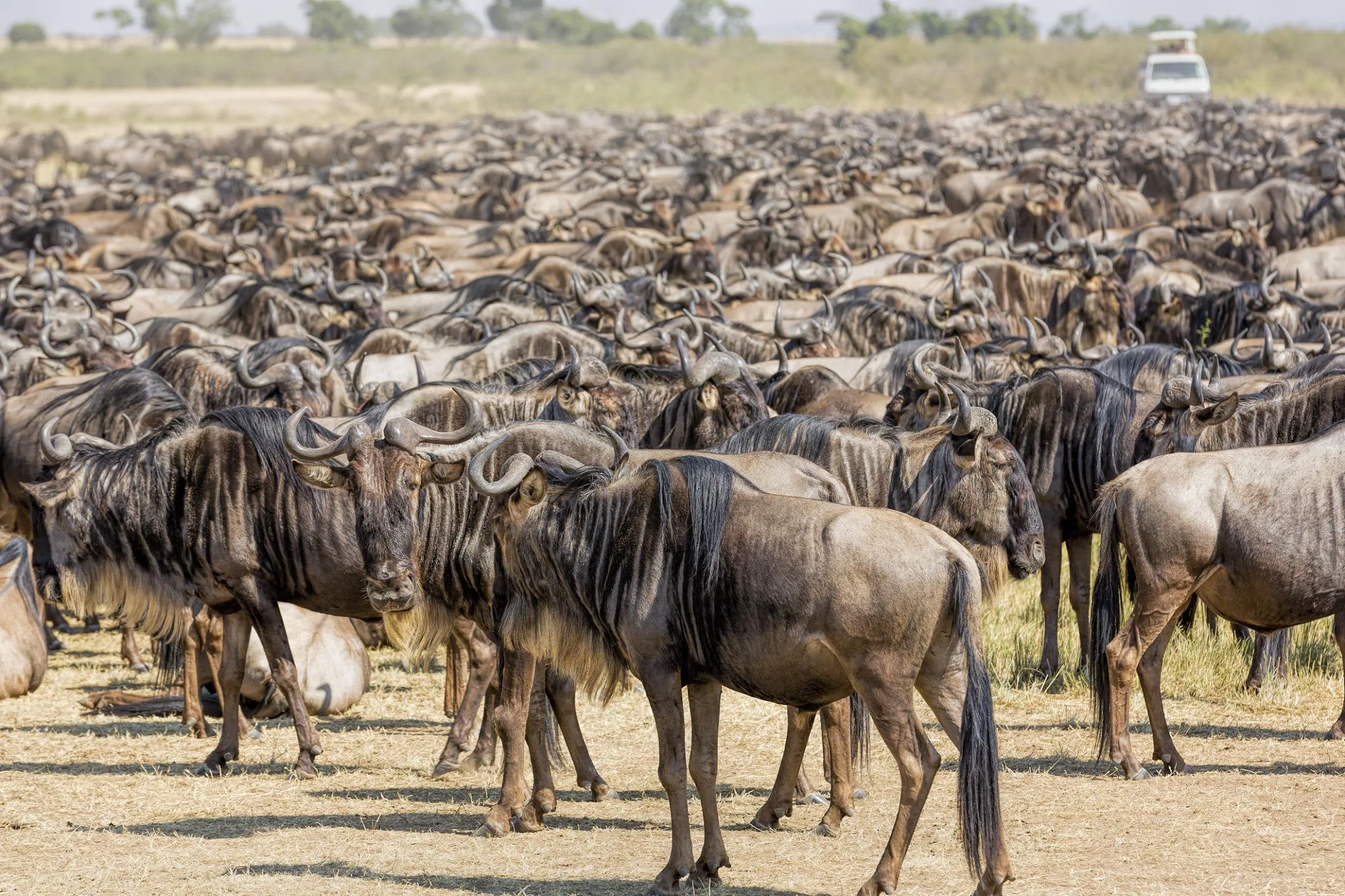
The best places to witness the Great Migration in Kenya are found across the Masai Mara National Reserve and its neighbouring conservancies. Each area offers a different experience, from possible Mara River crossings and big-cat sightings to affordable camps, luxury accommodation and quieter game drives. Because herd movements depend on rainfall, water and grazing, no location can guarantee a river crossing.
| Masai Mara area | Best known for | River-crossing access | Vehicle levels | Best suited to |
|---|---|---|---|---|
| Masai Mara National Reserve | Migration herds, Big Five and varied landscapes | Very good | Moderate to high | First-time visitors and families |
| Mara Triangle | Mara River crossings and photography | Excellent | Moderate | Migration-focused travellers and photographers |
| Musiara Area | Big cats, marshland and river access | Very good | Moderate to high | Big-cat enthusiasts and photographers |
| Talek Region | Accommodation choice and affordability | Moderate | High | Budget and mid-range travellers |
| Mara North Conservancy | Luxury camps and exclusive game viewing | Limited | Low | Couples, honeymooners and luxury travellers |
| Olare Motorogi Conservancy | Predator sightings and privacy | Limited | Very low | Photographers and premium travellers |
| Naboisho Conservancy | Night drives and guided walks | Limited | Low | Families, couples and repeat visitors |
Compare Our Great Migration Safari Packages in Kenya (2027–2028)
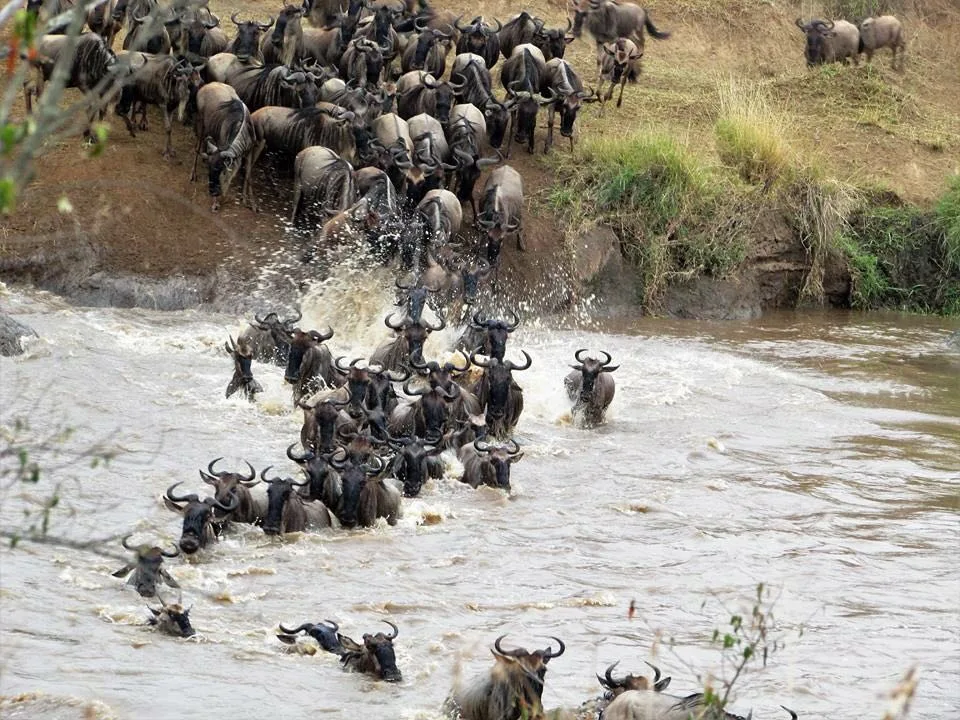
Choose from short Masai Mara safaris, longer migration itineraries, family adventures and luxury experiences. For the best balance of travel and wildlife viewing, we recommend spending at least three nights in the Masai Mara. River crossings cannot be guaranteed because herd movements depend on rainfall, grazing and animal behaviour.
| Safari package | Duration | Main destinations | Best suited to |
|---|---|---|---|
| Masai Mara Budget Safari | 3 days / 2 nights | Masai Mara | Short visits and budget travellers |
| Great Migration Safari in Kenya | 4 days / 3 nights | Masai Mara | Best short migration-focused safari |
| Kenya Migration Tour | 5 days / 4 nights | Masai Mara and Lake Nakuru | Migration, Big Five and rhinos |
| Masai Mara Luxury Safari | 5 days / 4 nights | Masai Mara | Couples, honeymooners and photographers |
| Kenya Family Safari | 6 days / 5 nights | Selected Kenya parks and Masai Mara | Families and multigenerational groups |
| Kenya Safari and Diani Beach | 7 days / 6 nights | Masai Mara and Diani Beach | Safari and beach travellers |
A three-day safari is suitable for travellers with limited time, while four or five days provide more game drives and flexibility to follow current herd movements. Families should consider five or six days, while photographers and honeymooners benefit from a private or luxury safari with at least four nights in the Masai Mara.
Our Recommended Great Migration Itinerary
For most travellers, we recommend a five-day safari with four nights in the Masai Mara. This provides enough time to explore different wildlife areas, follow migration activity and search for the Big Five without rushing or changing camps unnecessarily.
Important Booking Information
Book approximately 6–12 months ahead for travel in August or September. Confirm the accommodation, number of Masai Mara nights, vehicle type, park fees, meals and transfers before paying a deposit. Migration sightings depend on natural conditions, and no operator can guarantee a Mara River crossing.
Where to Stay During the Great Migration in Kenya (2027–2028)
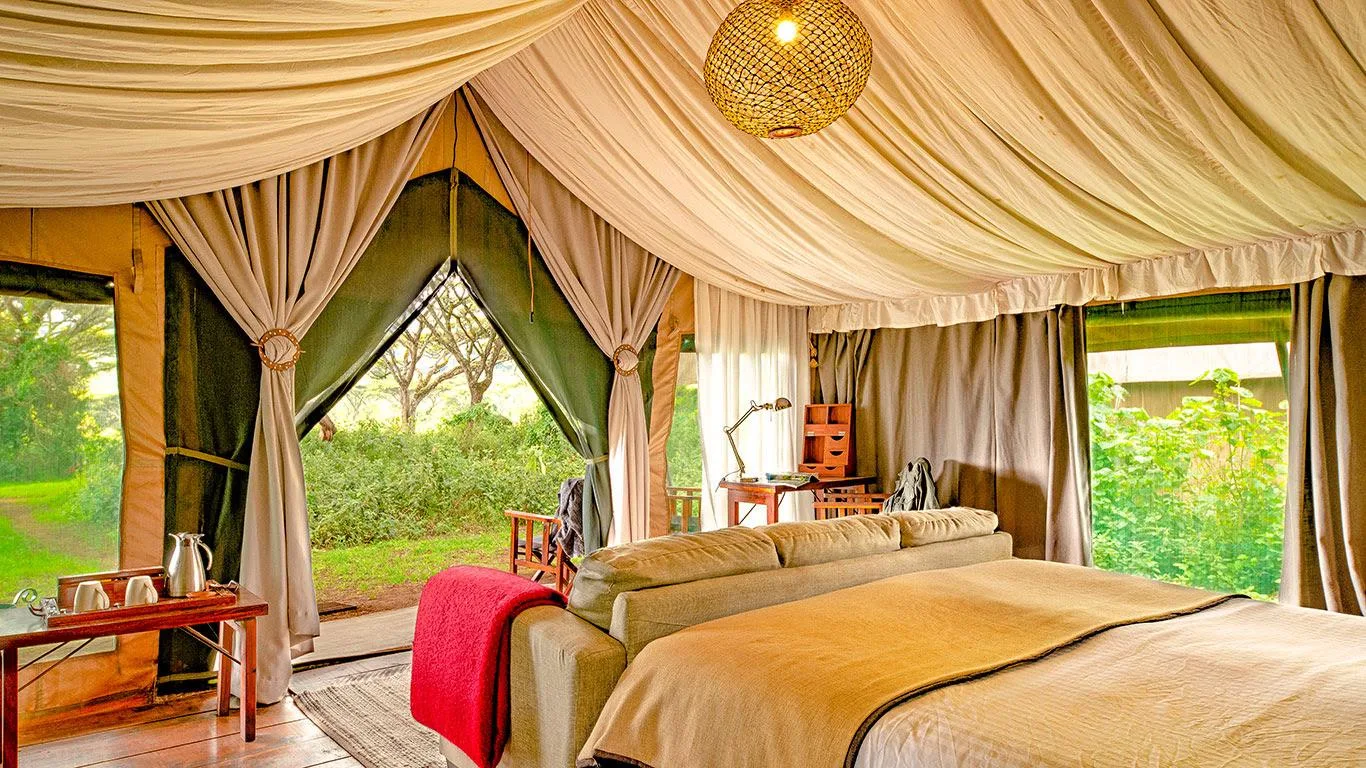
Choosing the right accommodation during the Great Migration is mainly about location, not simply luxury level. Camps inside the Masai Mara National Reserve or near the Mara River can reduce travel time to migration areas, while private conservancies provide quieter game drives and additional activities. No camp can guarantee a river crossing because herd movements depend on rainfall, water and fresh grazing.
Compare Great Migration Accommodation Options
| Accommodation level | What to expect | Examples | Best suited to |
|---|---|---|---|
| Budget | Simple permanent tents, essential facilities, full-board meals and accommodation near reserve gates | Enkorok Mara Camp, Miti Mingi Eco Camp or similar | Groups, solo travellers and budget safaris |
| Mid-range | Comfortable en-suite rooms or tents, reliable facilities and convenient reserve access | Mara Sopa Lodge, Fig Tree Camp, Ashnil Mara Camp or similar | Couples, families and first-time visitors |
| Luxury | Spacious tents or lodge rooms, refined dining, personalised service and premium locations | Mara Serena Safari Lodge, Mara Ngenche Safari Camp or similar | Honeymooners, photographers and luxury travellers |
| Ultra-luxury | Exclusive suites, private guiding, premium dining and highly personalised service | Selected camps in Mara North, Olare Motorogi and Naboisho | Special occasions and private high-end safaris |
Budget Camps
Budget camps provide simple, comfortable accommodation, generally near Talek, Sekenani or other reserve gates. They are suitable for travellers who want to prioritise game drives over luxury facilities. Confirm the distance from the gate because longer daily transfers can reduce wildlife-viewing time.
Mid-Range Camps and Lodges
Mid-range properties offer the best balance of comfort, location and value. Most provide en-suite accommodation, full-board meals and reliable electricity. This category is particularly suitable for couples and families spending three or four nights in the Masai Mara.
Luxury Tented Camps and Lodges
Luxury camps provide larger rooms or tented suites, attentive service and carefully selected wildlife locations. Properties around Musiara, the Mara Triangle and the Mara River are especially popular during migration season because they may reduce driving time to productive areas.
Ultra-Luxury Conservancy Camps
Ultra-luxury camps are primarily located in private conservancies such as Mara North, Olare Motorogi and Naboisho. They offer fewer vehicles, personalised guiding and activities such as night drives, guided walks and sundowners where permitted. These conservancies are not the main locations for Mara River crossings, so consider combining them with a stay inside the national reserve.
Inside or Outside the Masai Mara Reserve?
| Consideration | Inside the reserve | Outside the reserve |
|---|---|---|
| Access to wildlife areas | Faster morning access | Gate entry may add travel time |
| Mara River access | Often better, depending on location | Longer drives may be required |
| Accommodation cost | Generally higher | More affordable choices |
| Available categories | Mid-range to ultra-luxury | Budget to luxury |
| Best suited to | Migration-focused safaris and photographers | Groups and value-conscious travellers |
National Reserve or Private Conservancy?
Choose the Masai Mara National Reserve or Mara Triangle if your main priorities are migration herds and possible Mara River crossings.
Choose a private conservancy if you prefer fewer vehicles, exclusive camps, night drives and guided walks. Travellers with five or more nights can combine both experiences.
Our Accommodation Recommendation
For a three- or four-night safari, stay in one well-positioned camp rather than changing accommodation. This preserves valuable game-drive time.
For a five- to seven-night safari, spend three or four nights inside the reserve or Mara Triangle, followed by two or three nights in Mara North, Olare Motorogi or Naboisho.
All named camps are examples. Final accommodation should be confirmed according to availability, location, current service standards and your travel budget.
How Much Does a Great Migration Safari in Kenya Cost? (2027–2028)
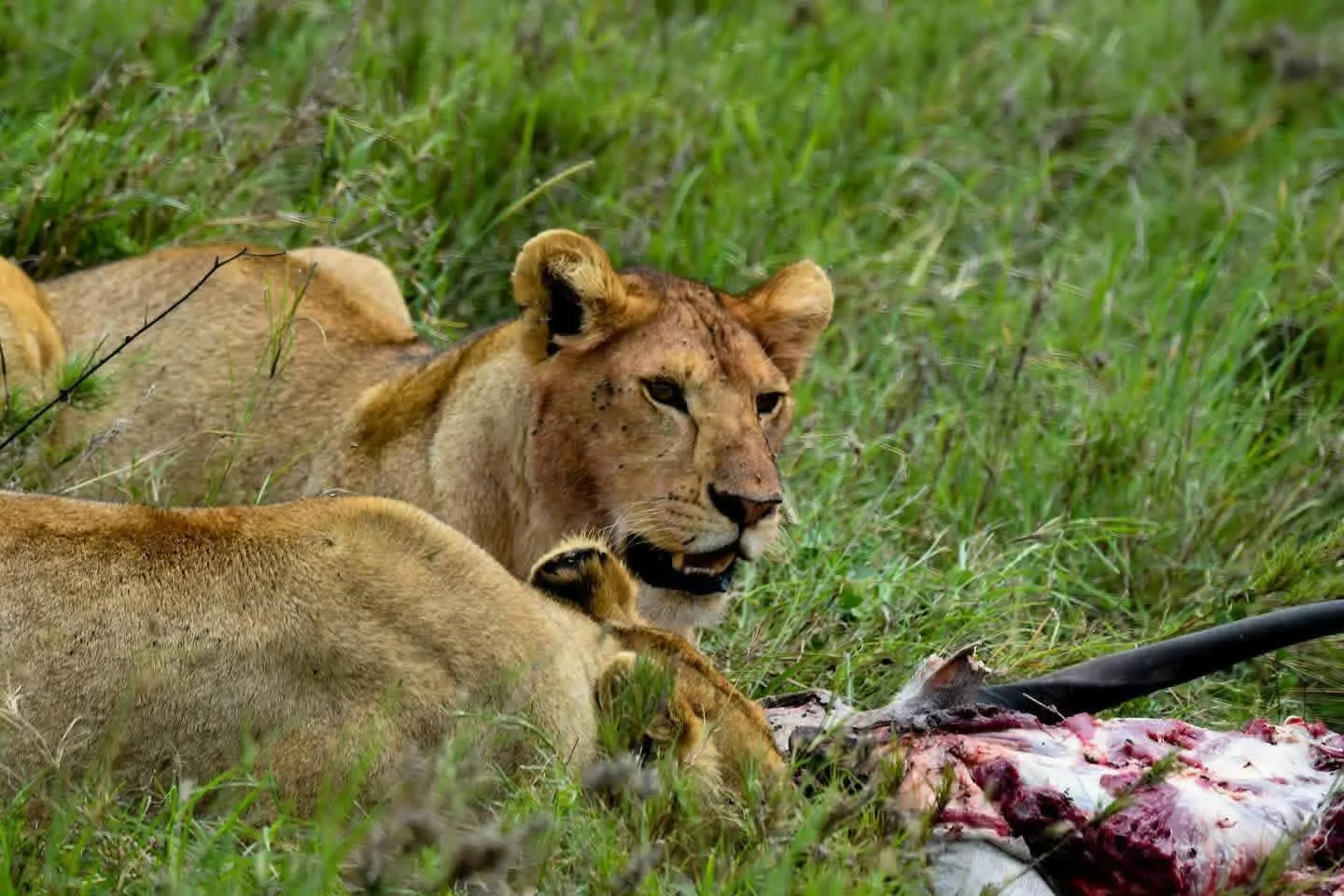
A Great Migration safari in Kenya typically costs between USD 700 and USD 1,500 per person for a short group safari, while private mid-range packages generally range from USD 1,800 to USD 3,500 per person. Luxury and fly-in safaris may cost between USD 3,000 and USD 8,000 or more per person. Prices vary according to safari duration, travel month, group size, accommodation location, park fees and transport type.
Great Migration Safari Price Comparison
| Safari style | Typical duration | Estimated price per person | Best suited to |
|---|---|---|---|
| Budget group safari | 3–4 days | USD 700–1,500 | Solo travellers, friends and budget travellers |
| Private budget safari | 3–4 days | USD 1,200–2,000 | Couples and small private groups |
| Private mid-range safari | 4–5 days | USD 1,800–3,500 | Families, couples and first-time visitors |
| Private luxury safari | 4–5 days | USD 2,800–5,500 | Honeymooners and comfort-focused travellers |
| Luxury fly-in safari | 4–6 days | USD 3,500–7,500 | Short holidays and travellers avoiding long road transfers |
| Ultra-luxury safari | 4–7 days | USD 6,000–12,000+ | Special occasions, VIP travellers and exclusive safaris |
Road Safari vs Fly-In Safari for the Great Migration (2027–2028)
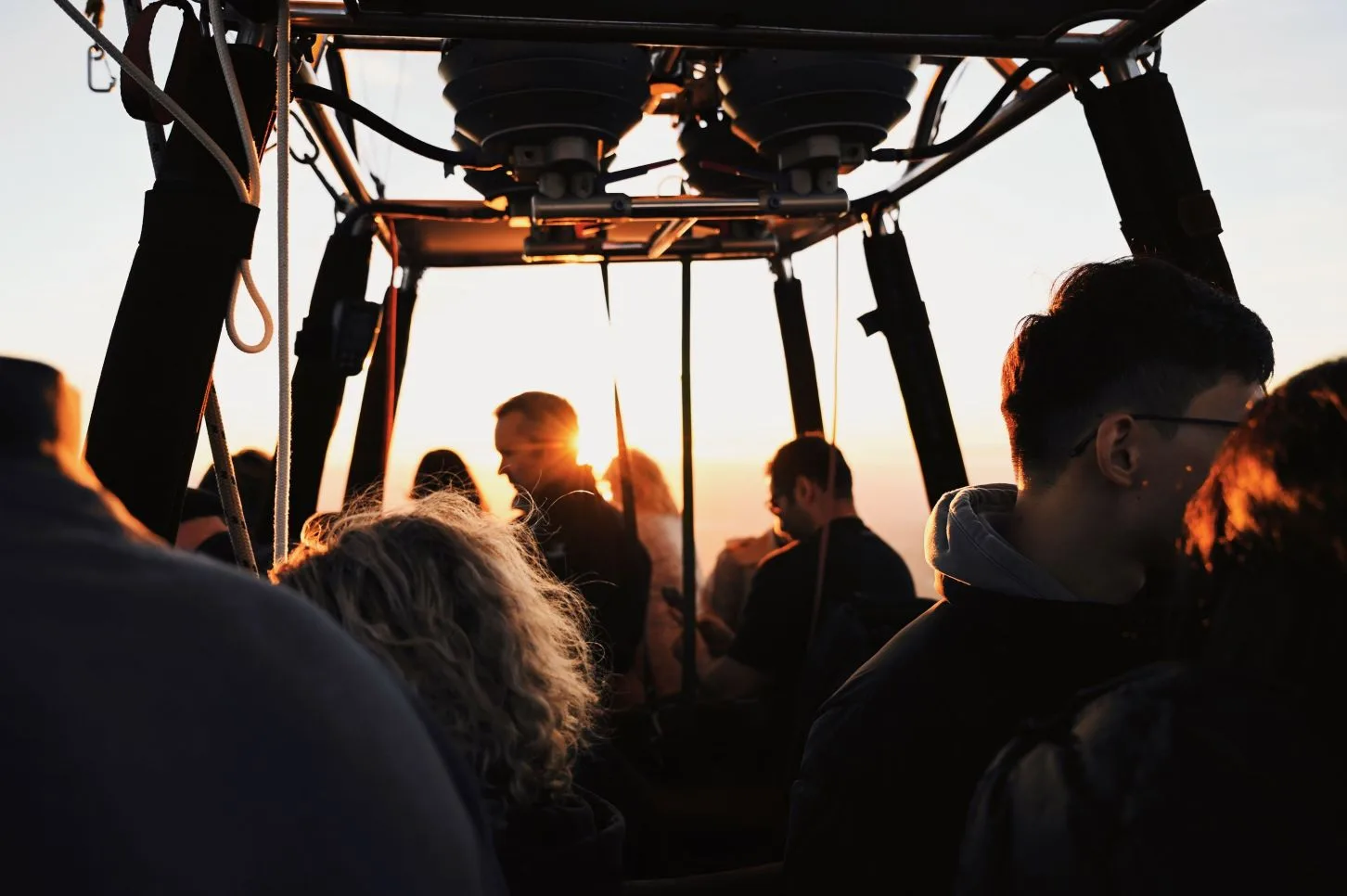
Travellers can reach the Masai Mara from Nairobi by road or scheduled flight. A road safari is more affordable and works well for itineraries combining several Kenyan parks, while a fly-in safari reduces transfer time and provides faster access to the Masai Mara. The best option depends on your budget, available time, comfort preferences and overall route.
| Feature | Road safari | Fly-in safari |
|---|---|---|
| Travel time from Nairobi | Approximately 5–6 hours | Approximately 45–60 minutes |
| Typical departure point | Nairobi hotel or airport | Wilson Airport, Nairobi |
| Cost | More affordable | More expensive |
| Safari vehicle | Usually one vehicle throughout the tour | Camp vehicle or private vehicle arranged in the Mara |
| Luggage allowance | More flexible | Usually about 15 kg in a soft-sided bag |
| Scenery | Great Rift Valley and Kenyan countryside | Aerial views and faster travel |
| Flexibility | Easy to combine several parks | Best for direct Masai Mara access |
| Recommended duration | 4–10 days | 3–7 days |
| Best suited to | Families, groups and first-time visitors | Couples, honeymooners and luxury travellers |
Private vs Group Great Migration Safari (2027–2028)
Responsible Wildlife Viewing During the Great Migration
Responsible wildlife viewing protects migrating animals, preserves the Masai Mara ecosystem and creates a safer experience for visitors. Always follow your guide’s instructions and respect the regulations established by reserve and conservancy management.
-
Maintain a safe viewing distance.
Approaching animals too closely can cause stress, interrupt natural behaviour and create unsafe situations. -
Do not block wildebeest approaching the river.
Vehicles should leave clear access to the riverbanks and avoid surrounding herds or restricting their movement. -
Keep noise to a minimum.
Speak quietly, avoid loud music and allow wildlife to behave naturally without unnecessary disturbance. -
Remain inside the vehicle.
Do not leave the vehicle except at designated areas or when your guide confirms that it is permitted. -
Never feed wildlife.
Feeding animals changes their natural behaviour, creates dependence on people and can endanger both wildlife and visitors. -
Follow designated tracks and reserve rules.
Unauthorised off-road driving can damage vegetation, disturb wildlife and contribute to soil erosion. -
Respect Maasai communities and private property.
Ask permission before photographing people, follow local guidance and use authorised community visits.
Why Responsible Migration Viewing Matters
Poor vehicle positioning, noise and overcrowding can disrupt animals approaching the Mara River and interfere with natural movement. Ethical game viewing gives wildlife space, improves the quality of sightings and helps protect the migration for future generations.
The Mara Conservancy’s migration-viewing guidance advises visitors to remain inside their vehicles, avoid excessive noise and never approach or block crossing animals. A responsible guide will always prioritise wildlife welfare over reaching the closest possible viewing position.
What Our Safari Guides Look for During Migration Game Drives
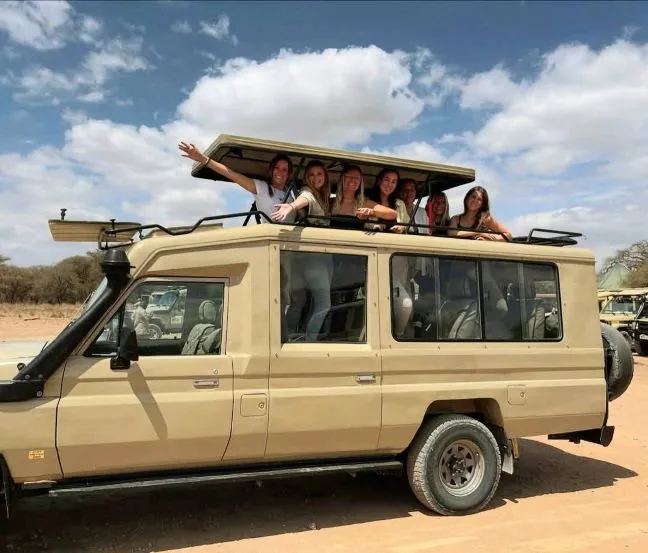
Great Migration Photography Guide (2027–2028)
Expert Travel Tips from Our Kenya Safari Specialists
Why Book Your Great Migration Safari With East Africa Jungle?
Plan Your Great Migration Safari in Kenya
Share your preferred travel dates, group size, budget and accommodation level with our local safari team. We will recommend the most suitable Masai Mara area, safari duration and transport option based on your interests and the typical migration conditions for your travel month.
Whether you are planning a private safari, family holiday, photography tour, honeymoon or luxury fly-in experience, we can customise the itinerary around your available time and preferred travel style.
WhatsApp: +254 728 567 308
Email: sales@eastafricajungle.com
Related Kenya Safari Guides
Continue planning your adventure with our expert Kenya travel guides. These resources will help you choose the best safari, understand the Great Migration, compare destinations and prepare for an unforgettable wildlife experience in 2027 - 2028 .
| Travel Guide | Why Read It? |
|---|---|
| Kenya Safari Packages (2027 - 2028) | Compare our most popular Kenya safari itineraries by duration, budget and travel style. |
| Best Time to Visit Kenya | Discover the ideal months for wildlife viewing, the Great Migration and different safari experiences. |
| Masai Mara Safari Guide | Learn everything you need to know about Kenya's most famous wildlife destination. |
| Masai Mara River Crossings Guide | Find out where and when to witness the spectacular Mara River crossings. |
| Great Migration Calendar (Month by Month) | Follow the movement of the migration throughout the year across Kenya and Tanzania. |
| Kenya Safari Cost Guide | Understand safari prices, what's included and how to budget for your trip. |
| Private vs Group Kenya Safaris | Compare private and group safaris to find the best option for your travel style. |
| Road Safari vs Fly-in Safari | Explore the advantages of road and fly-in safaris before making your decision. |
| Where to Stay in the Masai Mara | Compare the best safari camps, lodges and conservancies for every budget. |
| Kenya Big Five Safari Guide | Learn where and when to see Africa's famous Big Five during your safari. |
| Kenya Wildlife & Cultural Tours | Combine unforgettable wildlife encounters with authentic cultural experiences. |
| Family Safari Holidays in Kenya | Discover the best family-friendly itineraries, lodges and activities. |
| Luxury Kenya Safari Guide | Explore Kenya's finest luxury lodges, fly-in safaris and exclusive conservancies. |
| Kenya Safari Packing List | Know exactly what to pack for a comfortable and enjoyable safari. |
| Kenya National Parks & Conservancies Guide | Compare Kenya's top national parks and private conservancies in one comprehensive guide. |
Guide Travel Tip
The more informed you are before your safari, the better your experience will be. Reading about Kenya's wildlife, national parks and seasonal migration patterns will help you choose the right itinerary, travel at the best time and make the most of every game drive.
Explore More with East Africa Jungle
Whether you're researching the Great Migration, comparing safari packages or looking for practical travel advice, our Kenya safari guides are designed to help you plan with confidence. Explore our collection of expert resources and discover everything you need to know before your Kenya safari in 2027 -2028.
Editorial Review and Travel-Information Standards
This Great Migration guide is reviewed to ensure its seasonal information, safari-planning advice, accommodation guidance and cost estimates remain useful and realistic.
| Editorial detail | Information |
|---|---|
| Last updated | 21 August 2026 |
| Reviewed by | John Peter |
| Position | Senior Safari Consultant and Operations Manager |
| Experience | More than 16 years planning East African safaris |
| Main destination reviewed | Masai Mara National Reserve and surrounding conservancies |
| Next scheduled review | January 2027 or whenever important information changes |
How This Guide Was Reviewed
The guide was assessed using practical safari-planning experience, historical migration patterns and current destination information. The review considered:
- Typical herd movements across the Serengeti–Masai Mara ecosystem
- Masai Mara driving times and access between wildlife areas
- Seasonal weather and game-viewing conditions
- Accommodation locations and service standards
- Current park and conservancy fees
- Feedback from professional guides and returning travellers
- Responsible wildlife-viewing regulations
- Published information from reserve, conservancy and government sources
Migration dates are presented as seasonal guidance rather than guaranteed wildlife locations.
Our Editorial Commitment
East Africa Jungle aims to provide clear, experience-based and commercially transparent safari information. Prices are identified as estimates unless they relate to a confirmed package, while named camps and lodges are presented as examples subject to availability and quality review.
We do not guarantee Mara River crossings or specific wildlife sightings. The Great Migration is influenced by rainfall, water, grazing and animal behaviour, so guides must respond to current conditions during each safari.
Corrections and Updates
This guide will be updated when significant changes affect:
- Migration conditions or seasonal patterns
- Masai Mara park and conservancy fees
- Accommodation availability or standards
- Entry requirements and travel regulations
- Responsible wildlife-viewing rules
- Safari-package prices, routes or inclusions
If an error or outdated detail is identified, the relevant section should be corrected and the “Last updated” date changed to reflect the revision. Minor spelling or formatting adjustments do not require a new editorial-review date.
About the Author

John Peter – Senior East Africa Safari Consultant
Place the author biography and credential table beneath it.
Use one consistent experience figure. The page currently appears to use both “15+ years” and “16+ years.” Choose the accurate figure and use it consistently across:
- Author biography
- Editorial review
- Team profile
- Person schema
- Organization schema
- Website footer or team cards
Do not duplicate the biography under “Editor,” “Author Information” and “About the Author.”
Why This Guide Helps
Use this page to compare safari packages that match the same travel intent. Each result can be reviewed by itinerary, price, duration, accommodation, route map, image gallery, inclusions, and downloadable program.
Questions
1. What is the Great Migration in Kenya?
The Great Migration is the annual movement of more than 1.5 million wildebeest, accompanied by hundreds of thousands of zebras and gazelles, between Tanzania's Serengeti National Park and Kenya's Masai Mara National Reserve. It is widely regarded as one of the world's greatest wildlife spectacles and is famous for its dramatic Mara River crossings.
2. When is the best time to see the Great Migration in Kenya?
The best time to experience the Great Migration in Kenya is generally from July to October, when the herds are in the Masai Mara and river crossings are most likely to occur. However, exact timing varies each year depending on rainfall and grazing conditions.
3. Where is the best place to see the Great Migration?
The Masai Mara National Reserve, Mara Triangle, Mara North Conservancy, Olare Motorogi Conservancy and surrounding conservancies are among the best places to witness the migration. Your choice depends on your travel dates and the location of the herds during your visit.
4. Can you guarantee a Mara River crossing?
No. Mara River crossings are natural events and cannot be guaranteed. Experienced guides monitor herd movements and wildlife activity throughout the day to maximise your chances, but crossings happen unpredictably and depend entirely on animal behaviour.
5. How many days should I spend in the Masai Mara?
We recommend spending at least three to four nights in the Masai Mara during migration season. This provides enough time to explore different areas of the reserve and increases your chances of witnessing river crossings, predator activity and other memorable wildlife encounters.
6. How much does a Great Migration safari cost?
Prices vary depending on the safari style, accommodation and travel season. Budget group safaris generally start from around USD 750 per person, while luxury fly-in safaris can exceed USD 9,000 per person. Private safaris fall between these ranges depending on itinerary and accommodation.
7. Is a private safari better than a group safari?
It depends on your travel style. A private safari offers exclusive use of the vehicle, a flexible itinerary and more time at wildlife sightings, making it ideal for families, couples and photographers. A group safari is more affordable and allows solo travellers and friends to share costs while enjoying professional guiding.
8. Should I choose a road safari or a fly-in safari?
Road safaris are ideal for travellers wanting to visit several national parks and enjoy a more affordable holiday. Fly-in safaris are best for those with limited time or travellers seeking a luxury experience with more time spent on game drives rather than road transfers.
9. What wildlife can I expect to see?
In addition to millions of migrating wildebeest, zebras and gazelles, visitors regularly encounter lions, elephants, buffaloes, cheetahs, leopards, hyenas, giraffes, hippos, crocodiles and hundreds of bird species. The Masai Mara is one of Africa's best destinations for a Big Five safari.
10. What should I pack for a Great Migration safari?
Pack lightweight neutral-coloured clothing, a light jacket for cool mornings, comfortable walking shoes, binoculars, sunscreen, sunglasses, a hat, insect repellent, a camera with extra batteries and memory cards, and any personal medications.
11. Is the Great Migration suitable for families?
Yes. The Great Migration is an excellent family safari experience. Many lodges offer family rooms, child-friendly activities and flexible game drives. Private safaris are often recommended for families with young children because they provide greater flexibility.
12. How far in advance should I book?
We recommend booking 6 to 12 months in advance, especially if you plan to travel between July and October. The most popular camps and lodges near key migration areas are often fully booked well before the season begins.
13. Are hot air balloon safaris worth it?
Yes. A sunrise hot air balloon safari offers a unique perspective of the Masai Mara and the migration from above. It is one of the most popular optional activities during migration season and is often followed by a bush breakfast.
14. Is the Great Migration available all year?
The migration is a year-round natural cycle, but the location of the herds changes throughout the year. From July to October, the migration is typically in Kenya's Masai Mara. During other months, most of the herds are found in Tanzania's Serengeti ecosystem.
15. Why book your Great Migration safari with East Africa Jungle?
East Africa Jungle combines local expertise, experienced safari guides, carefully selected accommodation, comfortable 4×4 safari vehicles and personalised service to help you experience the Great Migration at the right place and the right time. Our itineraries are designed around seasonal wildlife movements to maximise your safari experience.
Can I see the Great Migration in Kenya without river crossings?
Yes. You can absolutely see the Great Migration in Kenya without witnessing a river crossing. In fact, many visitors consider the vast herds spread across the Masai Mara just as memorable as the crossings themselves. During July to October, you can see thousands of wildebeest and zebras grazing across the plains, along with lions, cheetahs, leopards, hyenas and elephants following the migration. River crossings are unpredictable because they depend on rainfall and herd behavior, so they cannot be guaranteed on a specific day.

 16+ Years
 English