8 Days Kilimanjaro Lemosho Route – Group Sharing Climb
From USD 2,295 per person sharing | 8 Days / 7 Nights
Climb Mount Kilimanjaro (5,895m) via the spectacular Lemosho Route on an 8-day guided group adventure. Trek through lush rainforest, the scenic Shira Plateau, Barranco Wall and alpine landscapes before attempting the summit at Uhuru Peak. Enjoy seven nights of mountain camping, professional guide support and a well-paced itinerary with valuable acclimatisation time.
Duration: 8 Days / 7 Nights
Destination: Mount Kilimanjaro, Tanzania
Starting Point: Moshi, Tanzania
Tour Type: Group Sharing Climb
Accommodation: Mountain Camping – Shared Tents
Price: From USD 2,295 per person sharing
Travel Period: 2027–2028
Quick Facts – 8-Day Kilimanjaro Lemosho Route Group Climb
Trip Details | Information |
|---|---|
Tour Name | 8 Days Kilimanjaro Lemosho Route – Group Sharing Climb |
Destination | Mount Kilimanjaro, Tanzania |
Duration | 8 Days / 7 Nights |
Climbing Route | Lemosho Route – Western Approach |
Highest Elevation | Uhuru Peak – 5,895m |
Starting Point | Lemosho Trailhead, via Londorossi Gate |
Finishing Point | Mweka Gate |
Meeting Location | Moshi, Tanzania |
Tour Type | Guided Group Sharing Trek |
Accommodation | Mountain Camping – Shared Tents |
Meals | Breakfast, Lunch and Dinner During the Trek |
Difficulty Level | Challenging – Good Fitness Required |
Approximate Trekking Distance | 65–75 km |
Summit Attempt | Day 7 – Barafu Camp to Uhuru Peak |
Best Climbing Seasons | January–March and June–October |
Group Departures | Daily departure enquiries; group confirmation required |
Group Size | Minimum 2 climbers for a new group, subject to confirmation |
Starting Price 2027–2028 | From USD 2,295 per person sharing |
2027–2028 Kilimanjaro Climbing Price Information
Our 8-Day Kilimanjaro Lemosho Route Group Sharing Climb starts from USD 2,295 per person sharing, based on twin-sharing mountain camping accommodation and a confirmed group departure.
The package includes professional mountain guides, porters, mountain meals, seven nights of camping, applicable Kilimanjaro National Park fees and return mountain transfers from Moshi.
The final price and departure availability are subject to written confirmation. Additional charges may apply for optional equipment rental, single-tent arrangements and services not included in the package.
Check Available Group Departures & Request Your Quote.
Overview of the 8-Day Kilimanjaro Lemosho Route
Experience Mount Kilimanjaro on an eight-day guided group climb following the Lemosho Route, beginning on the mountain's western slopes and continuing through rainforest, moorland, alpine desert and high-altitude summit terrain.
The itinerary includes seven nights of mountain camping at Mti Mkubwa, Shira 1, Shira 2, Barranco, Karanga, Barafu and Mweka Camps. On Day 7, climbers attempt to reach Uhuru Peak (5,895m) before descending towards Mweka Gate on the final day.
This group-sharing adventure is suitable for well-prepared trekkers seeking a structured Kilimanjaro expedition with mountain crew support, camping accommodation and a clearly planned trekking schedule.
Why Choose the 8-Day Lemosho Route?
The eight-day Lemosho Route is a popular option for climbers who want a varied trekking experience and more time to adjust to altitude than many shorter Kilimanjaro itineraries.
Key Advantages of the 8-Day Lemosho Route
Western approach: Begins in the quieter western part of Kilimanjaro National Park.
Gradual altitude gain: Provides a multi-day ascent with opportunities for acclimatisation.
Varied landscapes: Crosses rainforest, Shira Plateau, alpine terrain and the southern slopes of Kilimanjaro.
Barranco Wall experience: Includes the famous scramble above Barranco Camp.
Eight-day itinerary: Allows additional acclimatisation time compared with shorter route variations.
Group-sharing option: Allows climbers to join a guided expedition rather than arrange a fully private climb.
The route remains physically demanding, and additional acclimatisation time does not eliminate the risk of altitude sickness.
Kilimanjaro Lemosho Route Highlights
Trek through the rainforest on Kilimanjaro's western slopes.
Cross the expansive Shira Plateau with views of Kibo Peak.
Experience the high-altitude landscapes around Lava Tower.
Climb the famous Barranco Wall.
Walk through Karanga Valley towards Barafu Camp.
Begin the summit ascent under the stars.
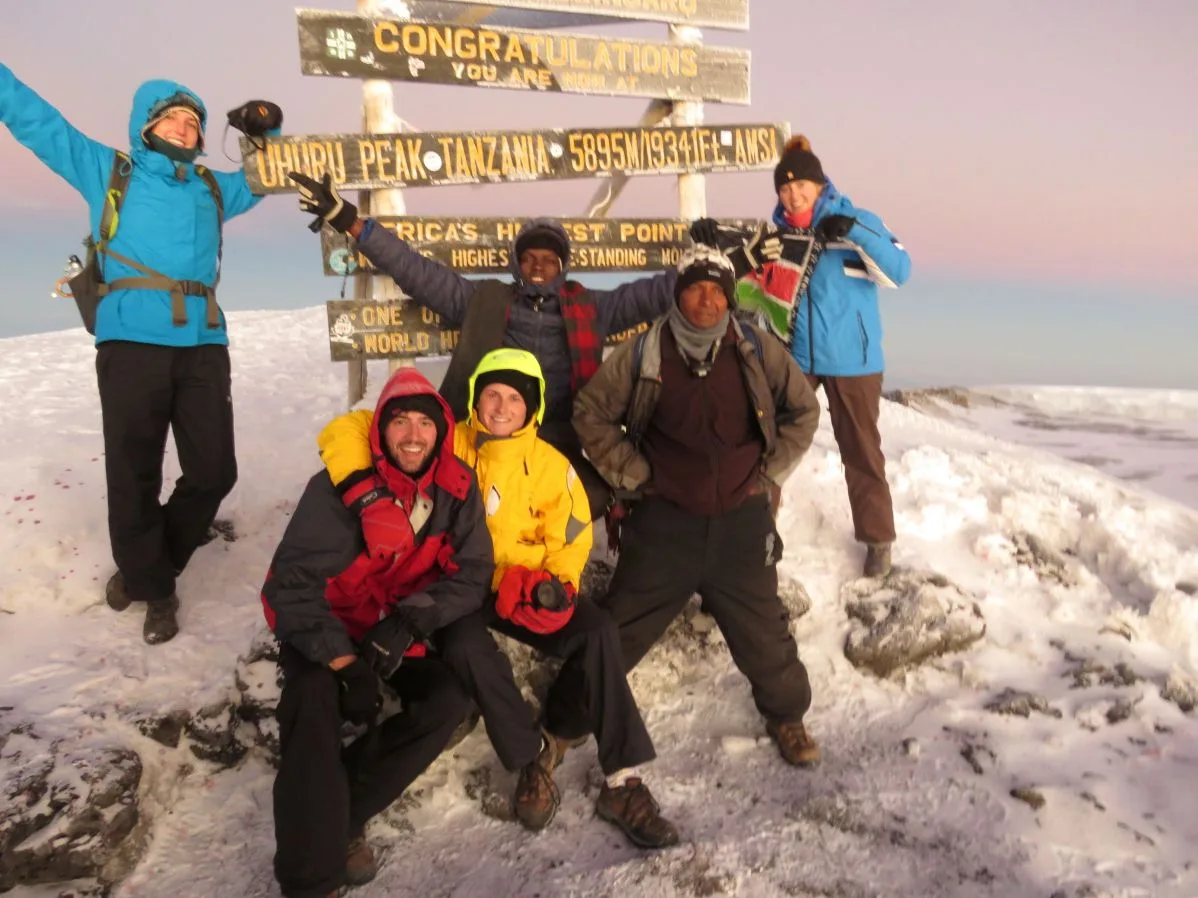
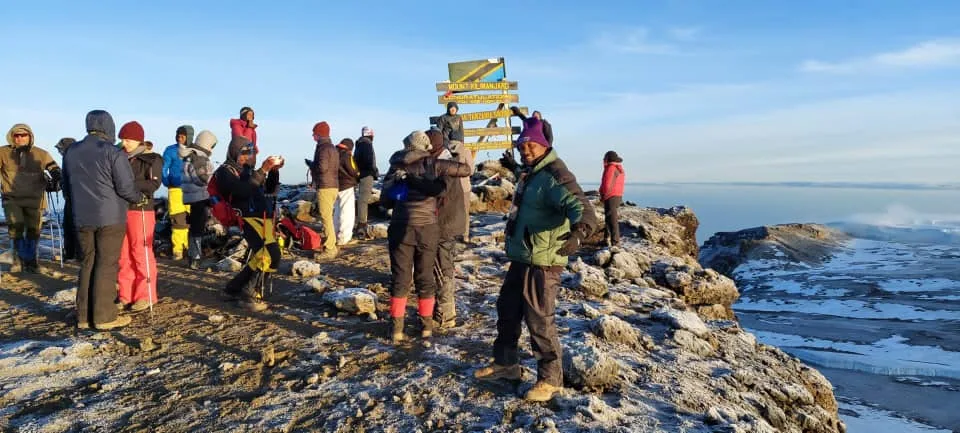
Attempt to reach Uhuru Peak at 5,895 metres.
Descend through changing vegetation zones towards Mweka Gate.
8-Day Lemosho Route Map, Distance & Altitude Profile
The 8-day Kilimanjaro Lemosho Route approaches Mount Kilimanjaro from the western slopes, crossing the Shira Plateau before joining the southern circuit towards Barranco, Karanga and Barafu Camps. The summit attempt follows the trail via Stella Point to Uhuru Peak (5,895m), with the descent continuing along the Mweka Route.
This eight-day itinerary covers approximately 65–75 km of trekking, depending on trail variations, campsite locations and the exact approach used by the mountain operator.
8-Day Lemosho Route Distance and Elevation by Day
| Day | Route | Approx. Distance | Walking Time | Overnight Altitude |
|---|---|---|---|---|
| 1 | Lemosho Trailhead → Mti Mkubwa | 6 km | 3–4 hrs | 2,650m |
| 2 | Mti Mkubwa → Shira 1 | 8 km | 5–7 hrs | 3,500m |
| 3 | Shira 1 → Shira 2 | 10 km | 4–6 hrs | 3,850m |
| 4 | Shira 2 → Lava Tower → Barranco | 10 km | 6–8 hrs | 3,900m |
| 5 | Barranco → Karanga | 5 km | 4–5 hrs | 4,035m |
| 6 | Karanga → Barafu | 4 km | 3–4 hrs | 4,673m |
| 7 | Barafu → Uhuru Peak → Mweka | 17 km | 11–16 hrs | 3,100m |
| 8 | Mweka → Mweka Gate | 10 km | 3–4 hrs | Trek ends |
Distances, walking times and elevations are approximate. Actual figures vary by trail conditions, campsite position, group pace and GPS measurement.
Important Altitude and Acclimatisation Points
Lemosho Trailhead: Approximately 2,100–2,400m, depending on the vehicle drop-off point.
Shira Plateau: Approximately 3,500–3,850m, where the landscape opens towards Kibo.
Lava Tower: Approximately 4,630m, followed by descent to Barranco Camp.
Barafu Camp: Approximately 4,673m, the starting point for the summit attempt.
Uhuru Peak: 5,895m, the highest point on Mount Kilimanjaro.
Mweka Camp: Approximately 3,100m, reached after the summit descent.
The ascent towards Lava Tower followed by a lower overnight camp at Barranco provides a valuable acclimatisation opportunity. Nevertheless, altitude sickness can affect anyone, regardless of age or fitness, and reaching the summit is never guaranteed.
Detailed 8-Day Kilimanjaro Lemosho Route Group Climb Itinerary
Follow our carefully planned 8-day Lemosho Route Kilimanjaro itinerary, combining scenic mountain trekking, gradual acclimatisation, professional guide support and an unforgettable summit attempt at Uhuru Peak (5,895m).
Day 1: Moshi – Londorossi Gate – Lemosho Trailhead – Mti Mkubwa Camp
Rainforest Trekking Adventure
Your Kilimanjaro adventure begins with a morning pickup from your hotel in Moshi. Travel by road to Londorossi Gate on the western side of Mount Kilimanjaro, where your mountain guides complete park registration and organise the climbing equipment.
Continue by vehicle to the Lemosho Trailhead before beginning your first trek through lush montane rainforest. Look out for colobus monkeys, forest birds and towering indigenous trees as you follow the shaded trail towards Mti Mkubwa, also known as Big Tree Camp.
Arrive at camp in the afternoon, settle into your tent and enjoy a freshly prepared dinner.
Trekking distance: Approximately 6 km
Walking time: 3–4 hours
Overnight altitude: Approximately 2,650m
Vegetation zone: Montane rainforest
Accommodation: Mti Mkubwa Camp
Meals: Lunch and dinner
Day 2: Mti Mkubwa Camp – Shira 1 Camp
Climb Above the Rainforest to the Shira Plateau
After breakfast, leave the rainforest behind as the trail gradually climbs through heather, tall grasses and volcanic terrain.
Continue across rolling hills and small streams towards Shira Ridge, where spectacular views of Kilimanjaro's western slopes begin to emerge. The trail then leads onto the expansive Shira Plateau, one of the mountain's most distinctive volcanic landscapes.
Reach Shira 1 Camp in the afternoon, with time to rest, enjoy the scenery and prepare for the following day's trek.
Trekking distance: Approximately 8 km
Walking time: 5–7 hours
Overnight altitude: Approximately 3,500m
Vegetation zone: Moorland
Accommodation: Shira 1 Camp
Meals: Breakfast, lunch and dinner
Day 3: Shira 1 Camp – Shira 2 Camp
Explore the Spectacular Shira Plateau
Today's trek crosses the open Shira Plateau, offering sweeping views towards Kibo Peak and Kilimanjaro's dramatic volcanic formations.
The route follows relatively gentle terrain through alpine moorland, with opportunities to admire giant groundsels, rugged ridges and expansive mountain scenery.
Arrive at Shira 2 Camp for lunch or in the early afternoon, depending on your group's pace. If conditions permit, your guide may arrange a short additional acclimatisation walk before returning to camp.
Trekking distance: Approximately 7–10 km
Walking time: 4–6 hours
Overnight altitude: Approximately 3,850m
Vegetation zone: Moorland
Accommodation: Shira 2 Camp
Meals: Breakfast, lunch and dinner
Day 4: Shira 2 Camp – Lava Tower – Barranco Camp
Climb High, Sleep Low – Important Acclimatisation Day
Begin your trek across increasingly rugged alpine terrain towards Lava Tower, a striking volcanic rock formation standing at approximately 4,630 metres.
This is an important acclimatisation stage because you climb to a higher elevation before descending to sleep at Barranco Camp, approximately 3,900 metres above sea level.
After a break near Lava Tower, descend through the scenic Barranco Valley, where giant groundsels and dramatic mountain cliffs create one of Kilimanjaro's most memorable landscapes.
Arrive at Barranco Camp beneath the imposing Barranco Wall, which you will tackle the following morning.
Trekking distance: Approximately 10 km
Walking time: 6–8 hours
Highest altitude: Lava Tower – approximately 4,630m
Overnight altitude: Approximately 3,900m
Vegetation zone: Alpine desert
Accommodation: Barranco Camp
Meals: Breakfast, lunch and dinner
Day 5: Barranco Camp – Barranco Wall – Karanga Camp
Conquer the Famous Barranco Wall
After breakfast, begin the exciting ascent of Barranco Wall, one of the most recognisable sections of the Kilimanjaro Lemosho Route.
The climb involves steep rocky paths and some scrambling, but generally does not require technical mountaineering equipment. Your guides will assist the group through the more challenging sections.
After reaching the top, enjoy panoramic views before continuing across mountain ridges and descending into Karanga Valley.
A final ascent leads to Karanga Camp, where you spend the afternoon resting and acclimatising.
Trekking distance: Approximately 5 km
Walking time: 4–5 hours
Overnight altitude: Approximately 4,035m
Vegetation zone: Alpine desert
Accommodation: Karanga Camp
Meals: Breakfast, lunch and dinner
Day 6: Karanga Camp – Barafu Camp
Final Ascent to Kilimanjaro Summit Base Camp
Today's shorter trek takes you through the rocky alpine desert towards Barafu Camp, the starting point for your summit attempt.
As the vegetation becomes increasingly sparse, enjoy impressive views of Mawenzi Peak and the surrounding mountain landscape.
Arrive at Barafu Camp around midday or early afternoon. Your mountain guides will conduct a summit briefing, check essential equipment and explain the expected weather conditions, climbing pace and safety procedures.
Enjoy an early dinner and rest before the demanding overnight ascent towards Uhuru Peak.
Trekking distance: Approximately 4 km
Walking time: 3–5 hours
Overnight altitude: Approximately 4,673m
Vegetation zone: Alpine desert
Accommodation: Barafu Camp
Meals: Breakfast, lunch and dinner
Day 7: Barafu Camp – Stella Point – Uhuru Peak – Mweka Camp
Summit Day – Reach the Roof of Africa (5,895m)
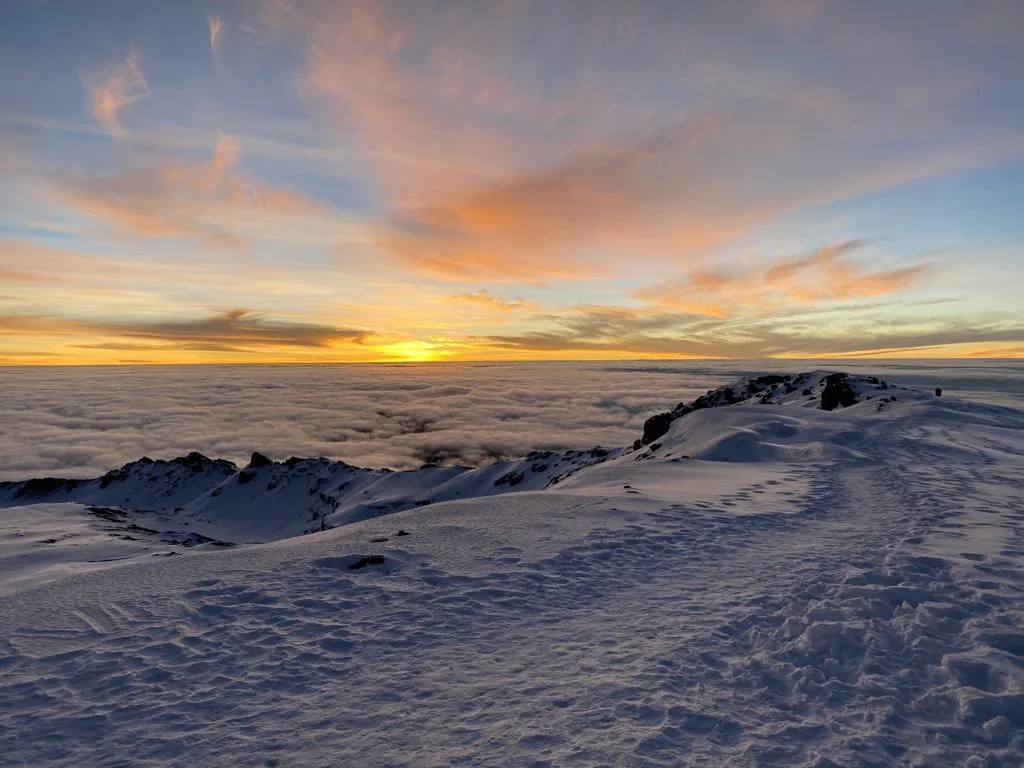
Summit day begins around midnight, when your guides lead the group up the steep mountain slopes under the stars.
The trail climbs through loose volcanic scree and rocky terrain towards Stella Point (approximately 5,756m), situated on Kilimanjaro's crater rim.
From Stella Point, continue along the summit ridge towards Uhuru Peak (5,895m), the highest point in Africa. Weather permitting, enjoy breathtaking views of the surrounding glaciers and the vast Tanzanian landscape.
After photographs and a short celebration, begin the long descent to Barafu Camp for a rest and meal before continuing down to Mweka Camp.
Summit day is the most physically demanding stage of the expedition. Your guides will continuously assess weather, altitude symptoms and group fitness, and may require an early descent for safety reasons.
Trekking distance: Approximately 17 km
Walking time: 11–16 hours
Highest altitude: Uhuru Peak – 5,895m
Overnight altitude: Approximately 3,100m
Vegetation zones: Arctic summit zone and descending moorland
Accommodation: Mweka Camp
Meals: Breakfast, lunch and dinner
Day 8: Mweka Camp – Mweka Gate – Moshi
Final Rainforest Descent and Kilimanjaro Climb Completion
Enjoy your final breakfast on Mount Kilimanjaro before descending through the lush rainforest towards Mweka Gate.
The trail passes through dense vegetation, where you may encounter birds and monkeys along the way.
At Mweka Gate, complete the park exit procedures and receive the appropriate climbing certificate if you reached a qualifying summit point.
Meet your transfer vehicle for the journey back to Moshi, where you can enjoy a well-deserved shower, rest and celebrate your Kilimanjaro trekking adventure.
Trekking distance: Approximately 10 km
Walking time: 3–4 hours
Finishing altitude: Approximately 1,640m
Vegetation zone: Montane rainforest
Accommodation: Not included unless confirmed separately
Meals: Breakfast and lunch
End of the 8-Day Kilimanjaro Lemosho Route Group Sharing Climb.
All distances, elevations and trekking times are approximate. The mountain guide may adjust the programme for weather, trail conditions, health or safety. Summit success is not guaranteed.
8-Day Kilimanjaro Lemosho Route Group Climb Prices 2027–2028
Starting Price: From USD 2,295 per person sharing
Our 8-day Lemosho Route group climb is priced from USD 2,295 per person, based on a confirmed group departure and twin-sharing mountain camping accommodation.
| Pricing Details | Information |
|---|---|
| Starting Price | USD 2,295 per person |
| Travel Period | 2027–2028 |
| Duration | 8 Days / 7 Nights |
| Tour Type | Group Sharing Climb |
| Accommodation | Twin-sharing mountain tents |
| Departure Point | Moshi, Tanzania |
| Minimum Group Size | 2 climbers for a new group, subject to confirmation |
| Solo Travellers | Can join available confirmed groups |
| Single-Tent Supplement | Quoted on request |
Important: Prices and departure availability are subject to final written confirmation. Additional services and optional supplements may affect the total cost.
For complete package details, see our What's Included and Excluded section.
Check Group Departures & Request Your Quote →
8-Day Kilimanjaro Lemosho Route Group Departures & Booking – 2027–2028
East Africa Jungle welcomes group climb enquiries throughout 2027–2028. Solo travellers, couples and friends can request their preferred departure date from Moshi.
Daily enquiries are welcome, but group departures are not automatically guaranteed every day. Confirmed climbs depend on available group places, minimum participation and mountain operating arrangements.
| Departure Details | Information |
|---|---|
| Departure Point | Moshi, Tanzania |
| Departure Enquiries | Accepted daily |
| Confirmed Departures | Subject to availability |
| Minimum Group Size | 2 climbers for a new group |
| Maximum Group Size | Confirmed before booking |
| Solo Travellers | Welcome to join existing groups |
| Accommodation | Shared mountain tents |
| Private Climbs | Available on request |
How to Join a Group Climb
Choose your date: Share your preferred climbing date and flexibility.
Check availability: We confirm available group places, tent arrangements and the final price.
Secure your booking: Once arrangements are confirmed, complete the required deposit.
Prepare for your climb: Receive your itinerary, equipment guidance, meeting details and safety information.
If your preferred group departure is unavailable, we can suggest alternative dates or discuss a private climb.
Request Your 2027–2028 Group Departure →
What's Included and Excluded in the 8-Day Lemosho Route Climb?
Our 8-day Kilimanjaro Lemosho Route group-sharing package is designed to provide the essential mountain services required for a guided climb, including professional crew support, camping arrangements and meals throughout the trek.
What's Included
Professional mountain guides: Licensed Kilimanjaro guides and assistant guides according to the confirmed group size.
Mountain support crew: Porters and a mountain cook to support the expedition.
Kilimanjaro National Park Fees: All applicable Kilimanjaro National Park entry, camping and park rescue fees for the eight-day mountain itinerary are included in the published climbing price.
Seven nights of mountain camping: Accommodation at designated camps along the Lemosho and Mweka routes.
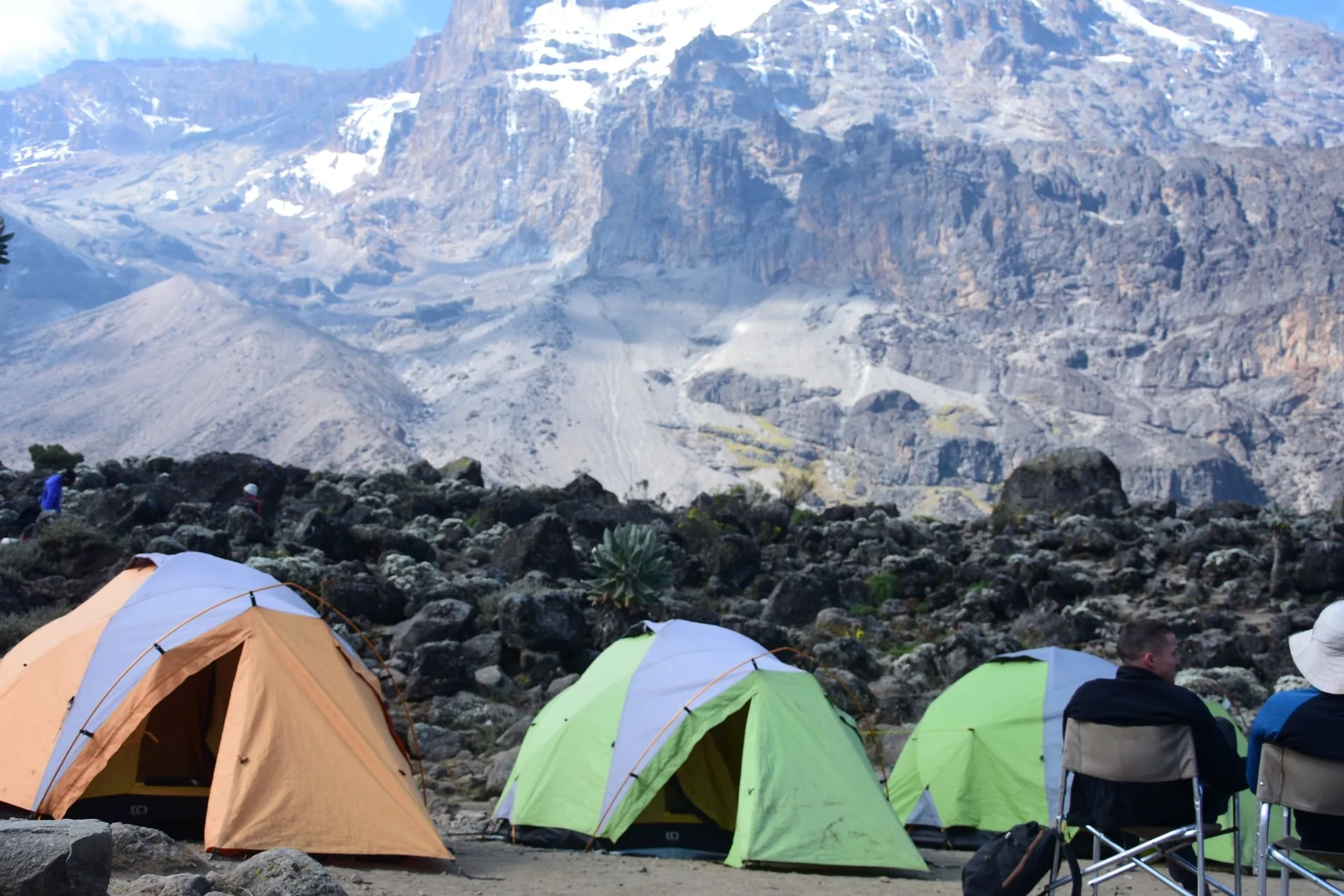
Mountain tents: Shared sleeping tents, normally arranged for two climbers per tent.
Communal camping equipment: Dining tent, tables, chairs and cooking equipment.
Mountain meals: Breakfast, lunch and dinner during the climb, as specified in the daily itinerary.
Drinking water: Treated or boiled drinking water supplied during the mountain trek.
Mountain transfers: Road transport from Moshi to the Lemosho starting point and from Mweka Gate back to Moshi.
Pre-climb briefing: Route explanation, equipment review and mountain safety briefing.
Mountain safety support: Guide-led altitude monitoring and access to the emergency equipment specified in your confirmed climbing arrangements.
Summit assistance: Guided summit attempt towards Stella Point and Uhuru Peak, subject to health, weather and safety conditions.
Climbing certificate: Official park certificate for climbers who reach a qualifying summit point.
What's Excluded
International and domestic flights to and from Tanzania.
Tanzania tourist visa and other personal travel documentation.
Accommodation before and after the eight mountain days, unless specifically included.
Kilimanjaro International Airport transfers, unless confirmed in your quotation.
Personal climbing equipment, including hiking boots, sleeping bag, trekking poles and suitable cold-weather clothing.
Equipment rental and any optional private tent supplement.
Travel Insurance and Medical Evacuation: Personal travel insurance, medical treatment, hospital expenses and privately arranged emergency medical evacuation services are excluded unless expressly included in the confirmed package. Kilimanjaro National Park rescue fees are included, but they do not replace comprehensive high-altitude travel insurance.
Tips for mountain guides, porters and cooks.
Personal expenses, laundry, souvenirs and additional beverages.
Optional activities, extra hotel nights and post-climb Tanzania safaris.
Costs arising from personal itinerary changes or services outside the confirmed package.
Important Booking Information: All inclusions are subject to the final written quotation. Confirm equipment provision, hotel nights, airport transfers, emergency equipment and any additional charges before paying your deposit.
Accommodation, Camps & Mountain Meals on the 8-Day Lemosho Route
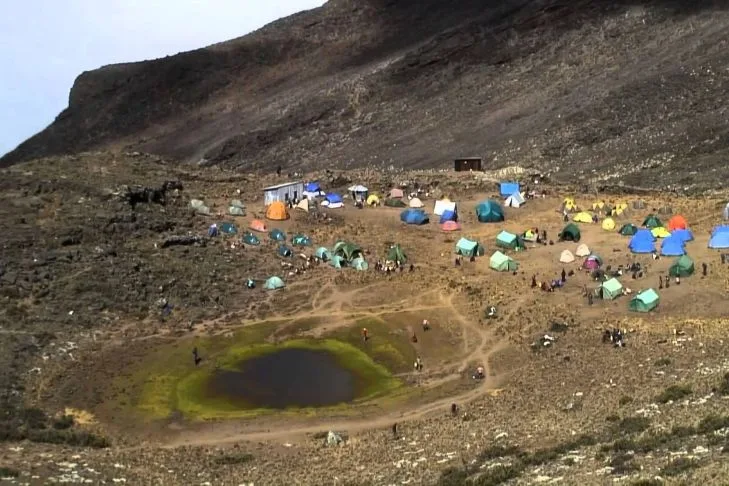
Our 8-Day Kilimanjaro Lemosho Route Group Sharing Climb includes seven nights of mountain camping, with shared sleeping tents, meals prepared by the mountain cook and support from the climbing crew.
Unlike the Marangu Route, which uses mountain huts, the Lemosho Route is a camping-based trek with basic facilities and changing temperatures.
Where Will You Sleep on the 8-Day Lemosho Route?
| Night | Mountain Camp | Approx. Altitude |
|---|---|---|
| 1 | Mti Mkubwa (Big Tree) Camp | 2,650m |
| 2 | Shira 1 Camp | 3,500m |
| 3 | Shira 2 Camp | 3,850m |
| 4 | Barranco Camp | 3,900m |
| 5 | Karanga Camp | 4,035m |
| 6 | Barafu Camp | 4,673m |
| 7 | Mweka Camp | 3,100m |
Camp elevations are approximate and may vary slightly according to the designated camping area.
Sleeping Tents & Mountain Camping Facilities
Climbers normally share weather-resistant mountain tents, with tent assignments confirmed before departure.
Camping arrangements include:
Sleeping tents: Shared by two climbers unless a private tent is arranged.
Sleeping equipment: Bring or rent a suitable cold-weather sleeping bag; confirm whether sleeping mats are provided.
Dining facilities: Communal dining tent with meals prepared by the mountain cook.
Toilets: Basic designated campsite toilets; private portable toilets may be available at an additional cost.
Washing facilities: Limited basic washing arrangements; no showers on the mountain.
Temperatures can fall below freezing, especially at higher camps. Warm clothing and suitable sleeping equipment are essential.
What Meals Are Provided During the Kilimanjaro Climb?
Our mountain cook prepares breakfast, lunch and dinner according to the daily trekking schedule.
| Meal | Typical Food |
|---|---|
| Breakfast | Porridge, eggs, bread, fruit, tea or coffee |
| Lunch | Packed lunches, sandwiches, rice, vegetables or fruit |
| Dinner | Soup, rice, pasta, potatoes, vegetables and protein dishes |
| Drinking Water | Boiled or treated water supplied during the trek |
Meals vary depending on available supplies and mountain conditions.
Special dietary requirements: Vegetarian, vegan and other dietary needs may be accommodated with advance notice, subject to confirmation.
Meals & Camping During Summit Day
Before the overnight summit attempt, climbers normally receive a light meal or hot drink and carry personal snacks and drinking water.
After descending to Barafu Camp, the group rests and eats before continuing to Mweka Camp for the final night.
Our recommendation: Bring warm sleeping equipment, a headlamp, suitable clothing layers and personal hygiene essentials. Confirm your complete camping equipment list before departure.
Lemosho Route Difficulty, Altitude & Acclimatisation
The 8-Day Kilimanjaro Lemosho Route is a challenging high-altitude trek that requires good physical fitness, mental determination and preparation for changing mountain conditions. Although technical mountaineering skills are not normally required, climbers must be comfortable walking for several consecutive days on uneven terrain, sometimes in freezing temperatures.
The eight-day itinerary provides more time for acclimatisation than shorter Lemosho Route variations, making it an attractive option for well-prepared beginners and experienced hikers. However, additional trekking days do not eliminate the risk of altitude sickness or guarantee reaching Uhuru Peak (5,895m).
How Difficult Is the 8-Day Kilimanjaro Lemosho Route?
| Difficulty Factor | What Climbers Should Expect |
|---|---|
| Overall Difficulty | Challenging high-altitude trekking |
| Duration | 8 Days / 7 Nights |
| Maximum Elevation | Uhuru Peak – 5,895m |
| Approximate Distance | 65–75 km |
| Daily Walking Time | Generally 3–8 hours |
| Summit Day | Approximately 11–16 hours, including descent |
| Terrain | Rainforest trails, rocky slopes, volcanic scree and alpine desert |
| Technical Climbing | Generally not required |
| Physical Fitness | Good cardiovascular endurance and hiking preparation |
| Main Challenges | High altitude, cold temperatures, fatigue and summit-night ascent |
How Does the 8-Day Lemosho Route Support Acclimatisation?
One of the main advantages of the eight-day Lemosho itinerary is its gradual progression through Kilimanjaro's different altitude zones.
The route incorporates several important acclimatisation opportunities:
Shira Plateau: Overnight stops at Shira 1 (approximately 3,500m) and Shira 2 (approximately 3,850m) allow climbers to progress through higher elevations.
Lava Tower: Climbers ascend to approximately 4,630m before descending to Barranco Camp at around 3,900m, following the climb high, sleep low principle.
Karanga Camp: An additional overnight stop helps divide the ascent between Barranco and Barafu Camps.
Controlled Walking Pace: Guides encourage a steady trekking rhythm, commonly called pole pole (slowly, slowly), to help manage exertion.
These features provide opportunities for altitude adaptation, although every climber responds differently to reduced oxygen availability.
Understanding Altitude Sickness on Kilimanjaro
Altitude sickness is an important consideration when climbing Mount Kilimanjaro, particularly above 3,500 metres.
Acute mountain sickness (AMS) may develop when the body struggles to adjust to high altitude.
Common symptoms include:
Headache
Nausea or loss of appetite
Dizziness
Unusual fatigue
Difficulty sleeping
More serious altitude illness may cause confusion, loss of coordination or breathlessness at rest.
Important: Climbers should immediately inform their mountain guide about altitude-related symptoms. Worsening symptoms require stopping further ascent and appropriate assessment. Severe altitude illness requires urgent medical attention and prompt descent when safe.
Physical fitness does not prevent altitude sickness, and summit attempts must always remain secondary to climber safety.
Is the 8-Day Lemosho Route Suitable for Beginners?
Yes. The 8-Day Lemosho Route is suitable for well-prepared beginners with good fitness and experience walking for several hours on uneven terrain.
Technical climbing skills are generally unnecessary, but climbers should be prepared for cold temperatures, basic mountain camping, high altitude and a demanding summit day.
Important: Altitude sickness can affect anyone, regardless of fitness or experience. Report symptoms immediately to your mountain guide. Worsening symptoms require medical assessment, and severe altitude illness requires urgent attention and prompt descent when safe.
Kilimanjaro Climbing Safety, Mountain Guides, Porters & Emergency Procedures
Safety is a priority on our 8-Day Kilimanjaro Lemosho Route Group Sharing Climb (2027–2028). East Africa Jungle coordinates expeditions with professional mountain teams responsible for guiding, health monitoring, campsite operations and emergency response.
Before departure, we confirm the guiding arrangements, available safety equipment and emergency procedures for your group.
Professional Kilimanjaro Guides & Mountain Crew
Our climbs are supported by licensed mountain guides, assistant guides, porters and a cook, according to group size.
Mountain guide responsibilities include:
Daily route briefings and weather assessments.
Monitoring climber health and maintaining a steady pace.
Checking equipment and preparing for summit day.
Coordinating first aid, emergency descent and rescue assistance.
The lead guide may modify the itinerary or require a climber to descend when safety conditions demand it.
Daily Health Checks & Emergency Equipment
Guides monitor climbers for fatigue, dehydration, breathing difficulties and altitude-related concerns. Climbers should report unusual symptoms immediately.
| Safety Provision | Arrangement |
|---|---|
| Licensed Mountain Guides | Included |
| Health Monitoring | Guide-led assessments |
| First-Aid Kit | Confirmed before departure |
| Emergency Oxygen | Availability must be confirmed |
| Pulse Oximeter | Availability must be confirmed |
| Communication Equipment | Confirmed before departure |
| Emergency Descent | Coordinated by mountain guides |
| Park Rescue Assistance | Arranged when required |
| Medical Evacuation | Subject to conditions and availability |
Important: Emergency oxygen, monitoring devices and communication equipment must be verified for your specific departure and should not be assumed included without written confirmation.
Emergency Descent & Evacuation Procedures
If a climber becomes seriously unwell or injured, the mountain team will:
Assess the climber and stop further ascent when necessary.
Provide available first aid and emergency assistance.
Arrange prompt descent when medically indicated and safe.
Contact park rescue authorities and coordinate evacuation if required.
Climber safety always takes priority over reaching Uhuru Peak (5,895m). Emergency oxygen does not replace descent or medical treatment, and helicopter evacuation cannot be guaranteed.
Responsible Kilimanjaro Porter Welfare
Our mountain support teams play an essential role in transporting equipment, preparing camps and supporting climbers.
East Africa Jungle aims to work with operators that follow applicable park regulations and responsible porter welfare practices, including:
Fair compensation and respectful treatment.
Appropriate clothing and protective equipment.
Adequate meals, drinking water and sleeping arrangements.
Compliance with applicable porter load limits.
Travellers may request details of the welfare arrangements for their expedition.
High-Altitude Travel Insurance & Safety Confirmation
All climbers should arrange travel insurance covering trekking to at least 5,895m, emergency medical treatment and evacuation.
Kilimanjaro National Park rescue fees are included in the stated package, but they do not replace comprehensive travel insurance.
Before travelling, consult a qualified healthcare professional about high-altitude trekking.
Best Time to Climb Kilimanjaro via the Lemosho Route
The best time to climb Mount Kilimanjaro via the Lemosho Route is generally from January to early March and from June to October, when conditions are often comparatively dry and visibility can be better.
Kilimanjaro can be climbed throughout the year, but rainfall, trail conditions, temperatures and summit visibility vary by season. Even during the drier months, climbers should prepare for freezing summit temperatures, strong winds and sudden weather changes.
Kilimanjaro Lemosho Route Weather by Month
| Month | Typical Conditions | Climbing Recommendation |
|---|---|---|
| January | Often relatively dry, with variable cloud cover | Excellent seasonal option |
| February | Generally favourable trekking conditions | Excellent seasonal option |
| March | Increasing rainfall, especially later in the month | Good early; wetter later |
| April | Main rainy season, muddy trails and reduced visibility | Less favourable |
| May | Rain often continues, particularly early in the month | Less favourable |
| June | Transition towards drier conditions | Good |
| July | Usually drier, with cold nights and busy trails | Excellent |
| August | Often dry and cold, with popular departures | Excellent |
| September | Generally favourable trekking weather | Excellent |
| October | Often good early, with increasing rain risk later | Good to excellent |
| November | Short-rain season, with variable rainfall | More challenging |
| December | Variable conditions, often improving towards year-end | Good when conditions permit |
These are typical seasonal patterns, not weather guarantees. Conditions vary between years and across Kilimanjaro's elevation zones.
January to March – Scenic Climbing Conditions
January and February are popular months for Kilimanjaro trekking, with comparatively favourable weather and opportunities for clear mountain views.
Early March may also offer good conditions, although rainfall becomes more likely as the main wet season approaches.
June to October – Popular Kilimanjaro Climbing Season
June through October is one of the most popular periods for climbing Kilimanjaro.
July, August and September are particularly sought after for their generally drier conditions. However, temperatures can be extremely cold at higher elevations, and campsites may be busier.
April, May and November – Wetter Climbing Periods
April and May are commonly associated with the main rainy season, while November often brings shorter rains.
Climbing remains possible, but wet trails, reduced visibility and challenging camping conditions can make the expedition more demanding.
When Should You Book Your 2027–2028 Lemosho Group Climb?
For travellers seeking favourable seasonal conditions, we recommend considering:
January–February: Popular for comparatively dry weather and scenic trekking.
July–September: Particularly popular for scheduled group departures.
June and October: Worth considering for travellers with flexible dates.
Booking ahead is advisable for popular departure periods, especially when flights, hotels and group places need to be coordinated.
Our Recommendation: Choose your climbing month based on expected weather, personal fitness, travel flexibility and confirmed group departure availability rather than relying on any claimed summit success guarantee.
Kilimanjaro Lemosho Route Training, Fitness & Packing List
Preparing for the 8-Day Kilimanjaro Lemosho Route requires good endurance, leg strength, suitable trekking equipment and experience walking on uneven terrain.
How Fit Do You Need to Be for the Lemosho Route?
Climbers should be comfortable hiking for several hours on consecutive days while carrying a personal daypack.
Focus your preparation on:
Cardiovascular endurance: Hiking, brisk walking, cycling or swimming.
Leg strength: Hill walks, stairs, squats and step-ups.
Hiking practice: Multi-hour walks with a loaded daypack.
Balance and recovery: Uneven-terrain practice, stretching and adequate rest.
Beginners may need several months of preparation, depending on their starting fitness.
Suggested 8-Week Kilimanjaro Training Plan
| Training Period | Recommended Preparation |
|---|---|
| Weeks 1–2 | Regular walking, light hills and basic strength exercises |
| Weeks 3–4 | Longer hikes, stair climbing and increased endurance |
| Weeks 5–6 | Multi-hour hill hikes with a loaded daypack |
| Week 7 | A longer practice hike, equipment testing and recovery |
| Week 8 | Reduce training intensity, rest and final equipment checks |
This is a general preparation example, not an individual fitness prescription. Beginners or less-active travellers may need several months of preparation.
Essential Kilimanjaro Lemosho Route Packing List
| Equipment Category | Recommended Items |
|---|---|
| Hiking footwear | Broken-in waterproof hiking boots, camp shoes |
| Clothing layers | Thermal base layers, fleece, insulated jacket |
| Waterproof protection | Waterproof jacket and trousers |
| Summit clothing | Warm gloves, insulated mittens, thermal hat |
| Trekking trousers | Comfortable hiking trousers and thermal leggings |
| Sleeping equipment | Cold-weather sleeping bag, suitable sleeping mat |
| Bags | Duffel bag for porter-carried equipment and personal daypack |
| Hydration | Refillable water bottles and insulated bottle protection |
| Trekking accessories | Trekking poles, headlamp and spare batteries |
| Sun protection | Sunglasses, sunscreen and lip balm |
| Personal care | Toiletries, hand sanitiser and personal medication |
| Documents | Passport, visa where required, insurance details |
What Should You Carry in Your Daypack?
Your daypack should contain essential items needed while walking, including:
Drinking water and personal snacks.
Waterproof jacket and warm layers.
Sunglasses, sunscreen and sun hat.
Personal medication and basic first-aid essentials.
Headlamp and spare batteries.
Camera or phone in suitable protective storage.
The mountain crew normally transports your main duffel bag between camps, subject to the confirmed porter baggage allowance.
Preparing for Kilimanjaro Summit Night
Summit night is usually the coldest and most demanding stage of the climb.
Prepare suitable thermal clothing, insulated gloves, a warm hat, headlamp, energy snacks and accessible drinking water. Hydration systems can freeze in extreme cold, so an insulated bottle is useful.
Your guide will explain the summit schedule, recommended clothing and equipment arrangements before departure.
Can You Rent Kilimanjaro Climbing Equipment?
Certain items, such as sleeping bags, trekking poles, insulated jackets and duffel bags, may be available to rent in Moshi.
Confirm rental availability, equipment condition, sizes and prices before travelling.
Final Kilimanjaro Preparation Advice
Allow enough time to prepare physically, test your equipment and arrange appropriate high-altitude travel insurance.
Consult a qualified healthcare professional about altitude illness risks, relevant health concerns and any preventive medication.
8-Day Lemosho vs 7-Day Lemosho vs Machame Route: Which Is Better?
Choosing the right Kilimanjaro route depends on your available time, fitness, budget and acclimatisation needs. The 8-Day Lemosho, 7-Day Lemosho and 7-Day Machame Routes all lead towards Uhuru Peak (5,895m), but differ in duration, starting point and trekking experience.
Kilimanjaro Route Comparison Table
| Feature | 8-Day Lemosho | 7-Day Lemosho | 7-Day Machame |
|---|---|---|---|
| Duration | 8 days / 7 nights | 7 days / 6 nights | 7 days / 6 nights |
| Starting Point | Western slopes | Western slopes | Southern slopes |
| Distance | 65–75 km | 65–75 km | 60–65 km |
| Acclimatisation | More time available | More compressed | Good with suitable pacing |
| Difficulty | Challenging | Challenging | Challenging |
| Trail Traffic | Quieter early stages | Quieter early stages | Often busier |
| Main Scenery | Rainforest, Shira Plateau, Barranco Wall | Rainforest, Shira Plateau, Barranco Wall | Rainforest, Shira Plateau, Barranco Wall |
| Accommodation | Camping | Camping | Camping |
| Summit | Uhuru Peak (5,895m) | Uhuru Peak (5,895m) | Uhuru Peak (5,895m) |
| Best For | Extra acclimatisation time | Travellers with 7 days | Classic southern approach |
| Typical Cost | Higher due to extra day | Generally lower | Often more economical |
Distances are approximate and may vary by itinerary and trail conditions.
Which Kilimanjaro Route Should You Choose?
Choose the 8-Day Lemosho Route for additional acclimatisation time, varied scenery and a more gradual trekking schedule. The 7-Day Lemosho Route suits travellers with limited time who prefer the scenic western approach, while the 7-Day Machame Route offers a popular southern approach with challenging terrain.
All three routes require good fitness and preparation. Additional climbing days may support acclimatisation but cannot guarantee summit success or prevent altitude sickness.
Guest Reviews – Kilimanjaro Lemosho Route Climbing Experiences
★★★★★ “An Unforgettable Kilimanjaro Summit Experience”
Name: James Mitchell
Country: United Kingdom
Travel Month: July
Group Type: Couple
Climbing Highlights: Uhuru Peak, Shira Plateau, Barranco Wall & professional mountain guides
“The eight-day Lemosho Route was an incredible experience from start to finish. We especially enjoyed walking across the Shira Plateau and tackling the Barranco Wall, which looked intimidating at first but turned out to be one of the highlights. Our guides were patient, knowledgeable and always encouraged us to maintain a comfortable pace. Summit night was extremely challenging, particularly because of the cold and altitude, but reaching Uhuru Peak at sunrise made everything worthwhile. The mountain crew worked incredibly hard throughout the climb, and having eight days gave us valuable time to adjust to the altitude.”
★★★★★ “A Wonderful Group Climb With an Amazing Mountain Team”
Name: Sarah Thompson
Country: Australia
Travel Month: August
Group Type: Solo Traveller – Group Sharing Climb
Climbing Highlights: Group trekking, mountain camping, Lava Tower & summit sunrise
“I joined the Lemosho Route group climb as a solo traveller and really enjoyed meeting people from different countries. The group atmosphere was friendly, and everyone encouraged each other during the more demanding sections. Our guides explained the route clearly, checked how we were feeling at altitude and made sure nobody felt rushed. The mountain camps were basic but well organised, and the meals were surprisingly good considering the location. Reaching Lava Tower was a memorable part of the acclimatisation process, while watching the sunrise during our summit attempt was something I will never forget.”
★★★★★ “Eight Days on Lemosho Were Absolutely Worth It”
Name: Michael Weber
Country: Germany
Travel Month: February
Group Type: Couple
Climbing Highlights: Rainforest trekking, Shira Plateau, altitude acclimatisation & Uhuru Peak
“We chose the eight-day Lemosho Route because we wanted a scenic climb with enough time to adjust to the altitude. Looking back, we were very happy with that decision. The changing landscapes were remarkable, from the green rainforest on the first day to the rocky terrain near Barafu Camp. Our mountain guides were professional and attentive, and the porters and cook did an excellent job keeping everything organised. Summit day was physically demanding, and the final ascent required a lot of determination, but standing at Uhuru Peak was an unforgettable moment. I would recommend taking the extra day rather than rushing the climb.”
Frequently Asked Questions About the 8-Day Kilimanjaro Lemosho Route – 2027–2028
1. How much does the 8-Day Kilimanjaro Lemosho Route Group Climb cost?
Our 8-Day Lemosho Route Group Sharing Climb starts from USD 2,295 per person for 2027–2028. The price includes seven nights of mountain camping, professional guides and crew, specified meals, park fees and mountain transfers from Moshi. Final pricing is subject to departure confirmation.
2. Can solo travellers join the 8-Day Lemosho Route group climb?
Yes. Solo travellers can join confirmed group departures, subject to availability. Tent-sharing arrangements and any single-tent supplement are confirmed before booking.
3. Are Kilimanjaro Lemosho Route group departures available daily?
We accept daily departure enquiries, but climbs are not guaranteed every day. A new group normally requires at least two climbers, while solo travellers can join existing confirmed groups.
4. How difficult is the 8-Day Kilimanjaro Lemosho Route?
The route is a challenging high-altitude trek suitable for well-prepared beginners and experienced hikers. Good fitness is essential, particularly for summit day. Technical climbing skills are generally unnecessary.
5. What are the chances of reaching Uhuru Peak on the 8-Day Lemosho Route?
The eight-day itinerary provides additional acclimatisation time, but summit success is never guaranteed. Altitude adaptation, fitness, health, weather and guide decisions influence the outcome. We do not publish unverified summit success rates.
6. What safety arrangements are available during the Kilimanjaro climb?
Licensed mountain guides monitor climbers and coordinate first aid, emergency descent and rescue assistance when required. Emergency oxygen, pulse oximeters and communication equipment must be confirmed for your specific departure.
7. Are Kilimanjaro airport transfers included in the climbing package?
Transfers between Moshi and the mountain entry and exit gates are included. Kilimanjaro International Airport transfers are excluded unless specifically confirmed in your quotation.
8. What equipment do I need for the 8-Day Kilimanjaro Lemosho Route?
Bring waterproof hiking boots, warm layers, an insulated jacket, waterproof clothing, gloves, a cold-weather sleeping bag, headlamp and daypack. See our detailed packing list above. Equipment rental may be arranged in Moshi.
9. How much should I tip Kilimanjaro guides and porters?
Tipping is customary and normally shared among the climbing group. The recommended amount depends on group size and crew composition. Tips are excluded from the package price; request the current tipping breakdown before departure.
10. Is eight days enough for acclimatisation on the Kilimanjaro Lemosho Route?
Eight days provide valuable acclimatisation opportunities, including Shira Plateau, Lava Tower and Karanga Camp. However, altitude sickness can affect anyone, and additional climbing days do not guarantee safe acclimatisation or summit success.
Why Book Your Kilimanjaro Climb With East Africa Jungle?
At East Africa Jungle, we help travellers plan their Kilimanjaro climb with clear pricing, organised mountain arrangements and practical support from enquiry to departure.
For our 8-Day Lemosho Route Group Sharing Climb (2027–2028), we focus on the details that matter before you begin your ascent.
What Makes Our Kilimanjaro Climbing Arrangements Different?
Local Tanzania climbing coordination: We help organise your mountain itinerary, Moshi meeting arrangements, transfers and confirmed group departure.
Professional mountain teams: Climbs are arranged with licensed Kilimanjaro guides, assistant guides, porters and a mountain cook, according to group requirements.
Transparent package pricing: From USD 2,295 per person sharing, with park fees, mountain camping, meals and included services clearly explained.
Pre-climb preparation: Receive guidance on trekking fitness, equipment, altitude considerations and your pre-climb briefing.
Safety arrangements confirmed before departure: We clarify available emergency equipment, guide responsibilities and rescue coordination without promising unverified resources.
Support for solo travellers and small groups: We check confirmed group places, departure dates and tent-sharing arrangements before booking.
Our commitment: Clear communication, realistic climbing expectations and confirmed arrangements before your Kilimanjaro adventure.
About the Author & Editorial Review
About the Author – John Peter
John Peter | East Africa Travel Specialist | East Africa Jungle
John Peter is an East Africa travel specialist involved in developing safari itineraries, coordinating travel arrangements and helping international visitors plan adventures across Kenya and Tanzania.
Through East Africa Jungle, he contributes to travel content covering Tanzania safari destinations, Kilimanjaro climbing routes, accommodation options and practical journey planning.
This eight-day Lemosho Route itinerary has been prepared to help travellers understand the climbing stages, overnight camps, altitude considerations and group-sharing arrangements before booking.
Editorial Review & Accuracy
Published by: East Africa Jungle
Author: John Peter
Last updated: 14 October 2026
Travel period covered: 2027–2028
Destination: Mount Kilimanjaro, Tanzania
This itinerary is based on the established eight-day Lemosho Route sequence through Mti Mkubwa, Shira 1, Shira 2, Barranco, Karanga, Barafu and Mweka Camps.
Trekking distances, elevations and walking times are approximate and may vary according to trail conditions and operational arrangements.
Before confirming a booking, travellers should receive verified information about departure dates, mountain guides, park fees, equipment, emergency procedures and package inclusions.
Editorial commitment: We aim to provide accurate travel information, transparent package descriptions and realistic expectations about high-altitude trekking. Summit success, wildlife encounters and mountain weather conditions are never guaranteed.
Book Your 8-Day Kilimanjaro Lemosho Route Group Climb – 2027–2028
From USD 2,295 per person sharing | 8 Days / 7 Nights
Ready to climb Mount Kilimanjaro? Join East Africa Jungle for a guided 8-day Lemosho Route group expedition featuring seven nights of mountain camping and a carefully paced summit itinerary.
Share your preferred climbing date, number of travellers and date flexibility. Our team will confirm group availability, final pricing and booking arrangements.
Check Available Group Departures & Request Your Kilimanjaro Quote
Available Months
Dates are flexible. Request your preferred month and our team will advise the best safari timing.
Safari Route Map
Map coordinates are not yet available for these stops, so a route summary is shown.
Plan Your Safari Today
Tell us your travel month, budget level, and group size. We will shape this package around your preferred safari style.

 16+ Years
 English