6 Days Kilimanjaro Marangu Route – Group Sharing Climb 2027–2028
Experience the challenge of climbing Mount Kilimanjaro on the Marangu Route, following established mountain trails towards Uhuru Peak (5,895m), Africa's highest summit. This guided adventure combines dramatic scenery, professional mountain support and a rewarding high-altitude trekking experience.
From USD 1,750 per person | 2027–2028
Plan Your Kilimanjaro Climb
6 Days Kilimanjaro Marangu Route – Overview
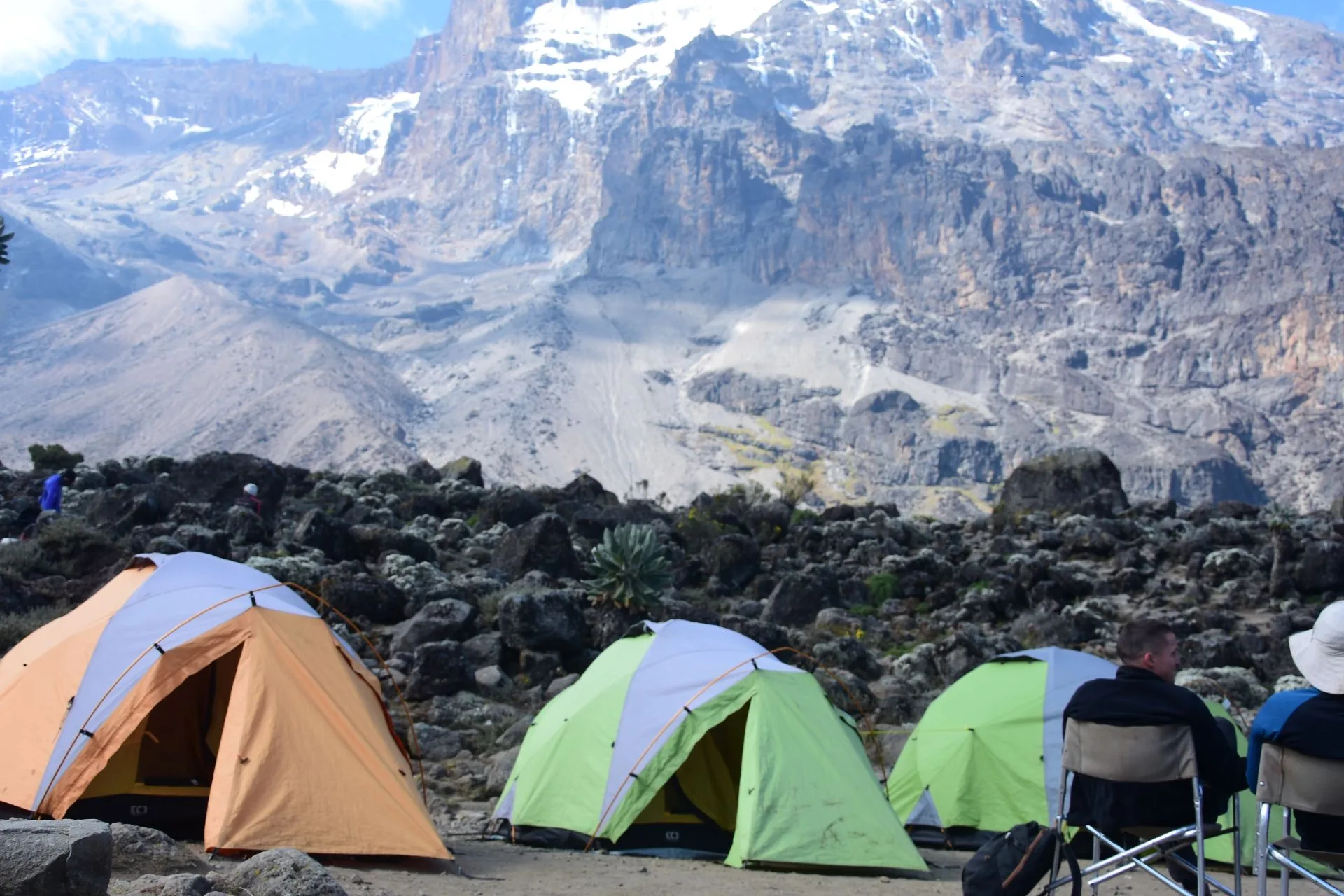
The Marangu Route, commonly known as the Coca-Cola Route, approaches Mount Kilimanjaro from the southeast and offers one of the mountain's most established trekking experiences. The trail begins in lush tropical rainforest before ascending through open moorland, high-altitude alpine desert and the volcanic landscapes surrounding Kibo.
The journey starts at Marangu Gate and follows a gradual ascent through Mandara Hut and Horombo Hut towards Kibo Hut. The final summit attempt begins during the night, with climbers ascending towards Gilman's Point before continuing along the crater rim to Uhuru Peak, conditions permitting.
This itinerary is suitable for physically prepared first-time Kilimanjaro climbers, solo travellers, couples and friends who prefer an organised trekking experience. Although no technical mountaineering skills are normally required, the high altitude, cold temperatures and demanding summit ascent require appropriate fitness, preparation and careful acclimatisation.
Travellers should approach the climb as a challenging mountain expedition rather than an easy walking holiday. Summit success depends on individual acclimatisation, weather conditions, physical readiness and the guidance of the mountain team.
Marangu Route Group Climb – Quick Facts
Our 6 Days Kilimanjaro Marangu Route Group Sharing Climb offers a guided trekking experience with permanent mountain hut accommodation and an additional acclimatisation day at Horombo Hut. The route approaches Mount Kilimanjaro from the southeast, passing through rainforest, moorland and alpine desert before the summit attempt at Uhuru Peak (5,895m).
Climbing Information | Details |
|---|---|
Climbing Package | 6 Days Kilimanjaro Marangu Route Group Sharing Climb |
Destination | Mount Kilimanjaro, Tanzania |
Route Name | Marangu Route (Coca-Cola Route) |
Climbing Duration | 6 Days / 5 Nights |
Highest Point | Uhuru Peak – 5,895m (19,341 ft) |
Starting & Ending Point | Moshi or Arusha, Tanzania |
Trailhead | Marangu Gate – approximately 1,860m |
Climbing Distance | Approximately 72–75 km round trip |
Difficulty Level | Challenging high-altitude trek; no technical climbing normally required |
Climbing Style | Guided Group Sharing Climb |
Tour Type | Guided Kilimanjaro Mountain Trek |
Accommodation | Shared Mountain Huts – Mandara, Horombo & Kibo |
Acclimatisation | Extra day at Horombo Hut with a guided hike towards Zebra Rocks |
Summit Attempt | Day 5, typically beginning around midnight |
Best Climbing Seasons | January–March and June–October |
Starting Price | From USD 1,750 per person |
Travel Period | 2027–2028 |
Group Departures | Scheduled departures, subject to confirmation and availability |
6 Days Marangu Route – Climbing Highlights
Attempt Africa's Highest Summit: Trek towards Uhuru Peak (5,895m), the highest point on Mount Kilimanjaro.
Explore Kilimanjaro's Changing Landscapes: Journey from tropical rainforest through moorland and alpine desert to the volcanic summit zone.
Discover Zebra Rocks: Take a guided acclimatisation hike towards the distinctive mineral-striped rock formations above Horombo Hut.
Cross the Saddle: Experience the dramatic high-altitude landscape between Mawenzi and Kibo peaks.
Experience a Summit Sunrise: Weather and personal progress permitting, witness sunrise over Kilimanjaro's crater rim and surrounding mountain scenery.
Marangu Route Group Climb Prices 2027–2028
From USD 1,750 per person – Group Sharing Climb
Our 6 Days Kilimanjaro Marangu Route Group Sharing Climb starts from USD 1,750 per person for eligible 2027–2028 departures. This guided expedition includes five nights in shared mountain huts and an additional acclimatisation day at Horombo Hut before the summit attempt at Uhuru Peak (5,895m).
6 Days Marangu Route Climbing Prices 2027–2028
| Climbing Package | Price Per Person | Booking Arrangement |
|---|---|---|
| 6 Days Marangu Route – Group Sharing | From USD 1,750 | Guided group climb with shared mountain huts |
| Solo Traveller – Joining Group | Subject to confirmation | Join an existing group departure |
| 6 Days Marangu Route – Private Climb | On request | Exclusive climb for your travelling party |
Price & booking conditions: The starting rate applies to eligible 2027–2028 group departures and is subject to availability. Solo travellers are welcome to enquire about joining a confirmed departure. Private climbs are quoted according to group size and requirements. Final prices and applicable booking conditions are confirmed before reservation.
6 Days Kilimanjaro Marangu Route Itinerary
Our 6-day Kilimanjaro Marangu Route itinerary follows the mountain's southeastern slopes through tropical rainforest, moorland and alpine desert before the final summit ascent to Uhuru Peak (5,895m). Unlike Kilimanjaro's camping routes, the Marangu Route provides permanent mountain huts throughout the climb.
The itinerary includes an additional acclimatisation day at Horombo Hut to help climbers adjust to increasing altitude before continuing towards Kibo Hut and the summit.
Day 1: Moshi – Marangu Gate (1,860m) – Mandara Hut (2,700m)
Hiking Distance: Approximately 8 km
Hiking Time: 4–5 hours
Accommodation: Mandara Hut
Meals: Lunch and Dinner
Your Kilimanjaro adventure begins with a morning pickup from your designated accommodation in Moshi, followed by a scenic drive to Marangu Gate, the starting point of the trek. Upon arrival, you will complete national park registration, meet your mountain crew and receive a briefing before beginning the ascent.
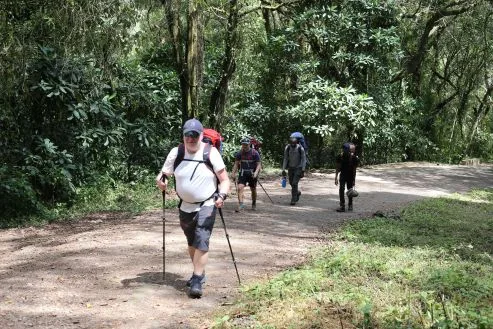
The first section of the trail passes through lush tropical rainforest, where you may encounter colobus monkeys, colourful birds and towering indigenous trees. The well-established path gradually climbs towards Mandara Hut, allowing you to settle into a comfortable trekking rhythm.
Arrive at Mandara Hut in the afternoon, enjoy dinner and spend your first night in shared mountain hut accommodation.
Day 2: Mandara Hut (2,700m) – Horombo Hut (3,720m)
Hiking Distance: Approximately 12 km
Hiking Time: 6–8 hours
Accommodation: Horombo Hut
Meals: Breakfast, Lunch and Dinner
After breakfast, leave Mandara Hut and continue your ascent towards Horombo Hut. The trail gradually emerges from the rainforest into open moorland, revealing expansive views across Kilimanjaro's lower slopes.
As you gain altitude, the vegetation changes noticeably, with giant heathers, grasses and distinctive high-altitude plants replacing the dense forest. On clear days, you may enjoy impressive views of Mawenzi Peak and the snow-capped summit of Kibo.
Your mountain guide will encourage a steady walking pace and regular hydration as you adjust to the thinner air.
Arrive at Horombo Hut in the afternoon, where you will have time to rest, enjoy a warm meal and prepare for the following day's acclimatisation hike.
Day 3: Horombo Hut – Zebra Rocks Acclimatisation Hike – Horombo Hut
Starting Altitude: Approximately 3,720m
Highest Point: Approximately 4,000–4,100m
Hiking Distance: Approximately 5–6 km return
Hiking Time: 3–4 hours
Accommodation: Horombo Hut
Meals: Breakfast, Lunch and Dinner
Today is dedicated to acclimatisation, an important feature of the six-day Marangu Route itinerary.
After breakfast, embark on a guided acclimatisation hike towards Zebra Rocks, a distinctive geological formation named after its striped mineral patterns. The walk takes you higher into Kilimanjaro's moorland environment, providing an opportunity to experience greater altitude before returning to sleep at Horombo Hut.
This follows the mountaineering principle of climbing higher during the day and returning to a lower sleeping altitude, which can support acclimatisation.
Return to Horombo Hut for lunch and spend the afternoon resting, drinking water and preparing for the next stage. Your guide will assess how you are coping with the altitude before continuing towards Kibo Hut.
Day 4: Horombo Hut (3,720m) – Kibo Hut (4,700m)
Hiking Distance: Approximately 10 km
Hiking Time: 5–7 hours
Accommodation: Kibo Hut
Meals: Breakfast, Lunch and Dinner
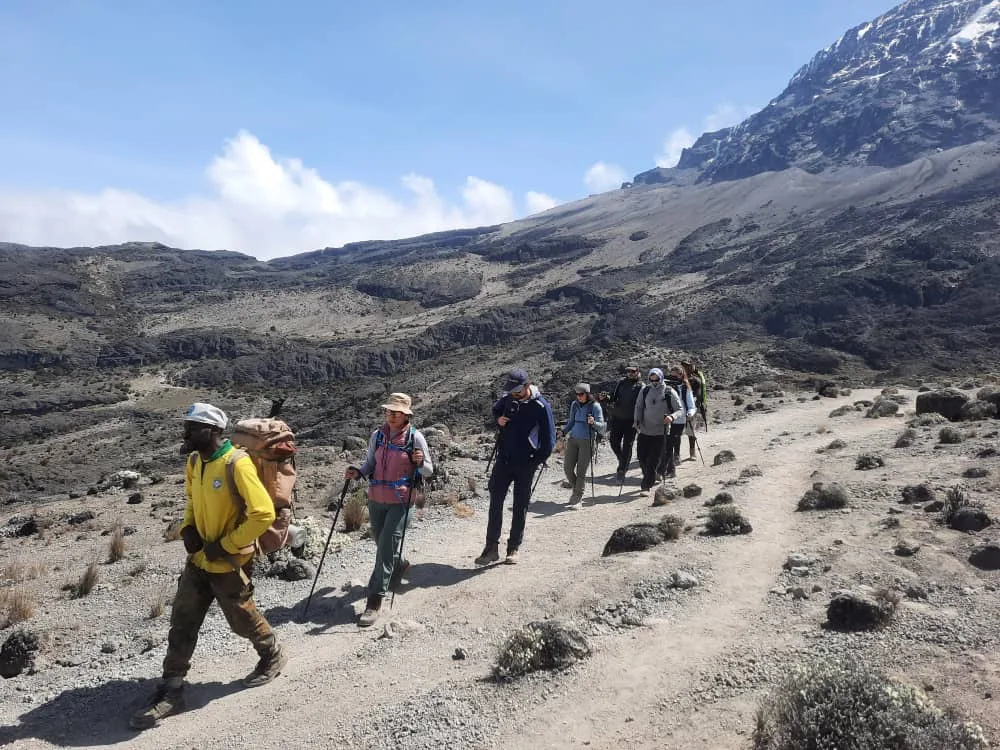
Following an early breakfast, continue towards Kibo Hut, crossing the increasingly barren alpine desert between Mawenzi and Kibo peaks.
The landscape changes dramatically as vegetation becomes sparse and the trail passes through the expansive Saddle, a high-altitude plateau offering remarkable views of Kilimanjaro's volcanic formations.
Although the terrain is generally less steep than the summit trail, the altitude makes walking more demanding. Your guide will maintain a slow, manageable pace and encourage frequent hydration and rest breaks.
Arrive at Kibo Hut around midday or early afternoon. After lunch, organise your summit clothing, headlamp, water and essential equipment.
Enjoy an early dinner and rest before the summit attempt, which normally begins late at night.
Day 5: Kibo Hut (4,700m) – Uhuru Peak (5,895m) – Horombo Hut (3,720m)
Hiking Distance: Approximately 21–22 km
Hiking Time: 12–16 hours, including ascent and descent
Accommodation: Horombo Hut
Meals: Breakfast, Lunch and Dinner
Your summit attempt typically begins around midnight, following a light meal and final preparations. Equipped with warm clothing and headlamps, you will ascend slowly through the darkness towards Gilman's Point (5,685m), one of the most demanding sections of the Marangu Route.
The steep trail crosses loose volcanic scree and rocky terrain, requiring determination, patience and careful pacing.
From Gilman's Point, climbers who are fit to continue follow the crater rim towards Uhuru Peak (5,895m), the highest point in Africa. Depending on weather conditions and your pace, you may witness sunrise over Kilimanjaro's glaciers and surrounding landscapes.
After reaching your highest safe point, descend to Kibo Hut for a short rest before continuing to Horombo Hut.
This is the longest and most physically demanding day of the climb. Summit success is not guaranteed, and your guide will make safety decisions based on altitude symptoms, weather and individual fitness.
Day 6: Horombo Hut (3,720m) – Marangu Gate (1,860m) – Moshi
Hiking Distance: Approximately 20 km
Hiking Time: 5–7 hours
Accommodation: End of Mountain Trek
Meals: Breakfast and Lunch
After breakfast, begin your final descent from Horombo Hut towards Marangu Gate. The trail leads downhill through the moorland zone, past Mandara Hut and into Kilimanjaro's beautiful tropical rainforest.
As you descend, the air becomes warmer and richer in oxygen, offering welcome relief after several days at high altitude. Your guide will lead the group at a comfortable pace, with opportunities for short breaks and photographs along the way.
Upon reaching Marangu Gate, complete the park exit formalities and collect your summit certificate, where eligible.
Meet your arranged transfer vehicle for the return journey to Moshi, where your six-day Kilimanjaro climbing adventure concludes.
Transfer arrangements: The itinerary includes transport to Marangu Gate on Day 1 and return transport to Moshi on Day 6. Whether these transfers are covered by the advertised package price must be confirmed in the What's Included & Excluded section before publication.
What's Included & Excluded – 6 Days Kilimanjaro Marangu Route Group Climb
Our 6 Days Kilimanjaro Marangu Route Group Sharing Climb is designed to provide an organised mountain trekking experience with professional crew support, shared mountain hut accommodation and a planned six-day itinerary.
Your booking quotation will confirm the services covered by your package price, including transfers, accommodation arrangements and any optional additions.
What's Included
| Service | Package Details |
|---|---|
| Professional Mountain Guides | Guided support throughout the six-day Kilimanjaro climb |
| Mountain Support Crew | Porter and cooking crew support during the trek |
| Mountain Hut Accommodation | Five nights in shared huts along the Marangu Route |
| Mountain Meals | Meals during the climb, according to the confirmed itinerary |
| Six-Day Guided Itinerary | Marangu Route trek with an additional acclimatisation day at Horombo Hut |
| National Park Fees | Kilimanjaro National Park entry, hut and applicable trekking fees, where included in the confirmed package |
| Trailhead Transfers | Transfers between the agreed pickup/drop-off point and Marangu Gate, subject to package confirmation |
What's Excluded
| Service | Package Details |
|---|---|
| International Flights | Flights to and from Tanzania |
| Tanzania Visa | Visa or entry authorisation costs, where applicable |
| Travel Insurance | Personal travel insurance covering high-altitude trekking and emergency evacuation |
| Personal Climbing Equipment | Personal clothing, hiking boots, sleeping bag and other individual trekking gear unless specifically provided |
| Crew Tips | Gratuities for mountain guides, porters and cooks |
| Personal Expenses | Laundry, souvenirs, personal purchases and other incidental expenses |
| Optional Services | Additional hotel nights, equipment rental and other services not specified as included in your quotation |
Transfers, Hotels & Optional Climbing Services
Marangu Gate Transfers: Your quotation will specify the pickup location, return drop-off point and whether transport to and from Marangu Gate is included.
Airport Transfers: Transfers from Kilimanjaro International Airport or Arusha Airport are confirmed separately unless expressly included in your package.
Pre-Climb & Post-Climb Hotels: Accommodation in Moshi or Arusha before and after the six-day trek is included only when listed in your confirmed quotation.
Climbing Equipment: Personal trekking equipment and optional rental items should be arranged before departure. Your booking confirmation will identify any equipment supplied as part of the package.
Important: Your final quotation and booking confirmation will identify the services included in your selected climbing package and any additional costs before you make payment.
Marangu Route Hut Accommodation – Mandara, Horombo & Kibo Huts
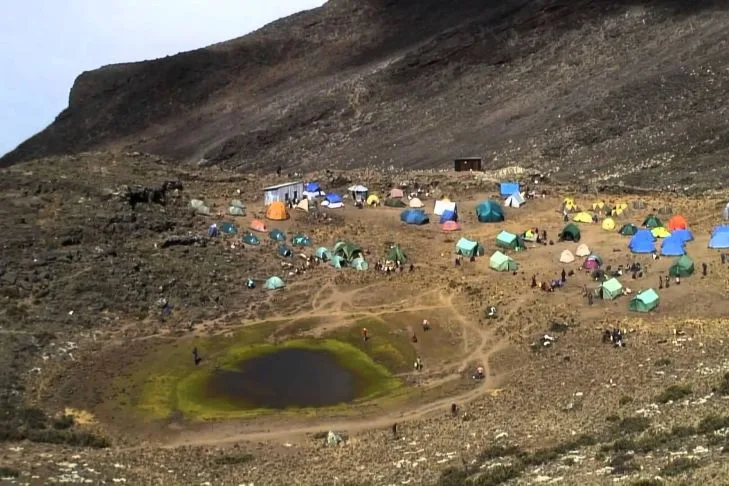
Unlike Kilimanjaro routes that use tented camps, the 6 Days Marangu Route Group Sharing Climb provides five nights in permanent mountain huts. Climbers stay at Mandara Hut, Horombo Hut and Kibo Hut, with shared sleeping facilities and communal dining areas.
The six-day itinerary includes one night at Mandara Hut, three nights at Horombo Hut and one night at Kibo Hut. Accommodation is basic but provides shelter from mountain weather, making the Marangu Route a popular choice for travellers who prefer huts to camping.
Mountain Hut Accommodation on the 6-Day Marangu Route
Mandara Hut – 2,720m
Night 1 | Rainforest Zone
Situated within Kilimanjaro's lush rainforest, Mandara Hut is the first overnight stop on the Marangu Route. Its wooden sleeping cabins provide shared bunk-style accommodation, with communal dining facilities and basic sanitation. The surrounding forest creates a peaceful mountain atmosphere after the first day's trek.
Horombo Hut – 3,720m
Nights 2, 3 & 5 | Moorland Zone
Horombo Hut is an important accommodation and acclimatisation station, offering panoramic views of Mawenzi and Kibo peaks. Climbers stay in shared sleeping huts with communal facilities. On the six-day itinerary, two consecutive nights here allow time for an acclimatisation hike towards Zebra Rocks before continuing uphill.
Kibo Hut – Approximately 4,700m
Night 4 | Alpine Desert Zone
Kibo Hut is the final overnight station before the summit attempt. Located in a stark, high-altitude environment, it provides basic shared sleeping quarters and communal facilities. Climbers arrive in the afternoon, prepare their summit equipment and rest before beginning the challenging overnight ascent towards Gilman's Point and Uhuru Peak.
What to Expect from Marangu Route Mountain Huts
The accommodation is functional rather than luxurious. Climbers should expect shared sleeping areas, limited privacy and cold nighttime temperatures, especially at Kibo Hut. A warm sleeping bag suitable for sub-zero mountain conditions is essential.
Facilities vary between stations, and electricity, hot showers and reliable charging points should not be expected. Climbers are advised to bring a headlamp, personal toiletries, warm sleeping clothes and a power bank.
Accommodation summary: 1 night at Mandara Hut, 3 nights at Horombo Hut and 1 night at Kibo Hut. All five mountain nights are included in the six-day trekking schedule.
Marangu Route Difficulty, Altitude & Acclimatisation
The 6 Days Kilimanjaro Marangu Route is considered a challenging high-altitude trek despite its reputation as one of Kilimanjaro's more straightforward walking routes. While the trail does not normally require technical rock-climbing skills, reaching Uhuru Peak (5,895m) demands good physical fitness, determination and careful altitude management.
The Marangu Route follows a relatively direct ascent and descent, making acclimatisation especially important. The additional day at Horombo Hut is a major advantage of the six-day itinerary compared with the shorter five-day option, although it does not eliminate the risk of altitude sickness.
Marangu Route Altitude Profile
Elevation at key stages of the Marangu Route
Approximate elevations; the Day 3 acclimatisation hike returns to Horombo Hut.
How Difficult Is the 6-Day Marangu Route?
The main challenge is not technical climbing but the combination of altitude, long trekking days and cold summit conditions. Summit day is particularly demanding, involving approximately 12–15 hours of ascent and descent over steep scree and rocky terrain.
Climbers should prepare with regular cardiovascular exercise, hill walking, stair climbing and longer hikes before travelling to Tanzania. Previous mountaineering experience is not essential, but good physical preparation is strongly recommended.
Acclimatisation and Altitude Sickness Prevention
The extra acclimatisation day at Horombo Hut allows climbers to hike towards approximately 4,000m before returning to sleep at 3,720m. This additional time can improve altitude adaptation, although the six-day ascent remains relatively rapid.
Altitude sickness can affect anyone, regardless of age or fitness. Symptoms may include headache, nausea, dizziness, unusual fatigue and loss of appetite. More serious warning signs include confusion, difficulty walking normally and breathlessness at rest.
Climbers should follow their guide's instructions, maintain a manageable walking pace, eat regularly and report symptoms immediately. Never continue ascending with worsening altitude symptoms. Serious altitude illness requires prompt descent and appropriate medical care.
Travellers should also consult a qualified healthcare professional before climbing, particularly regarding altitude illness prevention and any pre-existing medical conditions.
Best Time to Climb Kilimanjaro via Marangu Route
The best time to climb Kilimanjaro via the Marangu Route is generally January to early March and June to October, when Tanzania experiences its main dry-weather climbing periods. These months typically offer clearer mountain views, more favourable trekking conditions and less rainfall than the wet seasons.
However, Mount Kilimanjaro can be climbed throughout the year, and mountain weather remains unpredictable even during the driest months. Summit temperatures can fall well below freezing, making proper clothing and preparation essential.
Kilimanjaro Marangu Route – Month-by-Month Climbing Guide 2027–2028
Month | Typical Conditions | Climbing Recommendation |
|---|---|---|
January | Relatively dry, clear mornings | Excellent |
February | Generally favourable weather and visibility | Excellent |
March | Good early-month conditions; increasing rain later | Good early in month |
April | Long rains, muddy forest trails | Less favourable |
May | Often wet, cloudy and slippery | Less favourable |
June | Conditions generally improve as the dry season begins | Good |
July | Dry weather, cold nights and busy trails | Excellent |
August | Generally dry with clear mountain views | Excellent |
September | Often dry with good visibility | Excellent |
October | Generally favourable, with increasing rain risk later | Very good |
November | Short rains and variable visibility | Less favourable |
December | Variable early conditions, often improving later | Good late in month |
January to March – Warmer Kilimanjaro Climbing Season
January and February are popular months for Marangu Route group climbs, offering generally favourable weather, comfortable daytime trekking temperatures at lower elevations and opportunities for clear mountain views.
Early March can also be suitable, although rainfall typically becomes more frequent as the long rainy season approaches.
June to October – Main Kilimanjaro Climbing Season
June through October is Kilimanjaro's main dry-season climbing period. July, August and September are particularly popular with international trekkers, making early booking advisable for group departures and hut accommodation.
While the weather is generally drier, summit nights can be extremely cold, especially when strong winds increase the wind-chill effect.
April, May and November – Rainy-Season Climbing
The Marangu Route remains an option during wetter months, but rainfall can make rainforest trails muddy and reduce mountain visibility. Climbers should be prepared for damp conditions, changing weather and potentially more difficult summit attempts.
Which Month Should You Choose for a 2027–2028 Marangu Route Group Climb?
For travellers seeking a balance of favourable weather, scenic mountain views and established group-climbing seasons, January, February, July, August and September are particularly attractive choices.
Travellers who prefer quieter trails may consider early March, June or October, while recognising that conditions vary from year to year.
The most suitable climbing date ultimately depends on weather preferences, fitness, travel flexibility and confirmed group departure availability.
Marangu Route Group Departures & Booking Information
Join our 6 Days Kilimanjaro Marangu Route Group Sharing Climb 2027–2028 and experience Mount Kilimanjaro alongside fellow climbers. East Africa Jungle welcomes solo travellers, couples and small groups on organised Marangu Route departures, subject to confirmed availability.
Our six-day itinerary includes professional mountain guides, shared accommodation at Mandara, Horombo and Kibo Huts, and an additional acclimatisation day at Horombo before the summit attempt.
Marangu Route Group Size & Joining Arrangements
| Booking Information | Details |
|---|---|
| Climbing Route | Marangu Route (Coca-Cola Route) |
| Duration | 6 Days / 5 Nights |
| Climbing Style | Guided Group Sharing Climb |
| Minimum Departure | 2 confirmed climbers, subject to operational confirmation |
| Maximum Group Size | Confirmed when arranging your departure |
| Solo Travellers | Welcome to join an existing confirmed group |
| Couples & Friends | Can join scheduled group departures |
| Private Climbs | Available on request |
| Starting Point | Moshi or Arusha, Tanzania |
| Accommodation | Shared Mountain Huts |
| Travel Period | 2027–2028 |
| Departure Dates | Subject to confirmed group schedules and availability |
Marangu Route Group Departure Dates 2027–2028
Our six-day Marangu Route group climbs are arranged according to confirmed departure schedules and available places. Travellers can enquire about suitable climbing dates throughout 2027 and 2028.
| Travel Period | Departure Information | Booking Status |
|---|---|---|
| January–March 2027 | Dates available on enquiry | Request availability |
| June–October 2027 | Dates available on enquiry | Request availability |
| November–December 2027 | Dates available on enquiry | Request availability |
| January–March 2028 | Dates available on enquiry | Request availability |
| June–October 2028 | Dates available on enquiry | Request availability |
| November–December 2028 | Dates available on enquiry | Request availability |
Group climbing price: From USD 1,750 per person for eligible 2027–2028 departures. Final prices and joining arrangements are confirmed before booking.
The periods above are enquiry windows, not confirmed departure dates. Please contact East Africa Jungle for the current group schedule.
How Does the Marangu Route Group Sharing Climb Work?
Travellers joining a scheduled Marangu Route group climb share the six-day trekking itinerary with other climbers, supported by professional mountain guides, porters and a cooking crew.
Solo travellers may request to join an existing departure, while couples and friends can book together. Group participation depends on confirmed places and minimum departure requirements.
Climbers follow the same planned route, although individual trekking pace, acclimatisation and safety requirements are assessed throughout the expedition.
How to Book Your 6-Day Marangu Route Group Climb
Choose Your Travel Dates: Share your preferred climbing dates in 2027 or 2028 and indicate whether your dates are flexible.
Check Group Availability: Our team will advise on suitable group departures, participation requirements and available places.
Receive Your Climbing Quotation: Review your confirmed itinerary, package cost and booking conditions.
Confirm Your Reservation: Secure your place using the payment instructions provided with your booking confirmation.
Prepare for Your Climb: Arrange your travel documents, high-altitude trekking insurance and recommended climbing equipment.
Frequently Asked Questions – 6 Days Kilimanjaro Marangu Route Group Climb
1. How difficult is the 6 Days Kilimanjaro Marangu Route?
The six-day Marangu Route is a challenging high-altitude trek rather than a technical climbing expedition. Although the lower sections follow established trails, the summit ascent to Uhuru Peak (5,895m) requires good physical fitness, mental determination and careful acclimatisation.
2. Is the 6-day Marangu Route better than the 5-day Marangu Route?
The six-day Marangu Route provides an additional acclimatisation day at Horombo Hut, making it generally preferable to the shorter five-day option. However, both involve rapid altitude gain, and neither guarantees successful acclimatisation or summit success.
3. Can beginners climb Mount Kilimanjaro via the Marangu Route?
Yes. Physically prepared beginners can attempt the Marangu Route without previous technical mountaineering experience. Regular hiking, cardiovascular training and appropriate high-altitude preparation are strongly recommended.
4. How much does the 6 Days Marangu Route Group Climb cost in 2027–2028?
The 6 Days Kilimanjaro Marangu Route Group Sharing Climb starts from USD 1,750 per person sharing for 2027–2028. The package features a guided six-day trek, five nights in shared mountain huts and an additional acclimatisation day at Horombo Hut. Final pricing depends on your confirmed departure and any additional services requested. Contact East Africa Jungle for available group departure dates and a detailed quotation.
5. Can solo travellers join a Marangu Route group climb?
Yes. Solo travellers can enquire about joining an existing group-sharing departure. Joining arrangements depend on confirmed departure dates, available places and the operator's minimum participation requirements.
6. Where do climbers sleep on the Marangu Route?
Climbers stay in permanent mountain huts at Mandara, Horombo and Kibo. The six-day itinerary includes one night at Mandara Hut, three nights at Horombo Hut and one night at Kibo Hut, with shared sleeping facilities.
7. Do I need camping equipment for the Marangu Route?
You do not normally need to bring a personal sleeping tent because the Marangu Route uses permanent mountain huts. However, a warm sleeping bag, suitable clothing and essential trekking equipment are necessary.
8. What is the best time to climb Kilimanjaro via Marangu Route?
January to early March and June to October generally offer more favourable climbing conditions. July, August and September are particularly popular, although weather conditions can change throughout the year.
9. How long is the 6-day Marangu Route trek?
The route covers approximately 72–75 kilometres, depending on the acclimatisation hike and exact trail measurements. The itinerary includes four days of ascent and acclimatisation, a summit attempt on Day 5 and a final descent on Day 6.
10. What is the success rate of the 6-day Marangu Route?
There is no single reliable summit success rate applicable to every six-day Marangu climb. Outcomes vary according to altitude acclimatisation, fitness, weather, guide decisions and individual health. East Africa Jungle should publish its own summit success statistics only if supported by verified climbing records.
11. How cold does Kilimanjaro get during the summit attempt?
Summit temperatures can fall well below freezing, with strong winds making conditions feel considerably colder. Climbers should carry thermal base layers, an insulated jacket, waterproof outerwear, warm gloves and suitable head protection.
12. Can I get altitude sickness on the Marangu Route?
Yes. Altitude sickness can affect even experienced and physically fit climbers. The additional acclimatisation day helps, but does not remove the risk. Climbers should report symptoms promptly and follow medical and guide advice. Worsening symptoms require descent rather than continued ascent.
13. What happens if I cannot reach Uhuru Peak?
If you become unwell, excessively fatigued or unable to continue safely, your guide should assess the situation and arrange an appropriate descent. Summit safety takes priority over completing the climb, and the applicable emergency and evacuation arrangements should be confirmed before departure.
14. Do I need travel insurance for a Kilimanjaro climb?
Yes. Travellers should arrange comprehensive insurance that explicitly covers high-altitude trekking up to 5,895 metres, emergency evacuation and medical treatment. Standard travel insurance policies may exclude high-altitude mountaineering activities.
15. How far in advance should I book a 2027–2028 Marangu Route group climb?
Booking several months in advance is advisable, particularly for January, February, July, August and September departures. Early reservations provide more time to confirm group availability, prepare climbing equipment and arrange international travel.
16. Can I combine a Kilimanjaro Marangu Route climb with a Tanzania safari or Zanzibar holiday?
Yes. Travellers can combine their six-day Kilimanjaro group climb with a wildlife safari to Tarangire, Serengeti and Ngorongoro Crater, or a relaxing beach holiday in Zanzibar. These extensions can be arranged separately according to available travel dates and budget.
What to Pack for the 6-Day Marangu Route
Packing the right equipment is essential for a comfortable and safe 6 Days Kilimanjaro Marangu Route Group Sharing Climb. Although Marangu offers permanent mountain hut accommodation, climbers must prepare for changing weather conditions, from warm rainforest trails to freezing temperatures near Uhuru Peak (5,895m).
A layered clothing system, waterproof trekking gear, insulated summit clothing and a suitable sleeping bag are among the most important items.
Essential Kilimanjaro Marangu Route Packing Checklist
Interactive Packing Checklist
0 of 32 packed
Clothing & Layers
Footwear & Sleeping Gear
Backpack & Trekking Equipment
Health & Personal Essentials
Travel Documents
Daypack vs Porter Duffel Bag
During your Kilimanjaro Marangu Route climb, your daypack should contain essentials needed while trekking, including drinking water, snacks, waterproof clothing, sun protection and personal medication.
Your porter-carried duffel bag normally contains your sleeping bag, spare clothing and other overnight equipment. Confirm the permitted porter luggage weight with East Africa Jungle before departure.
Important Packing Advice
Temperatures near the summit can be extremely cold, particularly during the overnight ascent from Kibo Hut. Avoid cotton clothing for trekking, carry waterproof protection even during the dry season and test your hiking boots before travelling.
Equipment rental may be available in Moshi or Arusha, but availability, sizes, quality and rental costs should be confirmed in advance.
Guest Reviews – 6 Days Kilimanjaro Marangu Route Group Sharing Climb
★★★★★ “An Incredible Experience Reaching the Summit of Kilimanjaro”
Guest: Daniel Whitmore Country: United Kingdom Climbing Type: 6 Days Marangu Route Group Sharing Climbing Highlights: Uhuru Peak, summit sunrise, mountain guides and group support
“The six-day Marangu Route was an adventure I will never forget. Walking through the rainforest on the first day was beautiful, and the views became more spectacular as we climbed higher. Summit night was extremely challenging because of the cold and altitude, but reaching Uhuru Peak made every difficult step worthwhile. The encouragement from our guides and fellow climbers made a huge difference. Standing at the highest point in Africa was an emotional and unforgettable moment.”
★★★★★ “A Wonderful Group Climb With an Excellent Mountain Team”
Guest: Sophie Laurent Country: France Climbing Type: Solo Traveller – Group Sharing Climbing Highlights: Group atmosphere, mountain guides, Mandara Hut and Horombo Hut
“I joined the Marangu Route group climb as a solo traveller and really enjoyed sharing the experience with people from different countries. Everyone encouraged each other throughout the trek, especially during the more difficult sections. The mountain guides were patient and kept us moving at a comfortable pace. Staying in the mountain huts was a unique experience, and the meals were something to look forward to after a long day of hiking. It was a fantastic way to experience Kilimanjaro.”
★★★★★ “The Extra Acclimatisation Day Was Worth It”
Guests: Michael and Emma Fischer Country: Germany Climbing Type: Couple – Marangu Route Group Climb Climbing Highlights: Horombo Hut, Zebra Rocks, Mawenzi Peak and acclimatisation
“We chose the six-day Marangu Route because we wanted an additional day to adjust to the altitude. The acclimatisation hike to Zebra Rocks was one of our favourite parts of the climb, with amazing views of Mawenzi Peak. Staying two nights at Horombo Hut gave us time to rest before continuing towards Kibo. The summit attempt was still physically demanding, but the experience of climbing through such different landscapes was incredible. We would recommend the six-day itinerary over the shorter option.”
★★★★★ “A Challenging but Rewarding Kilimanjaro Adventure”
Guest: Oliver Bennett Country: Australia Climbing Type: Friends – Group Sharing Climbing Highlights: Mountain hut accommodation, Kibo Hut, summit night and Uhuru Peak
“Climbing Kilimanjaro via the Marangu Route was one of the most rewarding adventures of our lives. We loved watching the landscape change from green rainforest to rocky alpine desert. The mountain huts were basic but provided welcome shelter after long trekking days. Summit night was definitely the toughest part, especially the steep climb towards Gilman's Point. Reaching Uhuru Peak was an unforgettable achievement, and sharing the experience with our group made it even more special.”
Why Climb Kilimanjaro with East Africa Jungle?
1. Locally Based East African Travel Operator
East Africa Jungle specialises in travel experiences across East Africa, helping international travellers arrange Kilimanjaro climbing holidays and related travel services in Tanzania.
2. Personalised Climbing Advice
Our team assists with selecting travel dates, understanding the itinerary, preparing for the physical demands of the climb and reviewing booking arrangements before departure.
3. Coordinated Mountain Expedition Arrangements
We help organise the confirmed mountain itinerary, accommodation arrangements, trekking crew and required travel logistics so that climbers understand their programme before arrival.
4. Transparent Booking Information
We provide quotations detailing the applicable climbing price, payment conditions and package inclusions, allowing travellers to review their arrangements before confirming a reservation.
5. Support With Your Wider Tanzania Holiday
Travellers can enquire about additional accommodation, airport transfers, Tanzania safari extensions and Zanzibar beach holidays alongside their Kilimanjaro climb.
Ready to Climb Mount Kilimanjaro in 2027–2028?
Start planning your Marangu Route adventure with East Africa Jungle. Share your preferred travel dates and number of climbers, and our team will help you check departure availability and receive a detailed quotation.
Check Availability & Request Your Climbing Quote
Kilimanjaro Climbing Safety, Mountain Guides & Emergency Procedures
Climbing Mount Kilimanjaro via the 6 Days Marangu Route involves high-altitude trekking, changing mountain weather and a demanding summit ascent to Uhuru Peak (5,895m). At East Africa Jungle, climber safety is an important part of planning every guided mountain expedition.
Our Marangu Route group climb includes professional mountain guides and a support crew, with staffing arrangements determined by the confirmed group size. The six-day itinerary also includes an additional acclimatisation day at Horombo Hut (3,720m), allowing more time for altitude adjustment before the summit attempt.
Mountain Guides & Group Supervision
Climbers are accompanied by a mountain guiding team responsible for route navigation, trekking pace, group coordination and assessing whether conditions allow the climb to continue safely. The number of guides and assistant guides assigned to each departure is confirmed according to group size and the applicable operating arrangements.
Altitude Monitoring & Health Assessments
Altitude sickness can affect climbers regardless of age, fitness or previous trekking experience. During the expedition, participants should promptly report headaches, nausea, dizziness, unusual fatigue, breathlessness or difficulty maintaining balance.
The mountain team assesses climbers' ability to continue safely, particularly during the ascent to Kibo Hut and the summit attempt. The specific health-monitoring equipment and assessment procedures available on your departure will be confirmed before climbing.
Emergency Response & Evacuation
If a climber develops serious altitude-related symptoms or becomes unable to continue safely, the priority is to stop further ascent, assess the situation and arrange an appropriate descent and medical assistance.
Emergency communication arrangements, available medical equipment and evacuation procedures depend on the confirmed mountain operating arrangements and will be explained before departure.
Individual Descent & Group Safety
Not every climber acclimatises at the same rate. If one participant needs to descend while others are fit to continue, the mountain team must assess the situation and determine whether safe, supervised arrangements can be made for both the descending climber and the remaining group.
Continuing towards Uhuru Peak is always subject to the climber's condition, weather and the mountain team's safety assessment. Reaching the summit is never guaranteed.
Before Your Kilimanjaro Climb
East Africa Jungle will provide the confirmed guide arrangements, available emergency support and relevant safety procedures for your departure. All climbers should arrange suitable travel insurance covering high-altitude trekking to 5,895 metres, emergency evacuation and medical treatment.
Available Months
Dates are flexible. Request your preferred month and our team will advise the best safari timing.
Safari Route Map
Map coordinates are not yet available for these stops, so a route summary is shown.
Plan Your Safari Today
Tell us your travel month, budget level, and group size. We will shape this package around your preferred safari style.

 16+ Years
 English